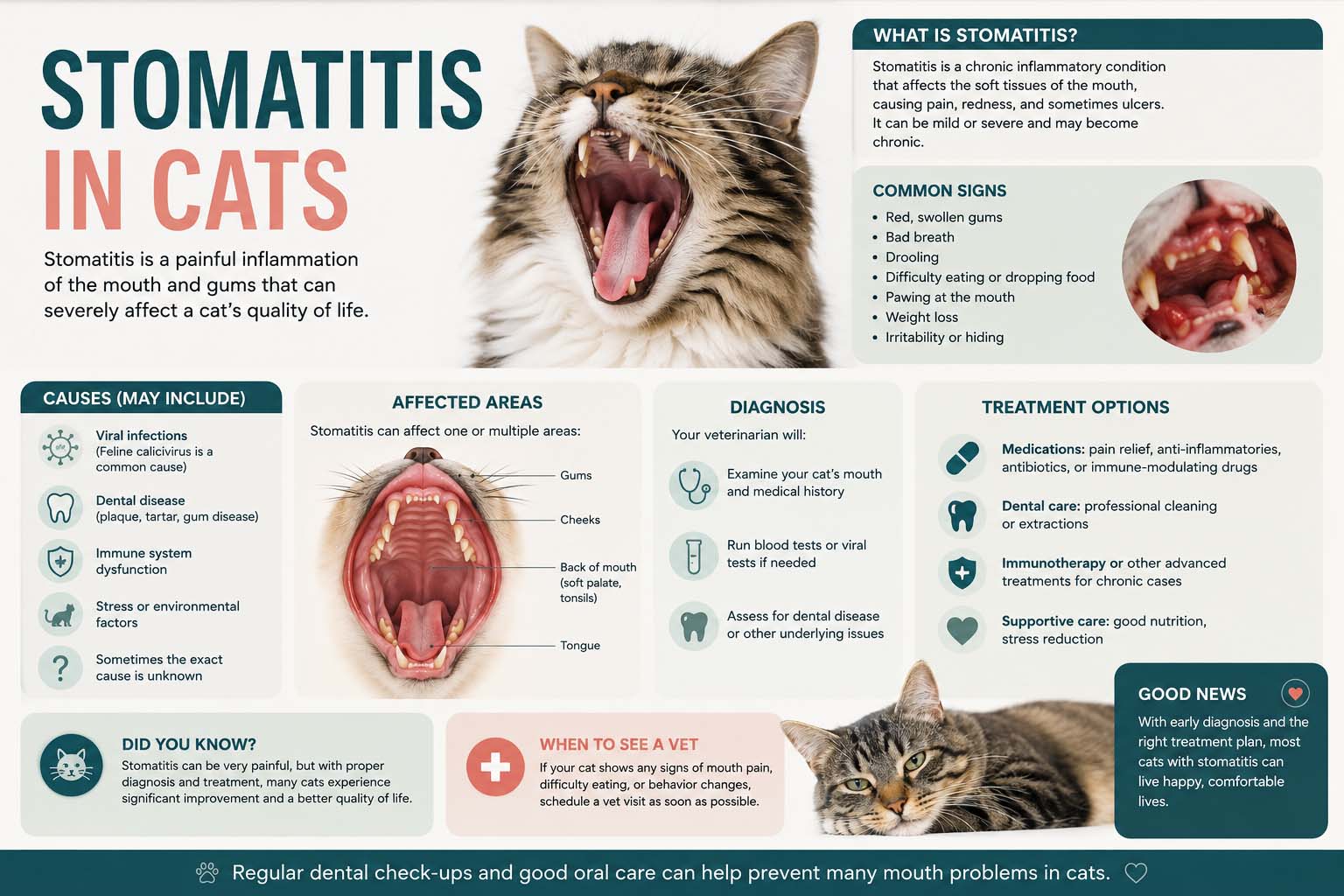
Stomatitis in cats is a severe and painful inflammation of the mouth and gums that can make eating, grooming, and even swallowing difficult. Many pet owners searching for what is stomatitis in cats are often surprised to learn that this condition affects much more than simple dental health. It can spread throughout the mouth, causing redness, ulcers, bleeding, and intense discomfort.
This disease is commonly linked to an overactive immune response to plaque and bacteria in the mouth. Some cats may also develop the condition because of viral infections, genetics, or poor oral hygiene. The inflammation usually appears near the back of the mouth, around the gums, tongue, and throat area. Cats suffering from stomatitis may drool excessively, lose weight, develop bad breath, or stop eating due to pain.
Veterinarians consider stomatitis one of the most serious oral conditions in felines because it can quickly reduce a cat’s quality of life if left untreated. Early diagnosis and treatment are important for preventing long-term complications.
Signs and Symptoms of Stomatitis in Cats
The symptoms of stomatitis in cats can vary from mild irritation to severe oral pain. Many cats hide their discomfort, which means owners may not notice the condition immediately. One of the first signs is usually difficulty eating. A cat may approach food with interest but suddenly pull away because chewing causes pain.
Bad breath is another common symptom. The smell often becomes strong because of inflammation, bacteria, and infection inside the mouth. Cats with stomatitis may also drool excessively or paw at their mouth. Some pets stop grooming themselves because oral pain makes movement uncomfortable.
Weight loss can become noticeable over time because eating becomes increasingly difficult. In severe cases, bleeding gums and ulcers may appear inside the mouth. Owners who search for stomatitis in cats photos often notice dramatic redness and swelling in affected cats. These visual signs help many people understand how serious the condition can become.
Causes of Stomatitis in Cats
Veterinarians still continue to study the exact causes of feline stomatitis. However, several factors are commonly associated with the disease. One major factor is an abnormal immune system reaction to plaque bacteria on the teeth. Instead of tolerating normal bacteria, the cat’s immune system attacks the tissues in the mouth, creating severe inflammation.
Genetics may also play a role, as some cats appear more prone to oral inflammation than others.
Poor dental hygiene can worsen the condition. Plaque buildup and gum disease create an environment where inflammation becomes more severe. Stress and underlying health problems may also weaken the immune system and contribute to the development of stomatitis.
Diagnosing the Condition
A veterinarian usually diagnoses stomatitis through a physical examination and dental evaluation. During the exam, the veterinarian checks for redness, ulcers, swelling, and signs of infection in the mouth.
In some cases, dental X-rays are needed to evaluate tooth roots and hidden oral disease. Blood tests may also be recommended to identify viral infections or underlying medical conditions that could contribute to the inflammation.
Treatment Options for Stomatitis in Cats
Treatment for stomatitis in cats often depends on the severity of the disease. Mild cases may improve with professional dental cleaning, antibiotics, pain medication, and anti-inflammatory drugs. However, severe cases usually require more advanced treatment.
One of the most effective long-term solutions is tooth extraction. Although this sounds extreme, removing affected teeth often greatly reduces inflammation and pain. Many cats experience a significant improvement in quality of life after dental extractions because the source of irritation is removed.
Pain management is another essential part of treatment. Cats with stomatitis can suffer intense discomfort, so veterinarians often prescribe medications to reduce pain and inflammation. Some cats may also need special diets with soft foods during recovery.
Stomatitis in Cats Life Expectancy
Many owners worry about stomatitis in cats life expectancy after receiving a diagnosis. The good news is that most cats can continue living a normal and happy life with proper treatment and management.
The condition itself is not usually fatal, but untreated stomatitis can severely impact a cat’s health. Chronic pain may lead to malnutrition, dehydration, and significant weight loss. Cats that stop eating because of oral pain can quickly become weak and ill.
When treatment is started early, many cats recover well and regain a good quality of life. Tooth extraction procedures often provide long-term relief, allowing cats to eat comfortably again. Regular veterinary care, proper nutrition, and ongoing oral management are essential for improving long-term outcomes.
Is Stomatitis in Cats Contagious?
A common concern among cat owners is the question, is stomatitis in cats contagious? In most cases, stomatitis itself is not considered contagious. The inflammation results from the individual cat’s immune response rather than direct transmission between pets.
However, some viruses associated with stomatitis, such as feline calicivirus, can spread between cats. This means that while the condition itself may not be contagious, certain underlying infections linked to it can pass from one cat to another.
Living With a Cat That Has Stomatitis
Caring for a cat with stomatitis requires patience and attention. Owners should monitor eating habits, weight, and behavior closely. Soft foods are often easier for affected cats to eat, especially during flare-ups or after dental procedures.
Stress reduction can also help support recovery. Cats feel safer and healthier in calm environments with regular routines. Providing fresh water, comfortable resting areas, and consistent veterinary follow-ups can improve overall well-being.
Conclusion
Stomatitis in cats is a painful oral disease that requires early attention and professional treatment. Understanding what is stomatitis in cats helps owners recognize symptoms such as bad breath, drooling, weight loss, and mouth inflammation before the condition becomes severe.