
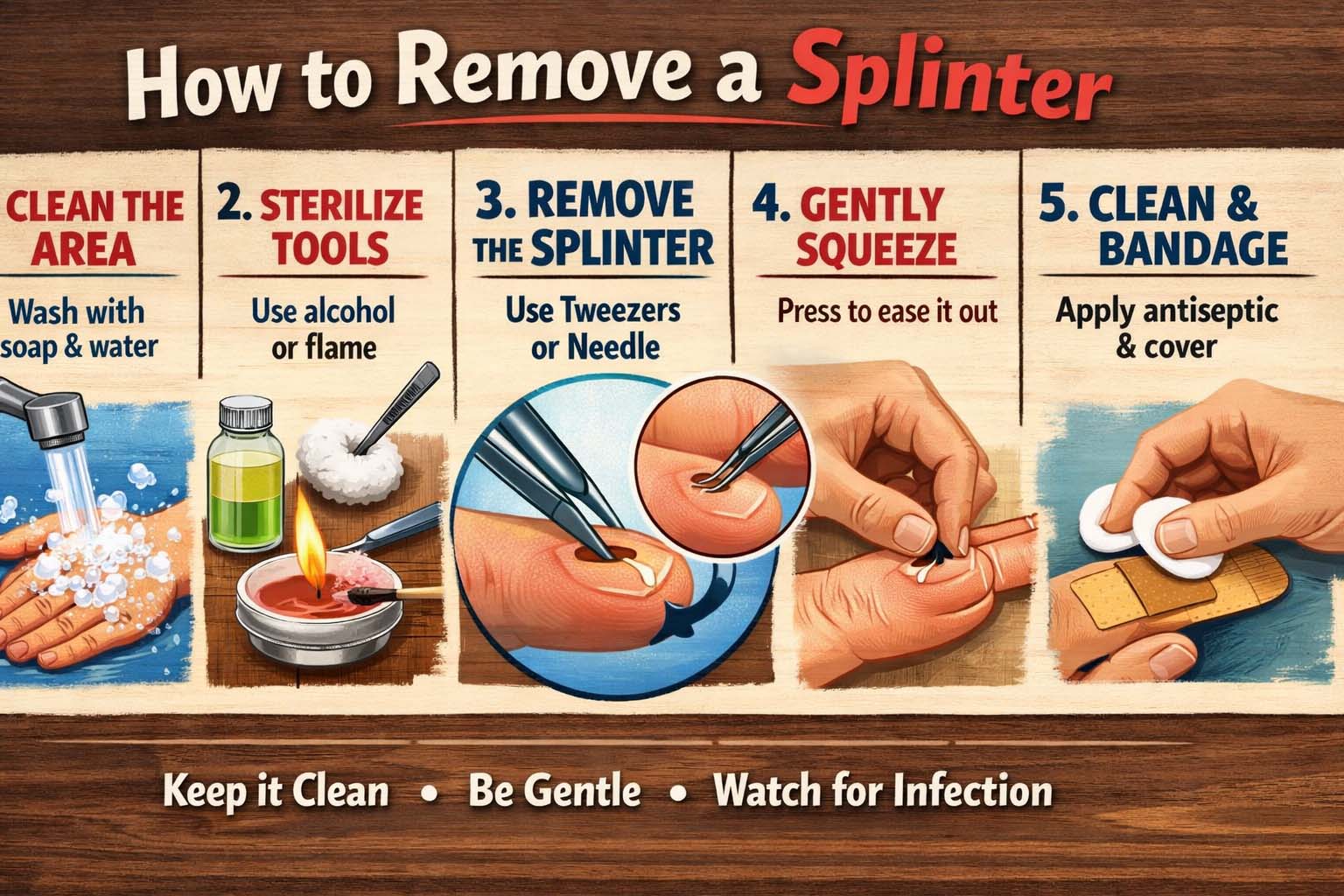
A splinter is a small fragment of wood, glass, metal, or another material that becomes lodged in the skin. While splinters are common and usually minor, they can cause pain, irritation, redness, and even infection if left untreated. Knowing how to remove a splinter properly In this guide, we’ll explain safe and simple ways to remove splinters at home, what tools to use, and when to seek medical care.
What Is a Splinter?
A splinter is any tiny foreign object that pierces and gets stuck beneath the skin. Common splinters include:
- Wood fragments
- Glass shards
- Metal slivers
- Plastic pieces
- Plant thorns
Splinters are often found in hands, fingers, feet, and toes because these areas frequently come into contact with rough surfaces.
Why You Should Remove a Splinter Quickly
Leaving a splinter under the skin may cause:
- Pain and tenderness
- Swelling
- Redness
- Infection
- Pus formation
- Difficulty walking or using hands
remove a splinter as soon as possible.
Supplies You May Need
Before starting, gather these items:
- Tweezers
- Needle or safety pin
- Soap and water
- Rubbing alcohol
- Antiseptic cream
- Bandage
- Magnifying glass
- Warm water bowl
Clean tools are essential to prevent infection.
Basic Steps for How to Remove a Splinter
1. Wash the Area
Clean your hands and the affected skin with warm water and soap.
2. Sterilize Tools
a needle before use.
3. Examine the Splinter
Use good lighting or a magnifying glass to locate the splinter and determine its angle.
4. Remove Carefully
If part of the splinter sticks out, use tweezers to pull it out in the same direction it entered.
5. Clean Again
Wash the area after removal and apply antiseptic ointment.
6. Cover if Needed
Use a small bandage if the skin is broken.
How to Remove a Splinter Without Tweezers
Sometimes tweezers are not available. If you’re wondering how to remove a splinter without tweezers, there are a few alternatives.
Use Adhesive Tape
For shallow splinters close to the surface:
- Place strong tape over the splinter.
- Press gently.
- Peel back slowly in the opposite direction.
Use a Sterilized Needle
Carefully lift the exposed end of the splinter with a clean needle, then pull it out with fingers if possible.
Baking Soda Paste
Mix baking soda with water into a paste and apply over the splinter. Cover overnight with a bandage. This may help draw the splinter to the surface.
How to Remove a Splinter You Can’t See
If you need to know how to remove a splinter you can’t see, it may be buried just beneath the skin.
Soak the Area
10–15 minutes. This softens the skin and may bring the splinter closer to the surface.
Use Magnification
A magnifying glass and bright light can help reveal tiny splinters.
Feel for Tenderness
Gently press around the area to locate the painful spot.
Try Gentle Lifting
Once visible, use a sterilized needle to expose the tip and remove it carefully.
If you still cannot locate it after trying, medical attention may be the safest option.
How to Remove a Deep Splinter
A deep splinter can be painful and more difficult to remove. If you’re searching for how to remove a deep splinter, follow these steps carefully.
Do Not Dig Aggressively
Digging into the skin can worsen injury and cause infection.
Soften the Skin
Soak the area in warm water for 15–20 minutes.
Use a Needle Gently
Sterilize a needle and carefully open the skin just enough to expose the splinter tip.
Pull Slowly
Use tweezers to grip the exposed end and pull steadily.
Seek Medical Help if Needed
If the splinter is too deep, near a nail, in the face, or causes severe pain, see a doctor.
How to Remove a Splinter from Foot
Many people need to know how to remove a splinter from foot because walking barefoot can lead to painful splinters.
Step 1: Wash the Foot
Use warm soapy water to clean the area thoroughly.
Step 2: Soak the Foot
Soak for 15 minutes to soften thick skin on the sole.
Step 3: Locate the Splinter
Use bright light to identify the entry point.
Step 4: Remove Carefully
Use tweezers or a sterile needle depending on depth.
Step 5: Protect the Area
Apply antiseptic cream and cover with a bandage to reduce friction while walking.
Signs of Infection After a Splinter
Watch for these symptoms after removal:
- Redness spreading outward
- Swelling
- Warm skin
- Pus
- Fever
- Persistent pain
If these occur, consult a healthcare professional.
When to See a Doctor
Seek medical care if:
- The splinter is deeply embedded
- You cannot remove it
- Signs of infection develop
- The splinter is glass or rusty metal
- Tetanus vaccination is outdated
How to Prevent Splinters
Prevent future splinters with these tips:
- Wear shoes outdoors
- Use gloves while handling wood
- Sand rough furniture edges
- Keep floors free of broken glass
- Be cautious with old wooden surfaces
Final Thoughts
Learning how to remove a splinter is a useful skill that can save discomfort and prevent infection. Whether you need to know how to remove a splinter without tweezers, how to remove a splinter you can’t see, how to remove a deep splinter, or how to remove a splinter from foot, the key is to stay calm, use clean tools, and avoid forcing it. If removal becomes difficult or symptoms worsen, seek professional medical care for the safest treatment.