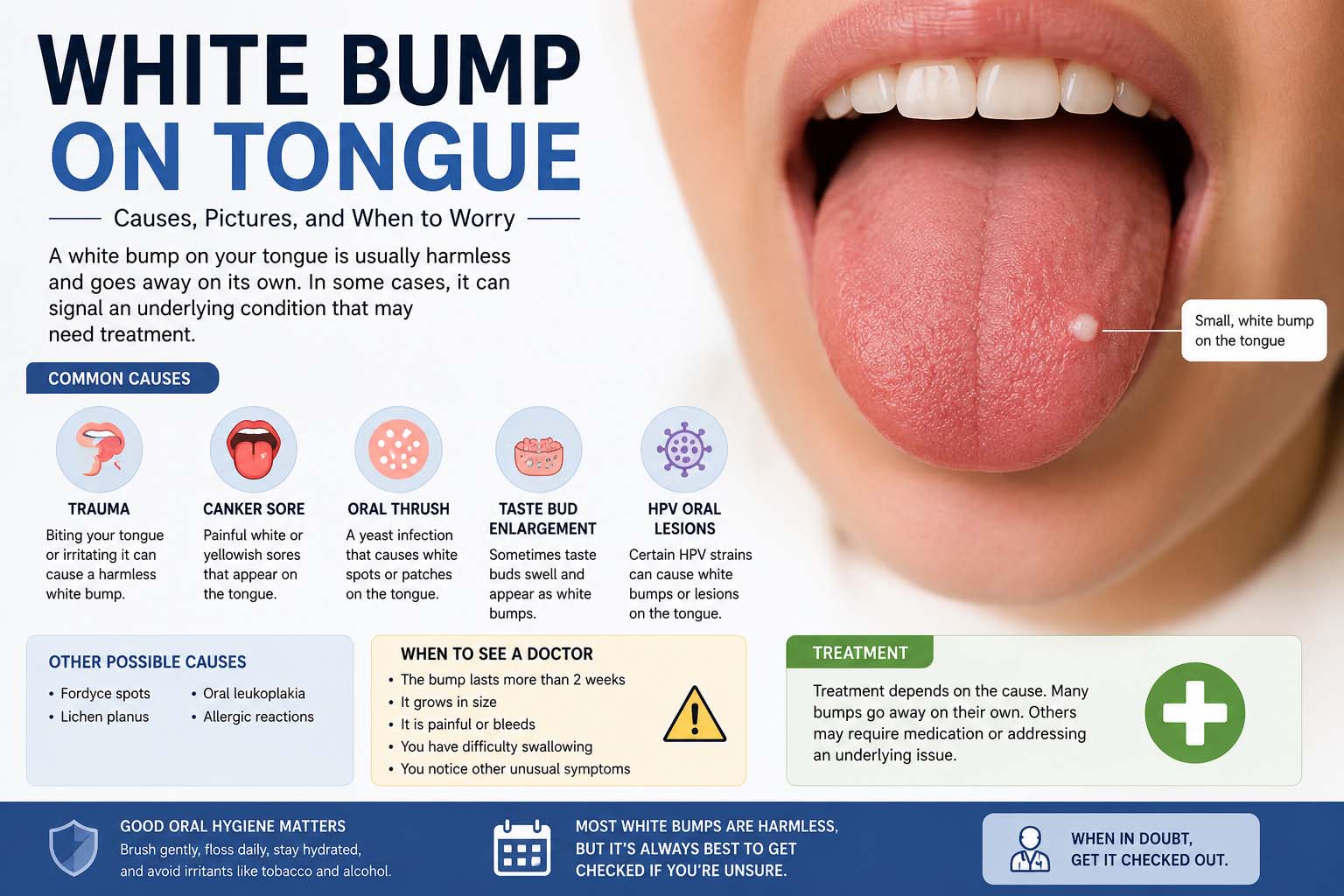
A white bump on tongue can be alarming for many people, especially when it appears suddenly or becomes painful. The tongue is an important part of the body that helps with speaking, tasting, chewing, and swallowing. Because it is constantly exposed to food, bacteria, and irritation, small bumps and changes in appearance are fairly common. In many cases, a white bump on tongue is harmless and disappears within a few days. However, some bumps may indicate irritation, infection, or an underlying health condition that requires medical attention.
There are several possible causes of white bumps on the tongue. These include canker sores, inflamed taste buds, oral thrush, allergic reactions, viral infections, and minor injuries from biting the tongue or eating spicy foods. Poor oral hygiene, stress, smoking, and nutritional deficiencies can also contribute to tongue irritation.
Understanding the possible causes and symptoms can help people know when a white bump is harmless and when professional medical advice may be necessary. Most tongue bumps are temporary, but persistent or painful changes should never be ignored.
White Bump on Side of Tongue
A white bump on side of tongue is a common issue that can develop for several reasons. The sides of the tongue are especially vulnerable to irritation because they frequently rub against teeth while eating or speaking. Accidentally biting the tongue is one of the most common causes of bumps in this area.
Inflamed taste buds may also appear on the side of the tongue.FThe bumps are usually small but can feel surprisingly painful. Stress, lack of sleep, and certain foods can increase irritation and make the bumps more noticeable.
Another possible cause is friction from sharp teeth, braces, or dental appliances. Continuous rubbing against the tongue can create irritation and small white lesions. In some cases, ulcers may form if the irritation continues for a long period.
Oral infections may also cause a white bump on side of tongue. Fungal infections such as oral thrush can create white patches or raised spots in the mouth. Thrush is more common in people with weakened immune systems, diabetes, or those taking antibiotics.
Although most side tongue bumps are harmless, a bump that lasts for several weeks or becomes larger should be evaluated by a healthcare professional. Persistent sores or lumps may require further examination to rule out more serious conditions.
White Painful Bump on Tongue
A white painful bump on tongue can make eating, drinking, and talking uncomfortable. Pain is usually a sign of inflammation or irritation in the tissues of the tongue. One of the most common causes is a canker sore, also known as an aphthous ulcer. These small sores often appear white or yellow in the center with a red border and can cause significant discomfort.
Canker sores may develop due to stress, injury, acidic foods, hormonal changes, or vitamin deficiencies. While they are not contagious, they can remain painful for several days before healing naturally.
Inflamed taste buds are another possible reason for a white painful bump on tongue. This condition, sometimes called transient lingual papillitis, occurs when taste buds become irritated or swollen.
Viral infections may also contribute to painful tongue bumps. Certain illnesses, including cold sores and viral fevers, can affect the mouth and tongue. In some cases, fever, fatigue, or sore throat may accompany the bumps.
Maintaining good oral hygiene is important during recovery. Brushing gently, staying hydrated, and avoiding spicy or acidic foods can help reduce irritation. Over-the-counter mouth rinses and saltwater rinses may also provide temporary relief.
Small White Bump on Tongue
A small white bump on tongue is usually harmless and often resolves without treatment. These tiny bumps can appear after minor irritation, eating rough foods, or accidentally burning the tongue with hot drinks. In many cases, they are caused by enlarged papillae, which are the small structures containing taste buds.
Dehydration and dry mouth may also contribute to the formation of tongue bumps. Saliva helps protect the mouth from bacteria and irritation. When the mouth becomes dry, the tongue may become more sensitive and prone to inflammation.
Allergic reactions can sometimes cause small white bumps as well. Certain foods, toothpaste ingredients, or mouthwashes may irritate the tongue and trigger small raised spots. Identifying and avoiding the irritant often helps the bumps disappear.
White Bump on Tip of Tongue
A white bump on tip of tongue can be especially noticeable because the tip of the tongue is highly sensitive. Even a tiny bump in this area can cause discomfort while eating or speaking. The tip of the tongue frequently comes into contact with teeth and food, making it more vulnerable to irritation.
One common cause is trauma from accidentally biting the tongue or eating sharp foods such as chips or hard candy. These injuries can lead to swelling and small white sores that heal over time.
Spicy foods and acidic drinks may also irritate the tip of the tongue, especially in people with sensitive oral tissues. Temporary inflammation of the taste buds can produce a white bump that feels sore or tender.
Smoking and alcohol use can further irritate the mouth and contribute to recurring tongue bumps. Tobacco products affect the tissues of the mouth and may slow healing processes.
Stress is another factor linked to tongue irritation. Many people notice tongue bumps during periods of anxiety or exhaustion.
Conclusion
A white bump on tongue is a common condition that can develop for many different reasons. Minor irritation, inflamed taste buds, canker sores, infections, and oral injuries are among the most frequent causes. In many situations, the bumps are harmless and disappear naturally within days or weeks.