
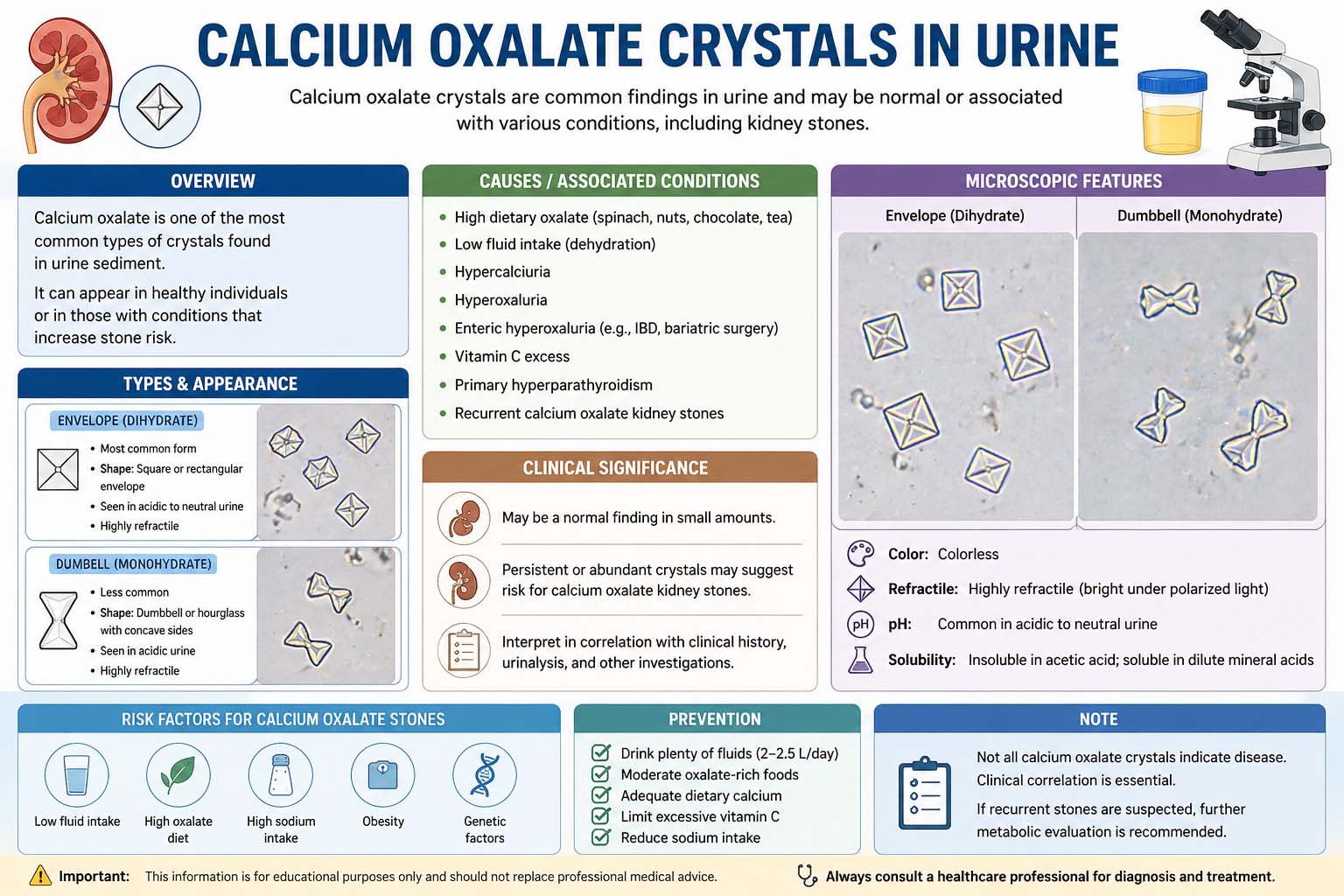
Finding calcium oxalate crystals in urine can be surprising when you first see it on a lab report. These tiny crystal formations are common in urine tests and may appear in healthy people or in those with certain health conditions. In many cases, they are harmless when present in small amounts, but frequent or large numbers of crystals may signal dehydration, dietary imbalance, kidney stone risk, or metabolic concerns.
Urine naturally contains many dissolved minerals and waste products. When the concentration of calcium and oxalate becomes too high, these substances can bind together and form crystals. These crystals are often identified during a routine urinalysis. Therefore, understanding why they appear and what steps to take can help you protect kidney and urinary health.
What Is Calcium Oxalate Crystals in Urine?
Many people ask, what is calcium oxalate crystals in and whether it should be a concern. Crystals are microscopic particles created when combines with oxalate in urine. Is a natural substance found in many foods such as spinach, nuts, beets, chocolate, and tea. The body also produces oxalate during normal metabolism.
When urine becomes concentrated, especially from low fluid intake, crystals can form more easily. Sometimes these crystals pass without symptoms. In other situations, they may contribute to kidney stone development. Calcium oxalate is one of the most common types of kidney stone material.
A single finding of crystals does not automatically mean disease. Instead, doctors usually consider hydration level, symptoms, medical history, and other urine test results before deciding if treatment is needed.
Common Causes of Calcium Oxalate Crystals in Urine
Dehydration is among the most common reasons. When you do not drink enough water, urine becomes concentrated, increasing the chance of crystal formation.
Diet can also play a role. For example, high intake of oxalate-rich foods may increase urinary oxalate levels. Excess sodium can cause more calcium to pass into urine, while very high animal protein intake may change urine chemistry.
Certain medical conditions such as inflammatory bowel disease, malabsorption disorders, obesity, diabetes, and hyperparathyroidism may raise the risk. Additionally, some supplements, especially excessive vitamin C, can increase oxalate production in the body.
Family history matters too. If kidney stones run in your family, you may be more likely to develop recurring crystals or stones.
Calcium Oxalate Crystals in Urine Treatment
If your test shows crystals, you may wonder about calcium oxalate crystals in urine treatment. Treatment depends on the cause, symptoms, and whether kidney stones are present.
The first step is usually increasing hydration. Drinking enough water helps dilute urine and lowers crystal concentration. Many healthcare providers recommend enough fluids to produce pale yellow urine throughout the day. For another hydration option, readers can explore the benefits of cucumber water.
Dietary changes may help. Reducing excess salt, limiting very high oxalate foods, and maintaining normal calcium intake are often recommended. Contrary to myth, extremely low calcium diets can sometimes worsen oxalate absorption.
Doctors may also advise reducing sugary beverages and balancing protein intake. If recurring stones are present, medications such as potassium citrate or thiazide diuretics may be prescribed depending on urine chemistry results.
Symptoms to Watch For
Many people with calcium oxalate crystals in have no symptoms at all. Crystals are often found incidentally during routine testing. However, symptoms can appear if stones develop or crystals irritate the urinary tract.
Common warning signs include burning during urination, frequent urination, lower abdominal discomfort, flank pain, blood in urine, nausea, or sudden severe pain radiating from the back to the groin. These symptoms may suggest a kidney stone or urinary problem needing prompt medical attention. People experiencing discomfort in that region may also want to understand possible causes of lower left abdomen pain.
Calcium Oxalate Crystals in Urine Dog
Pet owners sometimes search for calcium oxalate crystals in urine dog because dogs can develop urinary crystals too. In dogs, may be associated with concentrated urine, breed predisposition, urinary pH factors, obesity, or metabolic conditions.
Certain breeds such as Miniature Schnauzers, Shih Tzus, Lhasa Apsos, and Yorkshire Terriers may have higher risk. Dogs with urinary crystals may strain to urinate, pass blood, urinate frequently, or show discomfort.
Understanding Laboratory Ranges
People often ask about in urine normal ranger after reading a lab report. In general, occasional or few crystals may be seen in some healthy individuals, especially if the urine sample is concentrated. There is no single universal “normal range” because labs may report crystals as rare, few, moderate, or many rather than using a strict number.
A small amount may not be concerning if there are no symptoms and kidney function is normal. However, moderate or many crystals, especially on repeated tests, may require further evaluation. Your doctor may consider urine pH, specific gravity, calcium levels, stone history, and hydration status.
Prevention Tips for Long-Term Health
Preventing recurring calcium oxalate crystals in urine usually focuses on lifestyle habits. Drink water consistently during the day rather than only when thirsty. Additionally, eat a balanced diet rich in fruits and vegetables. Limit excessive sodium and processed foods. Pair moderate calcium intake with meals to help bind oxalate in the gut.
If you have repeated stones, your doctor may order a 24-hour urine collection to measure calcium, citrate, oxalate, sodium, and urine volume. As a result, this personalized approach often gives the best prevention plan.
When to See a Doctor
You should seek medical advice if crystals appear repeatedly, if you have pain, blood in urine, fever, vomiting, or a history of kidney stones. Recurrent findings may need imaging or metabolic testing.
During the evaluation, a healthcare professional may perform a head to toe assessment to check for pain, dehydration, swelling, and other relevant symptoms.
Conclusion
Calcium oxalate crystals in urine are common findings that may be harmless in small amounts but can also signal dehydration or increased kidney stone risk. Understanding what is in urine, reviewing calcium oxalate crystals in treatment, knowing concerns for calcium oxalate crystals in urine dog, and understanding the idea behind calcium oxalate crystals in urine normal ranger can help you respond wisely.