Hormones play a crucial role in nearly every function of the body, including metabolism, energy levels, mood, sleep, reproductive health, and weight management. When hormone levels become too high or too low, various symptoms can develop that affect daily life and overall well-being.
Many people wonder, when is the best time to test for hormone imbalance to get accurate results and identify potential health concerns. The answer depends on several factors, including age, sex, menstrual cycle timing, symptoms, and the specific hormones being tested.
This guide explains the ideal timing for hormone testing, common symptoms of hormonal imbalance, potential causes, and practical wellness strategies to support hormonal health.
What Is a Hormone Imbalance?
A hormone imbalance occurs when the body produces too much or too little of a particular hormone. Even small changes can affect important bodily functions.
Hormones are produced by glands in the endocrine system, including:
- Thyroid gland
- Pituitary gland
- Adrenal glands
- Ovaries
- Testes
- Pancreas
Because hormones regulate many systems simultaneously, imbalances can create a wide variety of symptoms.
Why Timing Matters for Hormone Testing
Hormone levels naturally fluctuate throughout the day, month, and even throughout different stages of life.
Factors that influence hormone levels include:
- Time of day
- Menstrual cycle phase
- Stress levels
- Sleep quality
- Exercise habits
- Medications
- Age
Testing at the appropriate time helps healthcare providers obtain more accurate information and avoid misleading results.
The Best Time to Test for Hormone Imbalance
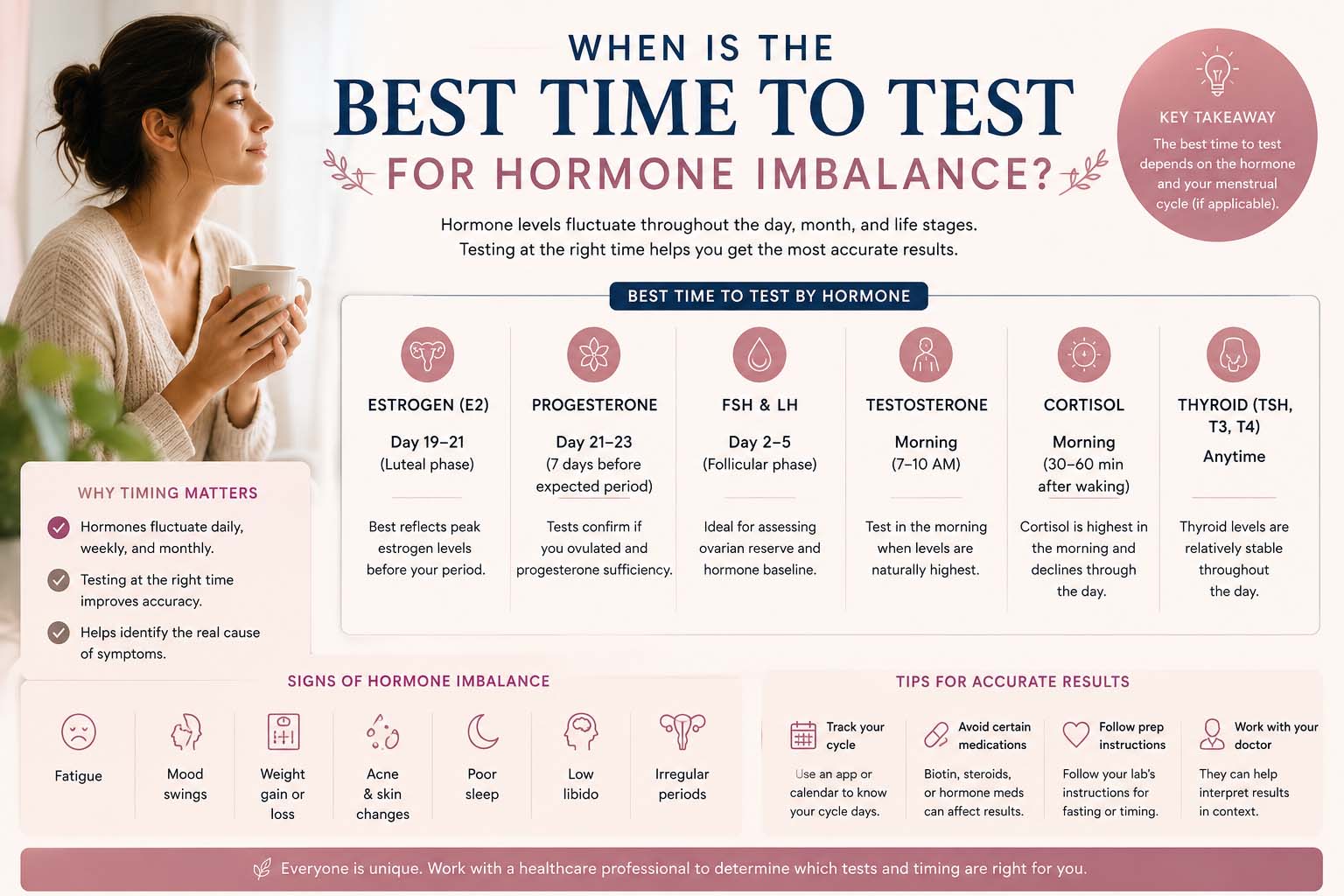
For many hormone panels, morning testing is often recommended, especially between 7 AM and 10 AM.
Morning testing is commonly preferred because:
- Cortisol levels are highest early in the day
- Testosterone levels peak in the morning
- Certain hormone reference ranges are based on morning samples
However, the ideal testing time varies depending on the hormone being evaluated.
Cortisol Testing
Cortisol follows a daily rhythm.
Best testing time:
- Early morning (usually before 10 AM)
Healthcare providers may also order additional afternoon or evening tests when evaluating adrenal function.
Testosterone Testing
For both men and women, testosterone levels are generally highest in the morning.
Best testing time:
- 7 AM to 10 AM
Morning testing helps ensure the most accurate measurement.
Thyroid Hormone Testing
Thyroid hormones tend to remain relatively stable throughout the day.
Best testing time:
- Morning testing is common
- Consistency matters more than exact timing
Testing at the same time for follow-up evaluations helps improve comparison accuracy.
Best Time for Women to Test Hormones
For women, menstrual cycle timing can significantly affect hormone levels.
Follicle-Stimulating Hormone (FSH)
Often tested:
Estrogen Testing
Typically measured:
- Early follicular phase
- Specific timing depends on medical goals
Progesterone Testing
Best measured:
- About 7 days after ovulation
- Often around Day 21 in a typical 28-day cycle
Proper cycle timing can provide a more accurate picture of reproductive hormone function.
Common Symptoms of Hormone Imbalance
Hormonal imbalances can affect men and women differently, but several symptoms are common.
Physical Symptoms
- Unexplained weight gain
- Difficulty losing weight
- Fatigue
- Hair thinning
- Acne
- Dry skin
- Muscle weakness
- Hot flashes
Emotional Symptoms
- Mood swings
- Anxiety
- Irritability
- Depression
- Difficulty concentrating
Sleep-Related Symptoms
- Insomnia
- Frequent nighttime waking
- Poor sleep quality
- Daytime exhaustion
Reproductive Symptoms
- Irregular periods
- Fertility challenges
- Low libido
- Erectile dysfunction
- Heavy menstrual bleeding
Common Causes of Hormone Imbalance
Hormonal disruptions can occur for many reasons.
Chronic Stress
Long-term stress can elevate cortisol levels and affect other hormone systems.
Poor Sleep
Inadequate sleep may interfere with:
- Cortisol regulation
- Growth hormone production
- Testosterone levels
- Appetite hormones
Thyroid Disorders
Conditions affecting the thyroid gland can significantly alter metabolism and energy levels.
Aging
Natural hormonal changes occur with age, including:
- Menopause
- Perimenopause
- Andropause
- Declining growth hormone levels
Certain Medical Conditions
Examples include:
- Polycystic ovary syndrome (PCOS)
- Diabetes
- Adrenal disorders
- Pituitary gland disorders
Benefits of Early Hormone Testing
Identifying hormonal issues early can provide several advantages.
Better Symptom Management
Testing can help uncover underlying causes of symptoms that might otherwise remain unexplained.
Personalized Treatment Plans
Accurate testing supports more targeted medical recommendations.
Improved Quality of Life
Addressing hormone imbalances may improve:
- Energy levels
- Mood
- Sleep quality
- Weight management
- Overall wellness
Monitoring Long-Term Health
Hormones influence cardiovascular health, bone density, metabolism, and reproductive function.
Exercise and Wellness Tips for Hormonal Health
Healthy lifestyle habits may support balanced hormone function.
Prioritize Sleep
Aim for
Consistent sleep schedules help regulate multiple hormone systems.
Exercise Regularly
Physical activity may support:
- Insulin sensitivity
- Stress management
- Healthy testosterone levels
- Weight control
Recommended activities include:
- Walking
- Strength training
- Cycling
- Swimming
- Yoga
Manage Stress
Stress reduction techniques may include:
- Meditation
- Deep breathing
- Journaling
- Nature walks
Eat a Balanced Diet
Focus on:
- Lean proteins
- Fruits
- Vegetables
- Healthy fats
- Whole grains
Balanced nutrition supports hormone production and regulation.
Maintain a Healthy Weight
Excess body fat can influence several hormones, including estrogen and insulin.
How Healthcare Providers Test Hormones
Several testing methods may be used.
Blood Tests
The most common option.
Can evaluate:
- Thyroid hormones
- Testosterone
- Estrogen
- Progesterone
- Cortisol
- Insulin
Saliva Tests
Sometimes used for specific hormone evaluations.
Urine Tests
May assess hormone metabolites over a 24-hour period.
Healthcare providers determine which testing method is most appropriate.
FAQ
When is the best time to test for hormone imbalance?
Morning testing is often recommended because many hormones follow daily rhythms and are most accurately measured early in the day.
Can hormone levels change throughout the day?
Yes. Hormones such as cortisol and testosterone naturally fluctuate during the day.
Should women test hormones during a specific part of the menstrual cycle?
Yes. Certain reproductive hormones are best tested during specific phases of the menstrual cycle.
What symptoms suggest a hormone imbalance?
Common symptoms include fatigue, weight changes, mood swings, irregular periods, sleep problems, and low libido.
Can stress affect hormone test results?
Yes. Stress may influence cortisol and other hormone levels.
Does exercise affect hormones?
Regular exercise can positively influence several hormones involved in metabolism, mood, and overall health.
Conclusion
Understanding when is the best time to test for hormone imbalance can help improve testing accuracy and provide valuable insights into overall health. While morning testing is commonly recommended for many hormones, the ideal timing often depends on the specific hormone being evaluated and individual factors such as menstrual cycle phase or medical history.
If you experience ongoing symptoms such as fatigue, mood changes, weight fluctuations, or sleep disturbances, consulting a healthcare professional about hormone testing may help identify potential underlying causes. Combined with healthy lifestyle habits, early evaluation can support better long-term wellness and quality of life.