If you’re wondering when is the best time to take a pregnancy test morning or night, you’re not alone. This is one of the most common questions among people trying to conceive or those concerned about a possible pregnancy.
While home pregnancy tests are generally very accurate, the timing of the test can affect the result, especially during the early days of pregnancy. Therefore, understanding how pregnancy tests work and when hormone levels are highest can help you get the most reliable answer.
In this guide, you’ll learn why morning testing is often recommended, whether nighttime testing can still work, and how to improve your chances of getting an accurate result.
How Do Pregnancy Tests Work?
Home pregnancy tests detect a hormone called human chorionic gonadotropin (hCG).
This hormone is produced after a fertilized egg implants into the uterus. Once implantation occurs, hCG levels begin rising and continue increasing during early pregnancy.
Pregnancy tests work by identifying hCG in urine. If enough of the hormone is present, the test may show a positive result.
The amount of hCG in your body depends on:
- How far along the pregnancy is
- Individual hormone production
- The sensitivity of the pregnancy test
- The concentration of urine
For this reason, timing can make a difference.
Additionally, people tracking fertility may find information about the best time to take ovulation test helpful.
When Is the Best Time to Take a Pregnancy Test Morning or Night?
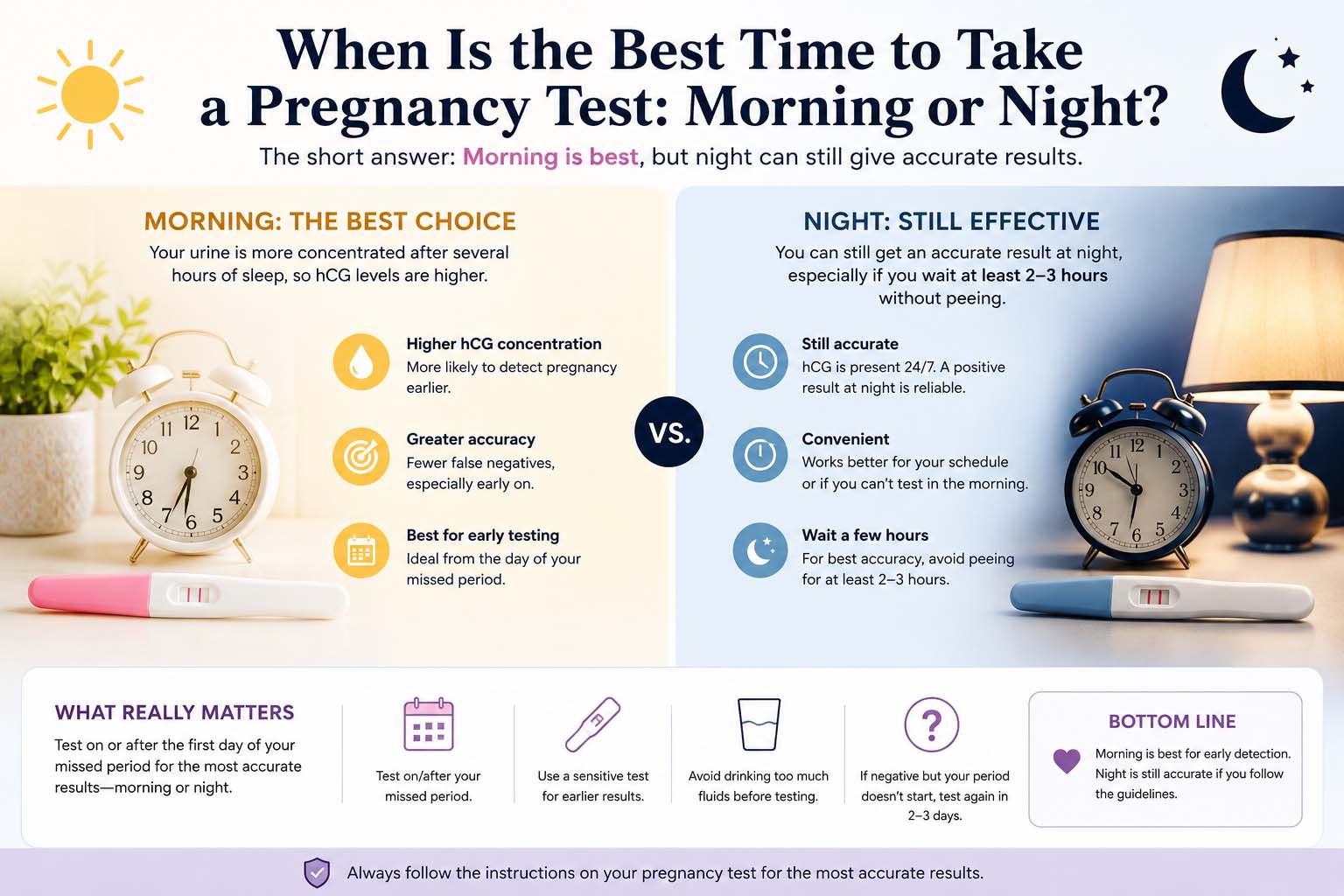
Most healthcare professionals recommend testing in the morning.
Why Morning Is Usually Best
Morning urine is often more concentrated because you have not urinated for several hours while sleeping.
As a result, a higher concentration of urine typically contains a stronger concentration of hCG.
Benefits of morning testing include:
- Better chance of detecting early pregnancy
- Reduced risk of false-negative results
- Higher hormone concentration
- Improved test accuracy during the first days after a missed period
Therefore, for people testing very early, first-morning urine is generally considered the most reliable option.
Can You Take a Pregnancy Test at Night?
Yes, you can take a pregnancy test at night.
Many modern pregnancy tests are sensitive enough to detect hCG throughout the day.
However, nighttime testing may be slightly less accurate if:
- You recently drank a large amount of fluids
- Your urine is diluted
- Your hCG levels are still very low
If you are several days past your missed period, a nighttime test may still provide accurate results.
Why Timing Matters
Pregnancy tests are designed to detect hCG, but very early in pregnancy the hormone may only be present in small amounts.
Testing too early can result in:
- False negatives
- Unclear lines
- Confusing results
Generally, waiting until after a missed period improves the chances of accurate detection.
In particular, the closer you are to your expected period date, the more important morning testing becomes.
Similarly, people with broader hormone-related concerns may find information about when is the best time to test for hormone imbalance useful when speaking with a healthcare professional.
When Should You Take a Pregnancy Test?
The ideal time to test depends on your cycle and symptoms.
Before a Missed Period
Some highly sensitive tests claim to detect pregnancy several days before a missed period.
However, testing this early may produce false-negative results because hCG levels may still be low.
On the Day of a Missed Period
Many experts recommend testing on the first day of a missed period.
At this point, hCG levels are often high enough for reliable detection.
One Week After a Missed Period
Testing one week after a missed period generally provides the highest level of accuracy.
Early Pregnancy Symptoms
Many people decide to take a pregnancy test because they notice symptoms.
Common early pregnancy symptoms may include:
Missed Period
A missed period is one of the earliest and most noticeable signs.
Breast Tenderness
Hormonal changes may cause breast sensitivity or soreness.
Fatigue
Increased progesterone levels can contribute to tiredness.
Nausea
Morning sickness may begin during the early weeks of pregnancy.
Additionally, information about when does morning sickness end may be useful for people experiencing pregnancy-related nausea.
Frequent Urination
Hormonal changes can increase the need to urinate more often.
Mood Changes
Fluctuating hormone levels may affect mood and emotions.
However, it’s important to remember that these symptoms can also have causes unrelated to pregnancy.
Factors That Affect Pregnancy Test Accuracy
Several factors can influence your results.
Testing Too Early
This is one of the most common causes of false-negative results.
Diluted Urine
Drinking excessive fluids before testing may reduce hCG concentration.
Incorrect Test Use
Always follow the instructions included with the test.
Expired Tests
Certain Medical Conditions
Rare medical conditions can affect hCG levels and test results.
Tips for Getting the Most Accurate Result
Use First-Morning Urine
If possible, test immediately after waking up.
Follow Instructions Carefully
Every pregnancy test is slightly different.
Therefore, read the instructions thoroughly before use.
Check Expiration Dates
Always verify that the test is within its usable date range.
Wait the Recommended Time
Reading the result too early or too late can lead to confusion.
Retest If Necessary
If the result is negative but your period still hasn’t started, consider testing again in a few days.
What If You Get a Negative Result?
A negative result does not always mean you are not pregnant.
Possible reasons include:
- Testing too early
- Low hCG levels
- Incorrect test usage
- Diluted urine
Therefore, if pregnancy remains possible, wait several days and test again.
If uncertainty continues, consult a healthcare professional for further evaluation.
What If You Get a Positive Result?
A positive result is usually highly accurate.
After receiving a positive result:
Schedule a Medical Appointment
A healthcare provider can confirm the pregnancy.
Begin Prenatal Care
Focus on Healthy Habits
Consider:
- Balanced nutrition
- Adequate hydration
- Quality sleep
- Prenatal vitamins if recommended
For example, learning about the benefits of d3 and k2 may help you prepare questions about nutrients for your healthcare provider.
Additionally, expectant parents may later find information about the best time to get epidural during labor useful when preparing for childbirth.
Wellness Tips While Waiting for Results
The waiting period can feel stressful.
Helpful wellness habits include:
Stay Hydrated
Proper hydration supports overall health.
Get Enough Rest
Manage Stress
Gentle relaxation techniques such as walking, meditation, or deep breathing may help.
Maintain Healthy Nutrition
Balanced meals support general wellness regardless of test results.
FAQ: When Is the Best Time to Take a Pregnancy Test Morning or Night?
Is Morning or Night Usually Better?
Morning is generally best because urine is more concentrated and may contain higher levels of hCG.
Can I Take a Pregnancy Test at Night?
Yes. Many tests can work at night, especially after a missed period, but morning testing is often more accurate.
How Soon Can a Pregnancy Test Detect Pregnancy?
Some tests can detect pregnancy several days before a missed period, though accuracy improves after the missed period.
Can Drinking Water Affect a Pregnancy Test?
Yes. Drinking large amounts of water may dilute urine and reduce hCG concentration.
Wait a few days and test again. If your period remains absent, consult a healthcare professional.
Conclusion
If you’re wondering when is the best time to take a pregnancy test morning or night, morning testing is usually the preferred choice. First-morning urine tends to contain the highest concentration of hCG, making it easier to detect an early pregnancy and reducing the risk of false-negative results.