
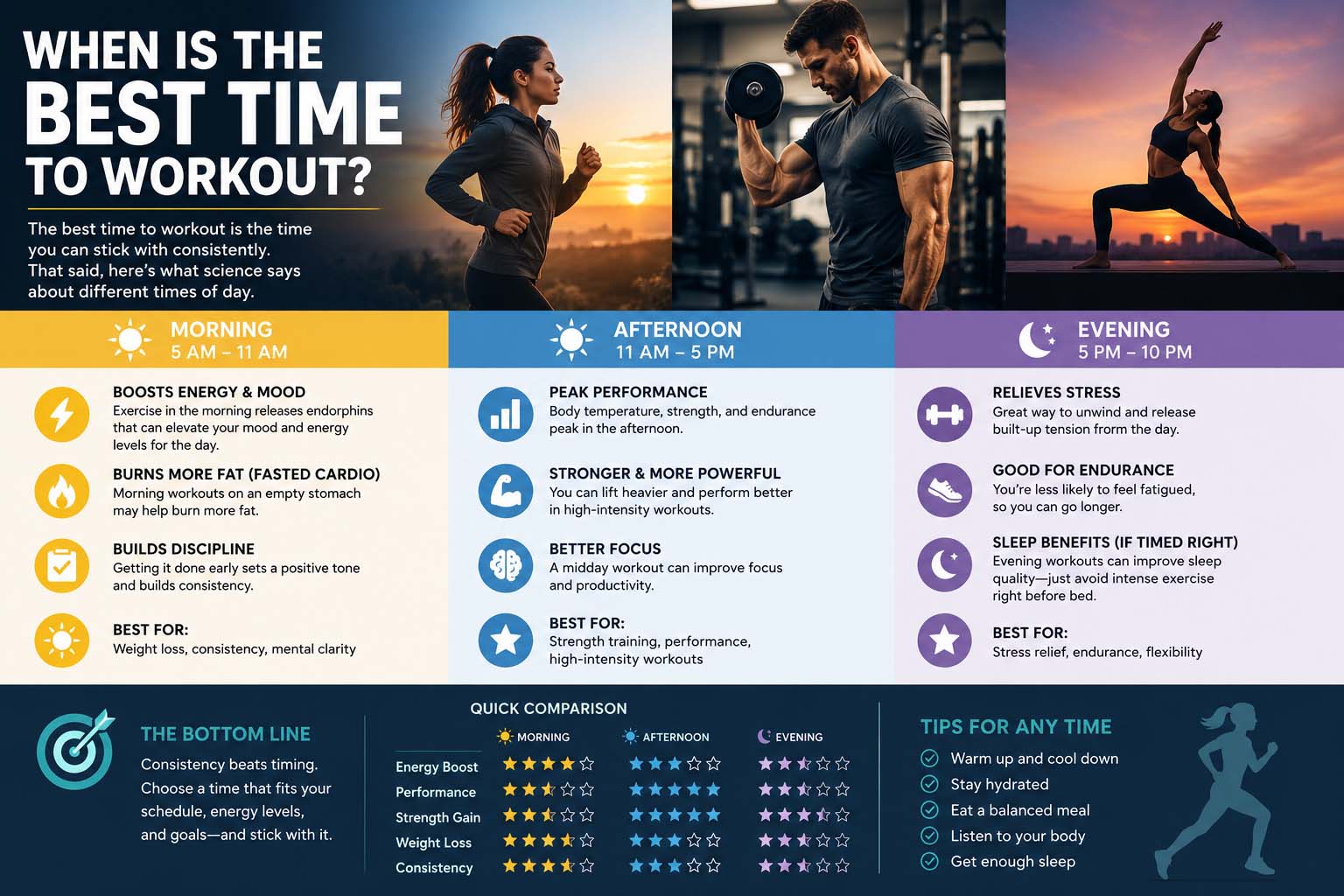
One of the most common fitness questions people ask is, when is the best time to workout? Whether your goal is losing weight, building muscle, improving endurance, or simply staying healthy, workout timing can influence your performance and consistency.
The truth is that there is no universal answer that works for everyone. The best workout time often depends on your lifestyle, fitness goals, energy levels, and daily schedule. While some people feel energized during early morning workouts, others perform better in the afternoon or evening.
Why Workout Timing Matters
Exercise affects your body in many ways. Your energy levels, hormone production, body temperature, and mental focus naturally change throughout the day.
These biological changes can influence:
- Strength performance
- Endurance capacity
- Fat burning efficiency
- Recovery speed
- Workout motivation
Understanding these factors can help you optimize your exercise routine and maintain consistency over the long term.
However, the most important factor remains finding a workout time that you can stick with regularly.
Benefits of Morning Workouts
Many fitness enthusiasts prefer exercising shortly after waking up.
Morning workouts offer several advantages.
Increased Consistency
Fewer distractions occur early in the day. By exercising before work, school, or family obligations, you’re less likely to skip your workout.
Improved Mental Focus
Physical activity stimulates blood flow and releases feel-good chemicals that can improve mood and concentration throughout the day.
Better Routine Building
Morning exercise often becomes a sustainable habit because it is completed before unexpected events interfere with your schedule.
Potential Fat-Burning Benefits
Some people choose fasted morning workouts as part of their weight-loss strategy, although total daily calorie balance remains the most important factor.
Benefits of Afternoon Workouts
For many individuals, the afternoon may provide the ideal balance between energy and performance.
During this period, body temperature tends to rise naturally, which may improve physical performance.
Improved Strength
Muscles are generally warmer and more flexible in the afternoon, potentially reducing injury risk.
Better Coordination
Reaction times and motor skills often peak during mid-afternoon hours.
Increased Energy
Many people experience higher energy levels after eating balanced meals earlier in the day.
Athletes often report strong workout performance during afternoon training sessions.
Benefits of Evening Workouts
Evening exercise remains a popular choice for people with busy schedules.
Stress Relief
A workout after work or school can help reduce stress and mental fatigue accumulated throughout the day.
Strong Performance Potential
Research suggests that strength, endurance, and flexibility may reach peak levels later in the day.
More Available Time
Many people find they can dedicate more time to training in the evening compared to rushed morning workouts.
However, extremely intense exercise close to bedtime may interfere with sleep for some individuals.
When Is the Best Time of Day to Workout?
A frequently searched question is when is the best time of day to workout.
The answer depends largely on personal preference and fitness goals.
Morning May Be Best If You:
- Prefer structured routines
- Want to exercise before daily responsibilities
- Feel energized early in the day
- Aim to build consistent habits
Afternoon May Be Best If You:
- Want peak physical performance
- Have flexible scheduling
- Enjoy training after meals
Evening May Be Best If You:
- Have busy mornings
- Use exercise to relieve stress
- Feel strongest later in the day
Ultimately, the best time is when you can consistently perform quality workouts.
When Is the Best Time to Workout to Lose Weight?
Many people specifically wonder when is the best time to workout to lose weight.
Weight loss occurs when you burn more calories than you consume over time.
Although workout timing may play a small role, consistency and nutrition have a much greater impact.
Morning workouts can support weight-loss efforts by:
- Establishing routine
- Increasing daily activity levels
- Encouraging healthier food choices
However, afternoon and evening workouts can be equally effective if they help you exercise consistently.
The best weight-loss strategy is choosing a workout time that fits your lifestyle and allows long-term adherence.
When Is the Best Time to Workout to Gain Muscle?
Another common question is when is the best time to workout to gain muscle.
Muscle growth depends primarily on:
- Progressive resistance training
- Adequate protein intake
- Recovery
- Sleep quality
Many strength athletes prefer afternoon or evening workouts because muscles are typically warmer and performance may be higher.
This can potentially lead to:
- Heavier lifting
- Better workout intensity
- Improved training volume
However, muscle growth can occur at any time of day when training and nutrition are optimized.
Consistency remains more important than the specific hour you train.
When Is the Best Time to Workout for Women?
Many women ask, when is the best time to workout for women.
The answer varies depending on individual schedules, hormone fluctuations, and personal preferences.
Some women enjoy morning workouts because they:
- Create a positive start to the day
- Improve productivity
- Reduce scheduling conflicts
Others prefer afternoon or evening workouts when they feel stronger and more energized.
Women should focus on:
- Consistency
- Proper recovery
- Balanced nutrition
- Adequate sleep
The ideal workout time is the one that supports long-term health and sustainable exercise habits.
Signs Your Current Workout Time May Not Be Ideal
Sometimes your body provides clues that your workout schedule needs adjustment.
Possible signs include:
Low Energy
If you consistently feel exhausted during workouts, another time of day may better match your natural energy levels.
Poor Performance
Repeated decreases in strength or endurance could indicate suboptimal timing.
Difficulty Sleeping
Late-night high-intensity exercise may affect sleep quality for some individuals.
Lack of Consistency
Frequently skipping workouts often suggests your chosen time does not fit your lifestyle.
Listening to your body can help you find a more effective routine.
Tips for Choosing the Best Workout Time
Finding the right workout schedule often requires experimentation.
Evaluate Your Energy Levels
Notice when you naturally feel most alert and active.
Consider Your Goals
Weight loss, muscle gain, athletic performance, and stress management may influence your preferred workout time.
Stay Consistent
Regular exercise matters more than perfect timing.
Prioritize Recovery
Ensure your workout schedule allows sufficient sleep and recovery.
Build a Sustainable Routine
Choose a time you can realistically maintain for months and years.
Long-term consistency delivers the greatest fitness results.
Frequently Asked Questions
When is the best time to workout?
The best time to workout is the time that fits your schedule, supports consistency, and allows quality exercise performance.
Is morning or evening exercise better?
Both can be effective. Morning workouts help build routine, while evening workouts may support stronger physical performance.
When is the best time to workout to lose weight?
Any time can support weight loss if combined with a calorie-controlled diet and consistent exercise routine.
Many people perform best during afternoon or evening strength sessions, but muscle growth can occur regardless of workout timing.
When is the best time of day to workout?
There is no single best time for everyone. Your ideal workout time depends on your goals, energy levels, and daily responsibilities.
Conclusion
If you’ve been wondering when is the best time to workout, the answer is surprisingly simple: the best workout time is the one you can maintain consistently. While morning workouts may improve routine building, afternoon sessions often support peak performance, and evening workouts can provide excellent stress relief and strength gains.