For many expectant parents, deciding whether and when to receive an epidural is an important part of birth planning. Epidurals are among the most common forms of pain relief used during labor and delivery, helping many individuals manage contractions more comfortably.
One of the most frequently asked questions is: what is the best time to get epidural during labor? While the answer varies depending on individual circumstances, labor progression, and medical recommendations, understanding the timing of an epidural can help families feel more prepared.
This guide explains how epidurals work, when they are commonly administered, potential benefits, considerations during induced labor, and helpful labor wellness tips.
What Is an Epidural?
An epidural is a form of regional anesthesia commonly used during labor.
It works by delivering medication into the epidural space around the spinal nerves, helping reduce pain sensations from the lower body.
Many laboring individuals choose an epidural because it may provide significant pain relief while allowing them to remain awake and alert during childbirth.
Epidurals are administered by trained anesthesia professionals in hospital settings.
How Labor Progresses
Understanding labor stages can help explain epidural timing.
Labor generally occurs in three stages:
Early Labor
During early labor:
- Contractions begin
- Cervical dilation starts
- Contractions may be irregular
Some individuals remain comfortable during this stage without medication.
Active Labor
Active labor often includes:
- Stronger contractions
- More frequent contractions
- Faster cervical dilation
Many people request pain relief during this stage.
Transition Phase
This is often the most intense part of labor before pushing begins.
Contractions become:
- Stronger
- Closer together
- More demanding physically and emotionally
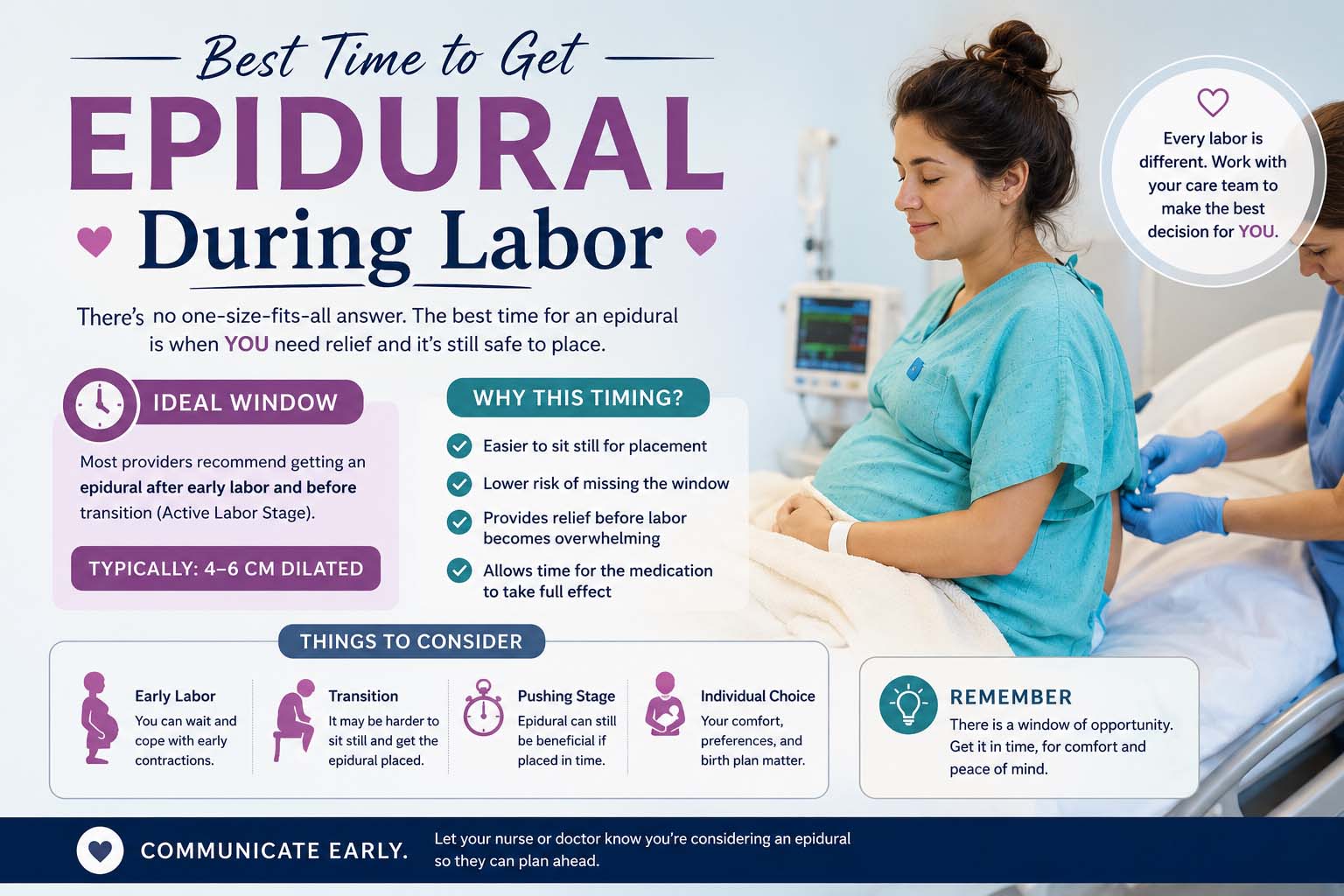
When Is the Best Time to Get Epidural During Labor?
Many people ask when is the best time to get epidural during labor because timing can influence comfort and labor experience.
Modern medical guidance generally focuses on individual needs rather than a strict cervical dilation requirement.
In many situations, an epidural can be requested whenever labor pain becomes difficult to manage and there are no medical reasons preventing its use.
Factors that influence timing include:
- Contraction intensity
- Labor progression
- Hospital policies
- Availability of anesthesia staff
- Personal comfort preferences
Discussing options with healthcare providers before labor begins can help create a flexible birth plan.
Best Time to Get an Epidural During Labor
The varies from person to person.
Some individuals prefer receiving pain relief earlier during active labor, while others wait until contractions become more intense.
Common reasons people choose an epidural include:
- Significant discomfort
- Exhaustion
- Long labor duration
- Need for rest before delivery
Healthcare teams typically evaluate labor progress and overall maternal health before administering the epidural.
Signs Labor May Be Becoming More Intense
Although every labor experience is unique, many individuals consider pain management when:
- Contractions become very frequent
- Speaking during contractions becomes difficult
- Rest becomes challenging
- Physical fatigue increases
Pain tolerance differs from person to person, so timing decisions should be individualized.
Best Time to Get Epidural During Induced Labor
Another common topic is the best time to get epidural during induced labor.
Labor induction uses medical techniques to help stimulate labor when recommended by healthcare providers.
Induced labor may sometimes lead to:
- Stronger contractions
- Faster contraction patterns
- Increased discomfort for some individuals
Because labor experiences vary, some individuals choose epidural pain relief earlier during induced labor compared to spontaneous labor.
Healthcare providers can help determine appropriate timing based on labor progression and individual circumstances.
Benefits of Epidural Pain Relief
Many individuals choose epidurals because of the potential benefits.
Significant Pain Relief
Epidurals are highly effective at reducing labor pain for many people.
Increased Comfort
Pain reduction may help laboring individuals feel more comfortable during long deliveries.
Improved Rest
Some individuals are able to relax or rest more effectively after receiving an epidural.
Flexibility During Labor
Epidurals can often be adjusted to maintain pain relief throughout labor.
Common Questions About Epidural Timing
Many expectant parents spend time researching experiences online.
Searches such as best time to get epidural during labor reddit often reflect a desire to hear personal experiences from other parents.
While personal stories can be helpful, medical decisions should always be discussed with qualified healthcare providers who understand the individual’s medical history and labor progress.
Every labor experience is unique.
Wellness Tips Before Labor
Attend Childbirth Classes
Prenatal education classes help parents understand labor stages and pain management options.
Discuss Birth Preferences Early
Talking with healthcare providers before labor begins can reduce uncertainty.
Stay Physically Active During Pregnancy
When approved by a healthcare provider, regular activity may support overall wellness.
Examples include:
- Walking
- Prenatal yoga
- Stretching
- Swimming
Practice Relaxation Techniques
Breathing exercises and relaxation strategies may help manage labor stress.
Common Concerns About Epidurals
Fear of Waiting Too Long
Some individuals worry they may wait too long to request pain relief.
Discussing preferences early with healthcare providers can help reduce anxiety.
Fear of Getting an Epidural Too Early
Modern labor management focuses on individual needs rather than rigid timing rules.
Healthcare teams help determine what is appropriate for each situation.
Uncertainty About Labor Progress
Labor often progresses differently than expected.
Flexibility is important when creating birth plans.
What to Discuss With Your Healthcare Provider
Important topics include:
- Epidural availability
- Personal medical history
- Labor preferences
- Alternative pain management options
- Potential benefits and risks
These conversations help individuals make informed decisions before labor begins.
FAQ About the Best Time to Get Epidural During Labor
What is the best time to get epidural during labor?
The best time varies based on labor progression, pain levels, and medical recommendations. Many individuals request an epidural during active labor.
When is the best time to get epidural during labor?
There is no single universal answer. Timing depends on individual comfort and healthcare guidance.
Can you get an epidural during induced labor?
Yes. Epidurals are commonly used during induced labor when appropriate.
Does everyone choose an epidural?
No. Pain management preferences vary, and some individuals choose other methods.
Can I discuss epidural options before labor?
Yes. Prenatal appointments are an excellent time to discuss pain relief preferences.
Is labor pain the same for everyone?
No. Labor experiences differ greatly between individuals and pregnancies.
Conclusion
Understanding the best time to get epidural during labor can help expectant parents feel more prepared and confident about childbirth. While there is no universal timing that works for everyone, many individuals choose epidural pain relief during active labor when contractions become more intense.
The best approach is to discuss options with healthcare providers before labor begins, remain flexible, and focus on personal comfort and safety. Whether labor begins naturally or through induction, informed decision-making and open communication with the medical team can help create a positive birth experience.
By learning about labor stages, pain management options, and wellness strategies ahead of time, parents can approach delivery with greater confidence and peace of mind.