
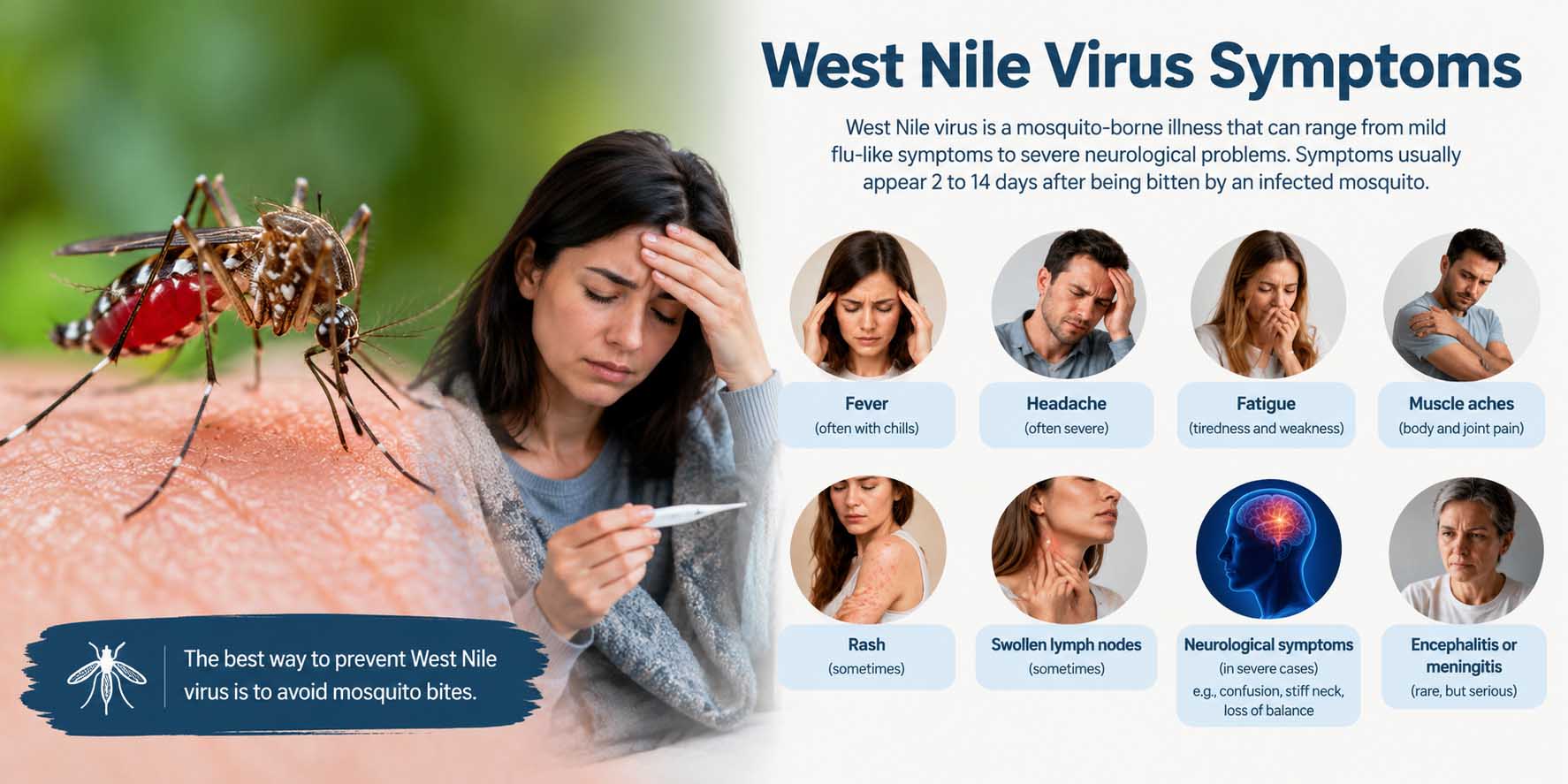
Here is something that surprises many people: most people who catch West Nile virus never feel sick at all. Still, a smaller group develops fever and body aches, and a few become seriously ill. So, knowing the common west nile virus symptoms, and especially the warning signs, can help you act fast when it matters.
In this guide, you will learn what the illness looks like, how long it lasts, who faces higher risk and how to protect yourself. However, this article is for general education only, so always contact a healthcare professional if you feel unwell.
What Are the Symptoms of West Nile Virus?
West Nile virus spreads mainly through mosquito bites. Once it enters the body, it can cause anything from no illness at all to a serious brain infection. According to the CDC, the infection falls into three broad groups.
No Symptoms at All
About 8 out of 10 infected people never notice anything. In other words, many people have had West Nile without ever knowing it. Even so, they can still build some immunity afterward.
Mild West Nile Virus Symptoms (West Nile Fever)
Roughly 1 in 5 people develop a flu-like illness, often called West Nile fever. In this case, common symptoms of West Nile virus include:
- Fever, often coming on fairly suddenly.
- Headache, which can feel dull or pounding.
- Body aches and joint pain.
- Tiredness and weakness.
- Nausea, vomiting or diarrhea.
- A skin rash, usually on the chest, stomach or back.
Generally, these signs ease within a few days to a week. However, tiredness and weakness can linger for weeks or even months. Meanwhile, if headache is the main complaint, simple steps like rest, fluids and a dark, quiet room may help, and our guide on how to get rid of a headache shares more gentle options.
Severe West Nile Virus Symptoms
About 1 in 150 infected people develop a serious illness that affects the brain or spinal cord. For example, this can lead to encephalitis (swelling of the brain) or meningitis (swelling of the tissues around the brain and spinal cord).
In these cases, warning signs may include:
- High fever and severe headache.
- Stiff neck.
- Confusion, disorientation or unusual sleepiness.
- Tremors or seizures.
- Muscle weakness, numbness or sudden paralysis.
- Vision problems.
- Loss of consciousness or coma.
Because severe illness can be life-threatening, these signs need emergency care right away. Also, recovery from severe disease can take months, and some people have lasting effects.
West Nile Virus Symptoms Timeline
So, how soon do signs appear after a bite? Usually, symptoms start about 2 to 14 days after infection. Here is a simple timeline:
- Days 0–14: First, the virus incubates, and you feel normal.
- First week of illness: Then, fever, aches and headache often peak.
- Weeks to months after: Finally, fatigue and weakness may slowly fade, although timing varies.
In severe cases, however, symptoms can worsen quickly over a day or two. Therefore, watch closely for confusion, neck stiffness or weakness.
How West Nile Spreads
Most people catch West Nile from the bite of an infected mosquito, usually a Culex species. These mosquitoes pick up the virus by feeding on infected birds. Then, they pass it to people and animals when they bite.
In rare cases, the virus can also spread through blood transfusions, organ transplants or from mother to baby. However, it does not spread through casual contact like hugging, kissing or sharing a room.
Also, in many parts of the United States, cases tend to rise from summer into early fall, when mosquitoes are most active. Still, West Nile occurs in many regions around the world, as the World Health Organization explains.
Who Faces Higher Risk?
Anyone can get West Nile virus. However, some people have a higher chance of severe illness, including:
- Adults over 60.
- People with cancer, diabetes, high blood pressure or kidney disease.
- Organ transplant recipients.
- Anyone with a weakened immune system.
Also, people who spend a lot of time outdoors, especially at dawn and dusk, may face more mosquito exposure.
When to Get Medical Help for West Nile Virus Symptoms
If you have a fever and body aches after mosquito bites, call your doctor, particularly if you are in a higher-risk group. That way, they can decide whether testing or monitoring makes sense.
On the other hand, go to an emergency room or call emergency services right away if you notice:
- Severe headache with a stiff neck.
- Confusion, unusual drowsiness or trouble staying awake.
- Seizures.
- Sudden weakness, numbness or trouble moving limbs.
- Vision changes.
How Doctors Diagnose It
Since West Nile fever looks a lot like flu or other viral infections, doctors usually rely on lab tests. First, they ask about symptoms, travel and mosquito exposure. Then, they may test your blood for antibodies to the virus.
If brain or spinal cord infection is possible, a doctor may also test spinal fluid through a lumbar puncture. Meanwhile, brain scans such as MRI can help rule out other problems.
Treatment and Recovery
Right now, there is no specific antiviral medicine for West Nile virus, and no vaccine is approved for people. Instead, treatment focuses on easing symptoms and supporting the body while it fights the infection.
Home Care for Mild Illness
For mild cases, doctors usually suggest:
- Plenty of rest, because fatigue is very common.
- Fluids to prevent dehydration, especially with fever or vomiting.
- Over-the-counter fever and pain relievers, as long as your doctor or pharmacist says they are safe for you.
Still, contact a doctor if you are not improving or new symptoms appear.
Hospital Care for Severe Illness
Severe cases usually need hospital care. For example, patients may receive IV fluids, pain control, breathing support and close monitoring. Later, physical or occupational therapy may help people regain strength and function.
Conditions That Can Look Similar
Many illnesses cause fever, headache and aches, so it is easy to confuse them. For instance, flu, COVID-19, other mosquito-borne viruses and bacterial meningitis can all look similar at first.
Some people with fever also notice eye discomfort. However, pain behind eye has many possible causes, from sinus trouble to migraines, so it does not point to West Nile on its own.
Similarly, confusion, stiff neck and high fever can come from several types of brain infections. For example, our guide to ear infection spread to brain symptoms explains another rare but serious cause of similar signs. That is why medical testing matters, since only a doctor can tell these apart.
Simple Ways to Prevent Mosquito Bites
Since there is no human vaccine, preventing bites is your best protection. Here are practical steps:
- First, use insect repellent. Choose an EPA-registered product with ingredients such as DEET, picaridin, IR3535 or oil of lemon eucalyptus. The EPA repellent finder can help you pick one.
- Next, cover up. Wear long sleeves and long pants, especially at dawn and dusk.
- Then, fix screens. Repair holes in window and door screens.
- Also, remove standing water. Empty buckets, birdbaths, plant saucers and gutters regularly, since mosquitoes breed there.
- Finally, follow local alerts. Health departments often share warnings when West Nile activity rises.
Common Myths About West Nile Virus
- Myth: Every infection is serious. In fact, most people have no symptoms at all.
- Myth: You can catch it from someone who is sick. However, it does not spread through casual contact.
- Myth: Antibiotics can treat it. Actually, antibiotics do not work against viruses.
- Myth: It only happens in hot climates. On the contrary, it occurs in many regions wherever infected mosquitoes live.
Frequently Asked Questions
Are West Nile virus symptoms in humans different from those in animals?
Partly, yes. Horses and birds can also get sick, and horses may show weakness or stumbling. Still, people mostly experience fever, aches and, rarely, brain-related symptoms.
Can you get West Nile virus twice?
Generally, people are thought to develop lasting immunity after infection. However, researchers are still studying how long that protection lasts.
Is West Nile virus contagious?
No, it does not spread from person to person through everyday contact. Instead, mosquito bites cause almost all cases.
How long does fatigue last after West Nile fever?
For some people, it fades within a few weeks. For others, though, tiredness can linger for months, so pace yourself and talk to your doctor if it does not improve.
Key Points on West Nile Virus Symptoms
To sum up, most infections cause no symptoms, while some lead to fever, headache, aches and rash. Rarely, though, the virus attacks the brain or spinal cord, which needs emergency care.
So, protect yourself with repellent, clothing and by clearing standing water during mosquito season. Above all, if you notice a stiff neck, confusion or sudden weakness after mosquito bites, get medical help right away.