
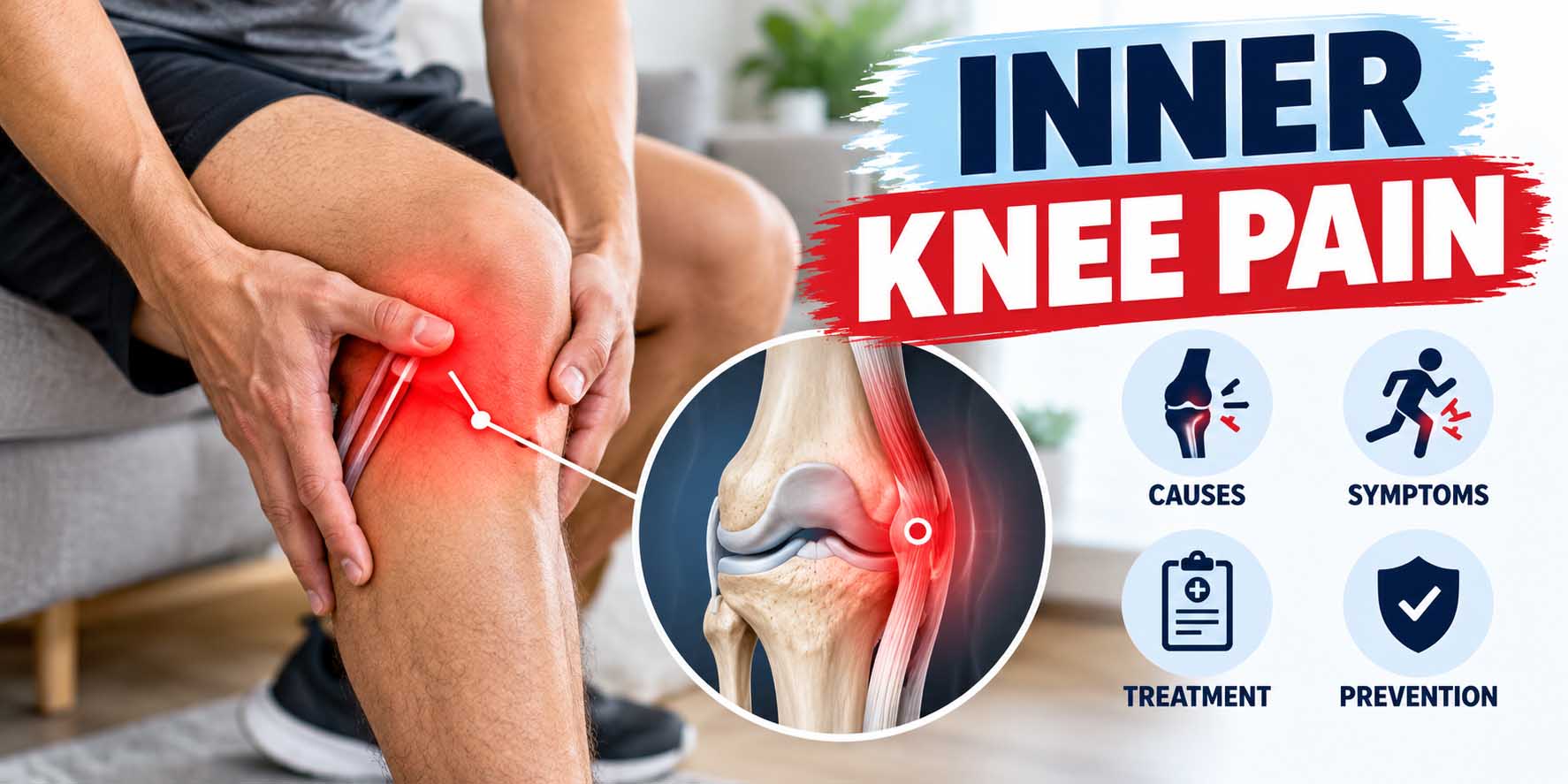
Have you noticed discomfort along the inside of your knee when walking, bending, or climbing stairs? Inner knee pain is a common problem that can affect athletes, active adults, and people who spend long hours standing or walking.
Sometimes, the discomfort develops after a sudden twist or sports injury. However, it can also appear gradually because of overuse, joint inflammation, or age-related changes.
The inner part of your knee contains ligaments, cartilage, tendons, and other structures that help support movement. When one of these structures becomes irritated or injured, even simple activities may become uncomfortable.
Fortunately, many causes respond to appropriate rest, rehabilitation, and activity adjustments. However, persistent swelling, instability, or severe pain may require medical attention.
This guide explains the possible causes, symptoms, treatments, and practical ways to protect your knees.
What Is Inner Knee Pain?
Inner knee pain refers to discomfort along the medial, or inside, portion of the knee joint.
The medial side contains several structures that help stabilize the knee and distribute body weight.
These include:
- Medial collateral ligament (MCL)
- Medial meniscus
- Inner knee joint cartilage
- Pes anserine tendons and bursa
- Surrounding muscles and connective tissues
Because these structures sit close together, identifying the exact cause based only on pain location can be difficult.
For example, pain along the joint line may suggest a meniscus or cartilage problem, while tenderness slightly below the joint may involve the pes anserine region.
However, a physical examination is often necessary to distinguish between these conditions.
Common Symptoms of Pain on the Inside of the Knee
Symptoms vary depending on the underlying cause and severity.
Some people experience a mild ache, while others notice sharp pain during specific movements.
Common symptoms include:
- Tenderness along the inside of the knee
- Pain while walking or climbing stairs
- Swelling around the joint
- Stiffness after sitting
- Discomfort during squatting
- Clicking or catching sensations
- Difficulty fully bending or straightening the knee
- A feeling that the knee may give way
However, not every symptom indicates a serious injury.
Inner Knee Pain When Bending
People experiencing discomfort when bending may notice symptoms during squats, kneeling, or getting out of a chair.
For example, meniscus injuries and arthritis can make deep knee bending uncomfortable.
However, tendon irritation and other conditions may produce similar symptoms.
Pain During Walking
Walking repeatedly loads the knee joint.
Consequently, inflammation, cartilage changes, or ligament injuries may cause discomfort with each step.
If the knee becomes increasingly painful or unstable, reduce activity and seek medical advice.
What Causes Inner Knee Pain?
Several conditions can produce discomfort along the medial side of the knee. Understanding their typical symptoms can help you recognize possible causes.
1. Medial Collateral Ligament Injury
The medial collateral ligament supports the inner side of your knee.
An MCL injury often occurs when force pushes the knee inward, such as during a sports collision or awkward movement.
Symptoms may include tenderness, swelling, and discomfort when changing direction.
Mild injuries may heal with conservative treatment. However, more severe tears require professional assessment and structured rehabilitation.
The American Academy of Orthopaedic Surgeons’ guide to collateral ligament injuries explains how these ligaments stabilize the knee and how clinicians assess and treat injuries.
2. Medial Meniscus Tear
The medial meniscus is a C-shaped piece of cartilage that cushions the inner knee joint.
A sudden twisting movement can damage it, particularly when the foot remains planted.
Meanwhile, age-related cartilage changes may lead to degenerative tears without a major injury.
Common torn meniscus symptoms include joint-line tenderness, swelling, catching, and difficulty fully straightening the knee.
However, clicking alone does not confirm a meniscus tear.
3. Knee Osteoarthritis
Osteoarthritis develops when joint tissues gradually change and cartilage becomes damaged.
Although it can affect different knee compartments, the inner compartment is commonly involved.
Symptoms often include aching, stiffness, swelling, and discomfort during weight-bearing activities.
While osteoarthritis becomes more common with age, previous injuries and other factors can increase the risk.
4. Pes Anserine Bursitis
The pes anserine bursa is a small fluid-filled structure located on the inner side of the shinbone, just below the knee.
When this region becomes irritated, people may experience tenderness and pain during stair climbing or exercise.
However, discomfort in this location may also involve nearby tendons rather than the bursa itself.
5. Tendon Irritation and Overuse
Repeated movements can overload the muscles and tendons surrounding the knee.
For example, suddenly increasing running distance or training intensity may trigger discomfort.
Consequently, symptoms often become more noticeable during exercise and improve when activity is reduced.
Inner Knee Pain Location Chart: What the Area May Indicate
The exact location of discomfort can provide useful clues. However, location alone cannot establish a diagnosis.
| Pain Location | Possible Causes | Common Clues |
|---|---|---|
| Directly along inner joint line | Meniscus injury, osteoarthritis | Tenderness, stiffness, catching |
| Along inner ligament | MCL injury | Pain after twisting or sideways force |
| Slightly below inner knee | Pes anserine irritation | Tenderness during stairs or exercise |
| Inner knee with swelling | Injury, arthritis, inflammation | Reduced movement, joint discomfort |
| Inner knee extending backward | Meniscus or other joint problems | Pain during bending or straightening |
An inner knee pain location chart can help describe symptoms more clearly during a medical appointment.
Nevertheless, several conditions overlap, so additional examination may be needed.
Inner Knee Pain From Running
Running places repeated forces through the knees, particularly when training volume increases quickly.
As a result, runners may develop discomfort from overuse, muscle weakness, or changes in training habits.
Common contributing factors include:
- Increasing mileage too quickly
- Running through existing discomfort
- Inadequate recovery between sessions
- Sudden changes in terrain
- Reduced hip or leg strength
- Previous knee injuries
Runners experiencing pain along the inside of the knee often want to know whether they should continue training.
However, the answer depends on the cause and severity.
If running causes sharp pain, swelling, limping, or instability, stop and seek appropriate assessment.
For mild overuse discomfort, temporary activity modification and gradual rehabilitation may help.
How to Relieve Inner Knee Pain at Home
Mild symptoms without significant injury may respond to simple self-care.
However, home treatment should not replace medical evaluation when serious symptoms develop.
Reduce Aggravating Activities
First, temporarily avoid movements that worsen discomfort.
For example, reduce deep squats, running, jumping, or repeated stair climbing if these activities trigger pain.
However, complete inactivity is not always necessary.
Gentle movement within a comfortable range may help maintain mobility.
Apply Ice for Recent Injuries
Cold therapy may reduce discomfort and swelling after an injury.
Wrap an ice pack in a towel and apply it for approximately 15–20 minutes at a time.
Avoid placing ice directly against your skin.
Consider Compression and Elevation
A comfortable elastic bandage or knee sleeve may help manage mild swelling.
However, compression should not cause numbness, tingling, or increased pain.
Likewise, elevating the leg may help reduce swelling after activity.
Use Pain Medication Carefully
Over-the-counter pain relievers may provide temporary relief.
However, anti-inflammatory medicines aren’t suitable for everyone, particularly people with certain kidney, stomach, heart, or medication-related risks.
Therefore, consult a pharmacist or healthcare professional before using them if you have concerns.
Exercises That May Support Knee Recovery
Once serious injury has been excluded, gentle strengthening and mobility exercises may support recovery.
However, the best exercises depend on the diagnosis.
Quadriceps Strengthening
Strong quadriceps help support knee movement.
For example, gentle quadriceps contractions or straight-leg raises may be appropriate during some rehabilitation programs.
However, stop if an exercise causes sharp pain.
Hip Strengthening
Hip muscles help control leg alignment during walking and running.
Consequently, strengthening these muscles may improve movement patterns and reduce unnecessary knee loading.
Exercises may include side-lying leg raises or other movements recommended by a physical therapist.
Gentle Range-of-Motion Exercises
Comfortable knee bending and straightening can help maintain flexibility.
However, avoid forcing the joint through painful movements, especially after a recent injury.
How Doctors Diagnose Medial Knee Pain
A healthcare professional usually begins by asking when symptoms started and whether an injury occurred.
They may also ask about swelling, locking, instability, and previous knee problems.
Physical Examination
During the examination, the clinician may assess:
- Knee swelling and tenderness
- Joint movement
- Ligament stability
- Meniscus-related symptoms
- Walking patterns
- Muscle strength
These findings help determine whether further testing is necessary.
Imaging Tests
X-rays can help identify fractures and changes associated with osteoarthritis.
However, they do not directly show meniscus or ligament tears.
An MRI may be recommended when significant soft-tissue injury is suspected or when results would affect treatment decisions.
Medical Treatments for Persistent Knee Discomfort
Treatment varies depending on the diagnosis.
For example, an MCL injury may require temporary bracing and rehabilitation.
Meanwhile, osteoarthritis often responds to a combination of exercise therapy, weight management when appropriate, and symptom-focused treatment.
Physical therapy may help restore strength, mobility, and confidence during movement.
However, surgery is not necessary for every meniscus injury.
In selected cases, an orthopedic specialist may recommend surgery for significant mechanical symptoms, certain repairable tears, or injuries that fail appropriate conservative treatment.
Can Inner Knee Pain Spread Behind the Knee?
Sometimes, discomfort affects more than one area.
For example, meniscus injuries and other joint conditions may produce symptoms along the inner and posterior knee.
However, pain behind knee can also involve a Baker’s cyst, tendon problems, or other conditions.
Similarly, back of knee pain accompanied by swelling may require evaluation to identify its cause.
Sudden calf swelling, warmth, redness, or tenderness can sometimes indicate a blood clot. Seek urgent medical assessment, particularly if symptoms occur without a clear injury.
If you also develop chest pain or shortness of breath, seek emergency care.
How Long Does Knee Pain Take to Heal?
Recovery depends on the underlying condition and severity.
Mild overuse-related discomfort may improve within days or weeks after reducing aggravating activities.
Meanwhile, mild MCL sprains often recover over several weeks, while more severe injuries may require months.
Meniscus injuries vary considerably, depending on the tear type, symptoms, and treatment.
Osteoarthritis is a long-term condition, although symptoms can often be managed effectively.
Therefore, avoid using a fixed recovery timeline without considering the diagnosis.
When Should You See a Doctor?
Seek prompt medical attention if you experience:
- Severe pain after an injury
- Inability to bear weight
- Significant swelling
- Visible knee deformity
- A knee that locks and cannot straighten
- Repeated giving way or instability
- Fever with a hot, swollen joint
Also, arrange a medical appointment if discomfort persists, repeatedly returns, or interferes with daily activities.
Early assessment may help prevent unnecessary delays in treatment.
Frequently Asked Questions
Why Does the Inside of My Knee Hurt Without an Injury?
Gradual discomfort may result from osteoarthritis, tendon irritation, overuse, or degenerative meniscus changes. However, a medical examination may be needed to identify the cause.
Is Walking Good for Inner Knee Pain?
Gentle walking may be helpful for some conditions, especially when symptoms remain mild. However, stop or reduce walking if pain increases, swelling develops, or you begin limping.
Can Inner Knee Pain Heal Without Surgery?
Yes. Many cases improve with activity modification, physical therapy, and other conservative treatments. However, treatment depends on the specific injury or condition.
Should I Wear a Knee Brace?
A brace may help certain ligament injuries or provide temporary support. However, the correct type depends on the diagnosis, so professional guidance is useful.
Can Being Overweight Contribute to Knee Pain?
Higher body weight can increase the load placed on knee joints during everyday activities. For some people, gradual weight management may help reduce osteoarthritis-related symptoms.
Protect Your Knees and Stay Active
Inner knee pain can interfere with walking, exercise, and daily movement, but many causes respond well to appropriate care.
Start by reducing activities that aggravate symptoms, maintaining comfortable movement, and choosing exercises that match your condition.
As discomfort improves, gradually return to normal activity rather than increasing intensity too quickly.
However, if pain persists, swelling develops, or your knee feels unstable, consult a qualified healthcare professional.
Understanding the cause is the best way to choose suitable treatment and protect your long-term knee health.