
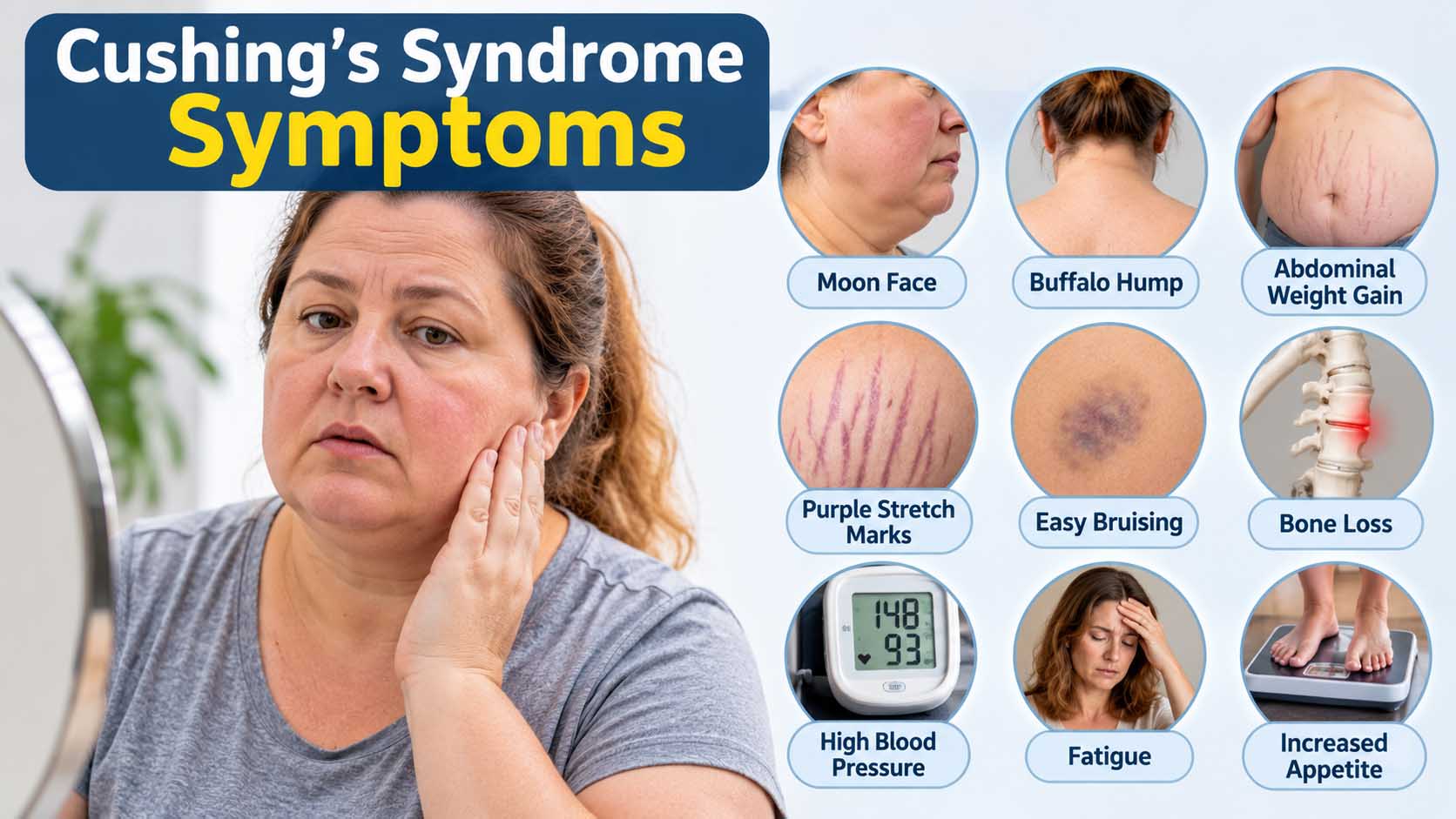
Maybe you’ve gained weight around your middle that just won’t budge, your face looks rounder in photos and you’ve noticed new purple stretch marks. Naturally, you might start wondering what’s going on. While many conditions cause changes like these, they can also be cushing’s syndrome symptoms. In short, Cushing’s syndrome happens when your body is exposed to too much of the hormone cortisol for a long time.
In this guide, you’ll learn the common signs, what causes them, how doctors test for the condition and when to get help. However, only a healthcare professional can diagnose it, so use this as a starting point for that conversation.
Cushing’s Syndrome Symptoms at a Glance
Because signs vary from person to person, here’s a quick overview:
| Body Area | Possible Signs |
|---|---|
| Body shape | Weight gain in the belly and upper body, thin arms and legs |
| Face and neck | Round “moon” face, fat pad between the shoulders |
| Skin | Purple or pink stretch marks, easy bruising, thin skin, slow healing |
| Muscles and bones | Muscle weakness, bone loss |
| Mood and energy | Fatigue, depression, anxiety, irritability |
| Metabolism | High blood pressure, high blood sugar |
What Is Cushing’s Syndrome?
Basically, cortisol is a hormone your adrenal glands make. Normally, it helps your body handle stress, control blood sugar and manage inflammation. However, when levels stay too high for too long, cortisol starts causing problems throughout the body.
According to the National Institute of Diabetes and Digestive and Kidney Diseases (NIDDK), the condition most often affects adults aged 30 to 50, although it can also occur in children.
An Exhaustive List of Cushing’s Syndrome Symptoms
Not everyone gets every sign. In fact, people with mild cases may notice only a few. Still, these are the changes doctors look for most often.
Changes in Body Shape
- Weight gain around the belly, chest and upper back, while arms and legs stay thin
- A rounder face, sometimes called a “moon face”
- A fatty hump between the shoulders or extra fat above the collarbones
Since weight changes can happen slowly, tracking them helps. For example, our guide on the best time to weigh yourself explains how to get consistent readings you can share with your doctor.
Skin Changes
- Wide purple or pink stretch marks, especially on the belly, thighs, breasts and arms
- Thin, fragile skin that bruises easily
- Cuts and infections that heal slowly
- Acne, even in adults who never had it before
Mood, Energy and Other Signs
- Muscle weakness, especially in the hips and shoulders, so climbing stairs may feel harder
- Bone loss, which can raise fracture risk
- Fatigue and trouble sleeping
- Mood changes, such as depression, anxiety or irritability
- Trouble focusing or memory problems
- High blood pressure and high blood sugar
Cushing’s Syndrome Symptoms in Women
Interestingly, the NIDDK reports that this condition affects about three times as many women as men. Also, women may notice a few extra changes:
- Extra hair on the face, neck, chest, belly or thighs
- Irregular periods, or periods that stop completely
- Fertility problems
Of course, period changes have many possible causes. For example, if you’re also dealing with hot flashes or vaginal dryness, our guide to low estrogen symptoms can help you compare signs before talking with your doctor.
Cushing’s Syndrome Symptoms in Men and Children
Meanwhile, men may notice:
- Lower interest in sex
- Erection problems
- Reduced fertility
On the other hand, children often gain weight while growing more slowly than their peers. So if a child’s height stalls as weight climbs, it’s worth mentioning to a pediatrician.
What Causes Cushing’s Syndrome?
Generally, there are two main types:
- Exogenous (from outside the body): Most often, long-term, high-dose use of glucocorticoid medicines, such as prednisone, causes it. Typically, people take these drugs for asthma, rheumatoid arthritis, lupus or after an organ transplant.
- Endogenous (from inside the body): In this case, the body makes too much cortisol on its own, usually because of a tumor.
For example, a noncancerous pituitary tumor that makes too much ACTH, the hormone that signals the adrenal glands, is the most common internal cause. Doctors call this specific type Cushing’s disease. Less often, adrenal tumors or tumors elsewhere in the body are to blame.
How Doctors Diagnose It
Because symptoms overlap with common problems like obesity, diabetes and depression, diagnosis can take time. So doctors usually rely on several tests.
Cortisol Screening Tests
- 24-hour urine cortisol test: you collect urine for a full day, then a lab measures cortisol.
- Late-night saliva test: cortisol should drop at night, so high levels late in the evening can be a clue.
- Low-dose dexamethasone suppression test: you take a small dose of a steroid, and doctors check whether your cortisol drops as expected.
Since cortisol rises and falls throughout the day, timing matters a lot. For more on this, our guide on when is the best time to test for hormone imbalance explains why the clock affects hormone results.
Other Lab Work and Imaging
Also, your doctor may order routine blood work to check blood sugar and electrolytes. For instance, a sodium blood test is often part of a basic metabolic panel, which helps doctors see how your body is handling fluids and minerals.
Then, if tests confirm high cortisol, imaging like an MRI or CT scan can help find the source.
Treatment Options
Thankfully, the condition can usually be treated, and it can often be cured. However, the right plan depends on the cause:
- Medication-related cases: doctors may slowly lower the steroid dose. Never stop steroids suddenly on your own, because that can be dangerous.
- Tumors: surgery is often the first choice.
- Other options: medicines that lower cortisol or radiation therapy may help when surgery isn’t possible.
Often, symptoms improve gradually after treatment, although recovery can take months.
When to See a Doctor About Cushing’s Syndrome Symptoms
If you notice several of these changes together, especially new purple stretch marks, a fat pad between the shoulders and muscle weakness, book an appointment. Also, talk to your doctor if you take steroid medicines long term and notice new weight gain or skin changes.
However, don’t panic. In fact, many people with weight gain or fatigue don’t have Cushing’s syndrome. Still, getting checked gives you answers and peace of mind.
Cushing’s Syndrome Symptoms in Dogs
Interestingly, dogs can develop a similar condition, often called Cushing’s disease. Usually, it shows up in middle-aged or older dogs. Common signs include:
- Drinking and urinating much more than usual
- A bigger appetite
- A pot-bellied look
- Hair loss or thin skin
- Heavy panting
So if your dog shows these signs, see a veterinarian, since only a vet can diagnose and treat it.
Common Myths
Myth: Only people taking steroids get it.
Fact: Actually, tumors can also cause it, although these cases are rarer.
Myth: Weight gain alone means you have it.
Fact: Instead, doctors look for a pattern of signs plus lab results.
FAQs
Can Cushing’s syndrome symptoms come on slowly?
Yes. In many cases, changes build gradually over months or years, so they’re easy to miss.
Is Cushing’s syndrome curable?
Usually, yes, especially when doctors find and treat the cause early.
Key Takeaways
To sum up, watch for a pattern: belly weight gain with thin limbs, a rounder face, purple stretch marks and muscle weakness. Then, write down your symptoms, any medicines you take and when the changes started.
Finally, share that list with your doctor or an endocrinologist. As a result, you’ll get the right tests faster and start on the path to feeling better.