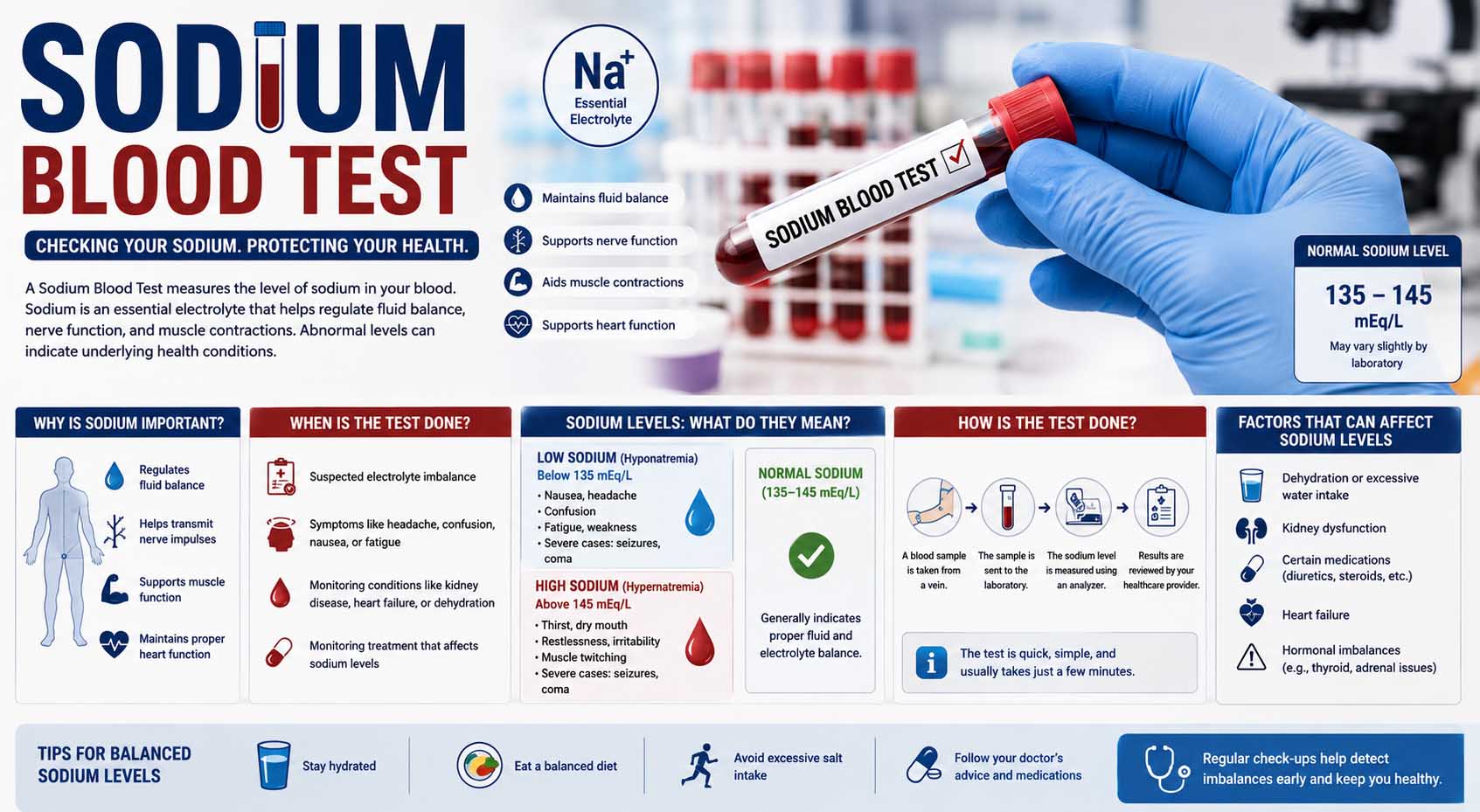
A sodium blood test measures the amount of sodium in your blood and helps doctors evaluate your body’s fluid balance, nerve function, and other essential processes. Sodium is an electrolyte, and although most people associate it with dietary salt, your blood sodium level depends on much more than how much salt you eat. Changes in body water, medications, kidney function, hormones, and certain illnesses can all affect the result.
Doctors often order this test as part of a routine electrolyte panel or comprehensive metabolic panel. Therefore, an abnormal result does not automatically mean something serious is wrong. Instead, your healthcare provider looks at the sodium result together with symptoms, medical history, medications, and other laboratory findings.
What Is a Sodium Blood Test?
A sodium blood test measures the concentration of sodium in the liquid portion of your blood. Laboratories usually report the result in milliequivalents per liter (mEq/L) or millimoles per liter (mmol/L).
Sodium helps control the amount of water inside and outside your cells. At the same time, it supports normal nerve signals and muscle function.
Your kidneys play a major role in maintaining sodium and water balance. However, hormones and your thirst response also help regulate this process. As a result, blood sodium can change when the body gains or loses too much water or sodium.
Doctors may order sodium testing during a routine health evaluation. Likewise, they may request it when someone has symptoms such as weakness, confusion, excessive thirst, vomiting, or significant changes in fluid balance.
Sodium is often measured alongside chloride, potassium, bicarbonate, and other markers. For example, a carbon dioxide blood test commonly measures bicarbonate and can give healthcare professionals more information about the body’s electrolyte and acid-base balance.
What Is the Normal Range for a Sodium Blood Test?
For many laboratories, a typical adult blood sodium range is approximately 135 to 145 mEq/L. However, reference ranges can vary slightly between laboratories.
| Sodium result | General interpretation |
|---|---|
| Below 135 mEq/L | Low sodium (hyponatremia) |
| About 135–145 mEq/L | Typical reference range |
| Above 145 mEq/L | High sodium (hypernatremia) |
These numbers provide a general guide rather than a diagnosis. Therefore, always use the reference range printed on your own laboratory report.
A mildly abnormal result may not cause symptoms. However, severe or rapidly developing sodium abnormalities can affect the brain and nervous system. Consequently, the severity of the result, how quickly it changed, and your symptoms all matter.
What Does Low Sodium Mean in a Blood Test?
If you are wondering what does low sodium mean in a blood test, the medical term is hyponatremia. Generally, this means the sodium concentration in your blood is below the laboratory’s reference range.
However, a low sodium blood test does not always mean that your body simply lacks dietary salt. In many cases, the problem involves having too much water relative to the amount of sodium in the bloodstream.
For this reason, eating salty foods is not a safe automatic solution. Your doctor first needs to determine why the sodium level has fallen.
Common causes of low sodium
Several conditions and situations can lead to low sodium. For instance, possible causes include:
- Certain diuretics and other medications
- Vomiting or diarrhea
- Drinking excessive amounts of water
- Heart, kidney, or liver problems that affect fluid balance
- Syndrome of inappropriate antidiuretic hormone secretion (SIADH)
- Adrenal or thyroid disorders
- Heavy sweating combined with inappropriate fluid replacement
- Certain acute or chronic illnesses
Because several electrolytes may change together, doctors often review potassium at the same time. However, dietary advice such as high potassium foods to avoid applies only in particular situations and should not be used simply because sodium is abnormal.
Symptoms associated with low sodium
Mild hyponatremia may cause few or no obvious symptoms. Meanwhile, as sodium falls further or drops rapidly, symptoms can become more noticeable.
Possible symptoms include headache, nausea, fatigue, muscle weakness or cramps, restlessness, and confusion. In severe cases, seizures, reduced consciousness, or coma can occur.
Therefore, severe neurological symptoms need urgent medical assessment rather than home treatment.
What Does High Sodium Mean?
A sodium result above the laboratory’s normal range is called hypernatremia. Most often, it develops when the body has too little water relative to sodium.
For example, dehydration can occur when a person loses fluids and cannot replace them adequately. This may happen during illness with fever, diarrhea, or vomiting. Likewise, people who cannot easily access water may have a higher risk.
Certain kidney conditions and disorders affecting antidiuretic hormone can also contribute to high sodium. In contrast, consuming too much sodium alone is a less common cause when the body’s water-regulating systems are working normally.
Signs of high blood sodium
Thirst is a common early sign. However, symptoms can become more serious as sodium rises.
People may experience weakness, irritability, confusion, muscle twitching, or unusual sleepiness. Severe hypernatremia can cause seizures or loss of consciousness.
As with low sodium, both the actual number and the speed of the change affect how symptoms develop.
Why Would a Doctor Order a Sodium Blood Test?
Doctors use a sodium blood test for several reasons. Often, it appears in routine laboratory panels even when a person has no specific symptoms.
However, testing becomes particularly useful when a doctor needs to investigate dehydration, fluid retention, unexplained weakness, confusion, or problems involving the kidneys or hormones.
Doctors may also monitor sodium after starting medications that can affect fluid or electrolyte balance. For example, certain diuretics can lower sodium in some people.
Other blood results can provide useful context as well. A tibc blood test high result, for example, relates primarily to iron-binding capacity rather than sodium balance, yet it may appear among laboratory findings being reviewed when investigating symptoms such as fatigue.
How the Sodium Blood Test Is Performed
The test itself is straightforward. Usually, a healthcare professional draws a small amount of blood from a vein in your arm.
First, they clean the skin. Next, they insert a needle into the vein and collect blood in a tube. Afterward, they remove the needle and apply pressure to the area.
The procedure usually takes only a few minutes. You might notice brief discomfort, minor bruising, or tenderness afterward.
In many cases, a sodium test does not require fasting. However, your doctor may order it alongside tests that do have preparation requirements. Therefore, follow the specific instructions provided with your laboratory order.
Understanding a Sodium Low in Blood Test Result
Seeing sodium low in blood test results can be worrying, especially when the number is highlighted on a laboratory report. Still, one isolated number rarely tells the whole story.
Doctors may repeat the measurement if necessary. They may also review blood glucose, kidney function, potassium, chloride, bicarbonate, and blood or urine osmolality depending on the situation.
Your medications matter as well. Therefore, tell your healthcare professional about prescription drugs, over-the-counter medicines, and supplements you take.
Some blood tests answer very different questions even when they appear on the same report. For instance, an nrbc blood test evaluates nucleated red blood cells and is interpreted differently from an electrolyte measurement such as sodium.
How Low or High Sodium Is Diagnosed
An abnormal sodium measurement identifies an electrolyte imbalance, but the next step is finding its cause.
Your healthcare provider may ask about recent vomiting, diarrhea, sweating, fluid intake, thirst, medications, and underlying health conditions. Meanwhile, a physical examination may look for signs of dehydration or excess fluid.
Depending on the situation, additional blood and urine tests can help determine how your body is handling water and sodium.
Doctors may also investigate related metabolic problems when symptoms or other results point in that direction. For example, a lactic acid blood test may be ordered in certain acutely ill patients when clinicians need to evaluate elevated lactate and possible problems with tissue oxygen delivery or metabolism. However, it is not a routine test for every abnormal sodium result.
How Are Abnormal Sodium Levels Treated?
Treatment depends on whether sodium is low or high, why the change occurred, how severe it is, and whether symptoms are present.
Treatment for low sodium
Mild hyponatremia may sometimes improve after the underlying cause is addressed. For example, a healthcare professional might adjust fluid intake or review a medication that contributes to the problem.
Other cases require treatment of an underlying kidney, heart, liver, thyroid, or adrenal condition. Meanwhile, severe symptomatic hyponatremia may require carefully controlled intravenous treatment in a hospital.
Sodium generally needs to be corrected at a controlled rate. Therefore, trying to rapidly raise sodium at home with salt, electrolyte drinks, or supplements can be unsafe.
Treatment for high sodium
High sodium treatment usually focuses on correcting the water deficit and addressing its cause. Depending on the person’s condition, fluids may be taken orally or given intravenously.
Again, doctors generally correct significant abnormalities carefully. Changing sodium too rapidly can cause complications, so severe hypernatremia requires medical supervision.
Can Diet Fix a Low Sodium in Blood Test?
A low sodium in blood test result does not necessarily mean you need more sodium in your diet. This is one of the most common misunderstandings surrounding the test.
For example, if excess water retention caused the low reading, simply increasing dietary salt may not address the underlying problem. Likewise, if a medication or hormone disorder caused hyponatremia, treatment needs to target that issue.
Therefore, avoid making major changes to salt or fluid intake until you understand the cause of the abnormal result.
For everyday wellness, most people should follow balanced dietary guidance rather than deliberately increasing sodium. People with certain medical conditions may actually need to limit sodium, so individualized advice matters.
Can You Help Keep Sodium Levels Balanced?
You cannot prevent every sodium abnormality. However, sensible hydration and medication habits can reduce avoidable problems.
Drink according to your body’s needs rather than forcing extremely large amounts of water. At the same time, replace fluids appropriately during prolonged heat exposure, intense exercise, vomiting, or diarrhea.
Also, take prescription medicines exactly as directed. If a medication can affect electrolytes, your healthcare provider may recommend periodic blood testing.
Finally, avoid using salt tablets or electrolyte supplements to treat an abnormal laboratory result unless a qualified healthcare professional recommends them. What helps one type of sodium imbalance may worsen another.
When Should You Seek Medical Care?
A slightly abnormal sodium value without symptoms may simply require follow-up with the clinician who ordered the test. However, you should not ignore a clearly abnormal result, especially if you are unwell.
Seek prompt medical advice if an abnormal sodium result occurs with persistent vomiting or diarrhea, severe weakness, unusual confusion, or significant changes in alertness.
Meanwhile, severe confusion, seizures, loss of consciousness, or other rapidly worsening neurological symptoms require emergency medical care.
Frequently Asked Questions
Is sodium tested in a routine blood test?
Often, yes. Sodium commonly appears in electrolyte panels and metabolic panels. Therefore, many people have their sodium measured during routine laboratory testing.
Is 135 sodium too low?
A sodium level of 135 mEq/L sits at the lower boundary of the typical reference range used by many laboratories. However, ranges vary, so check the range printed on your report and discuss unexpected results with your healthcare provider.
What level of sodium is dangerously low?
There is no single number that determines risk in every person. However, severe hyponatremia, particularly when sodium falls rapidly or neurological symptoms develop, can become a medical emergency. Clinicians consider the sodium value, symptoms, speed of change, and overall health together.
Does drinking too much water lower sodium?
Yes, excessive water intake can dilute blood sodium in some situations. However, the kidneys can normally remove substantial amounts of excess water. Problems become more likely when intake overwhelms that ability or when an illness or medication interferes with water excretion.
Can dehydration cause high sodium?
Yes. When the body loses more water than sodium, blood sodium concentration can rise. Therefore, dehydration is an important potential cause of hypernatremia.
Should I eat more salt if my sodium is low?
Not automatically. Low blood sodium frequently reflects a water-balance problem rather than inadequate salt intake. Therefore, ask your healthcare provider what caused the result before increasing salt or using sodium supplements.
Practical Takeaways for Your Sodium Results
A sodium blood test is a simple but valuable way to assess an essential part of your body’s fluid and electrolyte balance. Although a typical reference range is around 135–145 mEq/L, the meaning of an abnormal result depends on your symptoms, medications, health conditions, and other laboratory findings.
If your result is slightly outside the reference range, discuss it with the healthcare professional who ordered the test rather than trying to correct it yourself. Meanwhile, seek urgent care for serious symptoms such as seizures, severe confusion, or loss of consciousness. With the cause identified, healthcare professionals can choose the safest way to restore and maintain a healthy sodium balance.