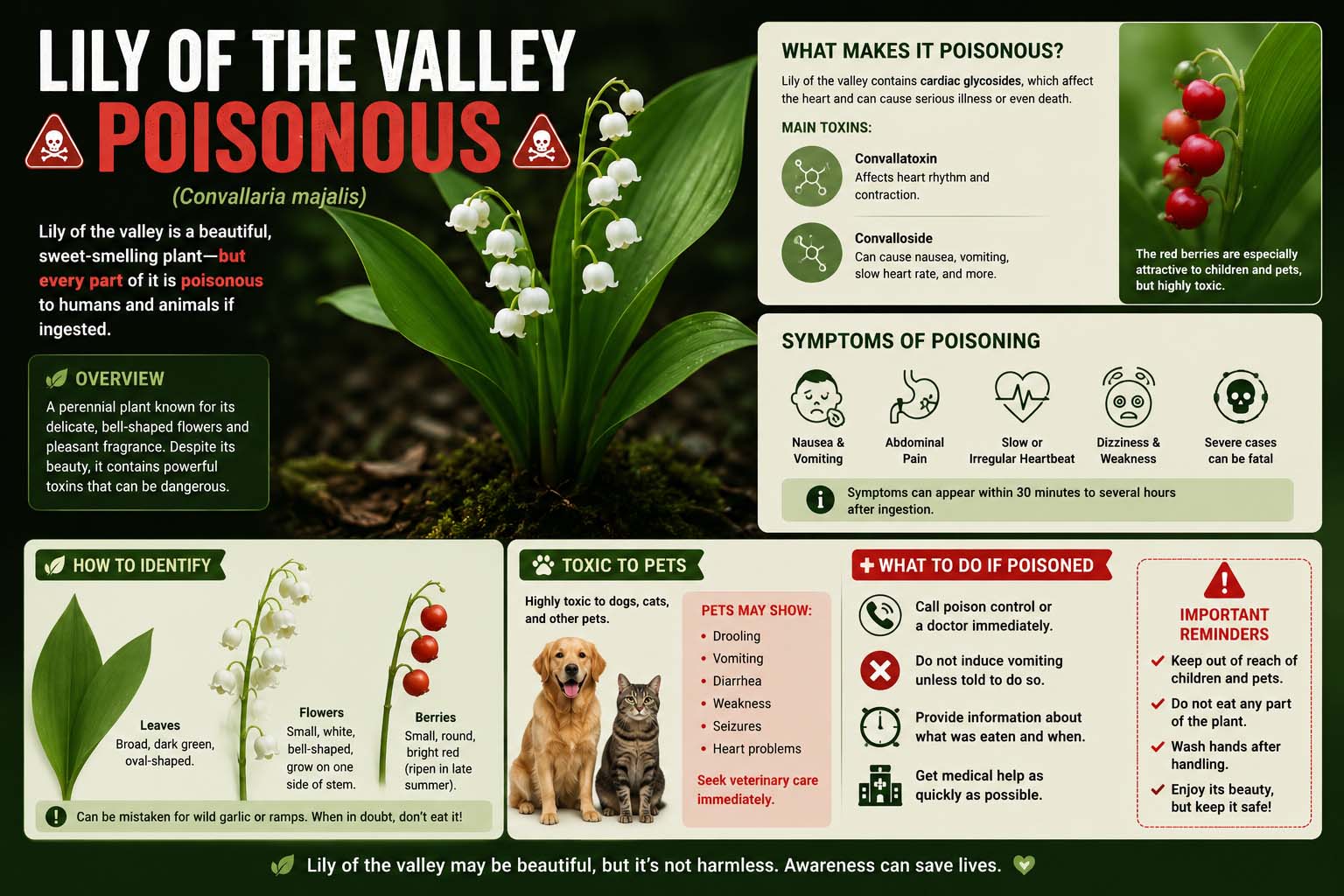
Is lily of the valley poisonous to humans and pets? Yes. This attractive flowering plant contains toxic compounds that can affect the heart and digestive system when swallowed. All parts of the plant pose a poisoning risk, including its flowers, leaves, stems, roots, and berries.
Lily of the valley (Convallaria majalis) is popular in gardens and floral arrangements because of its small, white, bell-shaped flowers and sweet fragrance. However, its delicate appearance can hide a serious health hazard, especially for children and pets.
Although touching the plant is generally less dangerous than eating it, accidental ingestion requires prompt professional advice. Therefore, understanding its toxicity, warning signs, and prevention measures can help protect your household.
Is Lily of the Valley Poisonous?
Yes. Lily of the valley is toxic to humans, cats, dogs, and other animals when ingested.
Every part of the plant contains potentially harmful substances, including:
- Flowers
- Leaves
- Stems
- Roots
- Berries
- Seeds
Water from a vase containing the plant may also present an ingestion risk because plant compounds can enter the water.
The primary concern involves cardiac glycosides, which can interfere with normal heart function.
However, the severity of poisoning varies according to the amount swallowed and the individual’s health.
Why Lily of the Valley Is Toxic
Lily of the valley contains cardiac glycosides, including convallatoxin.
These substances interfere with processes that help regulate heart muscle activity. As a result, significant exposure can cause abnormal heart rhythms and other serious complications.
Some prescription heart medications also contain cardiac glycosides. However, this similarity does not make the plant safe for home treatment.
In fact, consuming an uncontrolled amount of toxic plant material can be dangerous.
Several factors may influence poisoning severity:
- Amount of plant material swallowed
- Age and body size
- Existing medical conditions
- Individual sensitivity
- Time between exposure and treatment
Children may face greater risks because of their smaller body size and tendency to explore unfamiliar objects.
Therefore, families should keep this plant away from areas where young children can reach it.
Symptoms of Lily of the Valley Poisoning
Symptoms may develop after someone swallows the plant. However, their onset and severity can vary.
Some people initially experience digestive discomfort, while more serious cases can involve the cardiovascular system.
Digestive Symptoms
Common gastrointestinal symptoms include:
- Nausea
- Vomiting
- Abdominal pain
- Diarrhea
These symptoms may appear before more serious complications.
However, their absence does not guarantee that an exposure is harmless.
Heart-Related Symptoms
Cardiac glycosides can interfere with normal heart rhythms.
Possible effects include:
- Slow heartbeat
- Irregular heartbeat
- Dizziness
- Low blood pressure
- Fainting
Severe heart rhythm disturbances can become life-threatening.
Therefore, anyone who may have swallowed lily of the valley should seek immediate advice from a poison control service or medical professional rather than waiting for symptoms.
Nervous System Symptoms
Some poisoning cases may also involve neurological or general symptoms.
These can include:
- Confusion
- Weakness
- Unusual tiredness
- Dizziness
- Visual disturbances
However, symptoms alone cannot reliably determine how serious an exposure may be.
Medical professionals may need to assess heart rhythm and other clinical findings.
Is Lily of the Valley Poisonous to Touch?
Touching lily of the valley is generally much less dangerous than swallowing it.
The plant’s most serious toxic effects occur through ingestion. However, handling its leaves, stems, or flowers may cause skin irritation in sensitive individuals.
For example, some gardeners may notice mild redness or discomfort after direct contact.
Wearing gardening gloves can reduce unnecessary exposure.
After handling the plant, wash your hands thoroughly with soap and water.
Additionally, avoid touching your mouth or preparing food before washing your hands.
Children should never place plant material in their mouths, even after briefly handling the flowers.
Is Lily of the Valley Poisonous to Cats?
Yes. Lily of the valley is poisonous to cats and can cause serious health problems if they ingest any part of the plant.
Cats may encounter the flowers in gardens, bouquets, or indoor arrangements. In addition, drinking water from a vase containing the plant may create an exposure risk.
Possible poisoning symptoms in cats include:
- Vomiting
- Drooling
- Weakness
- Abnormal heart rhythm
- Low blood pressure
- Collapse
The ASPCA’s lily of the valley toxicity information identifies this plant as toxic to cats, dogs, and horses.
If your cat may have chewed or swallowed any part of the plant, contact a veterinarian or animal poison control service immediately.
Do not wait for visible symptoms.
Although lily of the valley is not a true lily, it remains dangerous to cats because of its cardiac glycosides.
Therefore, households with curious cats should avoid keeping this plant within their reach.
Is Lily of the Valley Poisonous to Dogs?
Yes. Lily of the valley is also toxic to dogs.
Dogs may encounter the plant while exploring gardens, walking through landscaped areas, or investigating fallen flowers.
Because dogs sometimes chew unfamiliar vegetation, accidental ingestion can occur without an owner noticing immediately.
Possible symptoms include:
- Vomiting
- Diarrhea
- Excessive drooling
- Weakness
- Slow or irregular heartbeat
- Collapse in severe cases
However, not every exposed dog will show the same symptoms.
If you suspect ingestion, contact your veterinarian promptly.
Never attempt to induce vomiting unless a veterinary professional specifically instructs you to do so.
For prevention, consider removing the plant from areas where pets roam freely.
Common Causes of Accidental Poisoning
Most accidental exposures occur when someone or an animal encounters the plant without recognizing its toxicity.
Understanding these situations can help families prevent emergencies.
Garden Exposure
Children and pets may explore flower beds and landscaped areas.
For example, a child might pick an attractive flower or berry without realizing that it is unsafe to eat.
Therefore, parents should identify potentially toxic plants growing around their homes.
Mistaken Plant Identity
Lily of the valley may resemble other plants during certain growth stages.
Its leaves can sometimes cause confusion when people collect wild plants for food.
However, appearance alone is not enough to confirm whether an unfamiliar plant is edible.
Never consume wild vegetation without reliable identification.
Decorative Bouquets
Florists sometimes use lily of the valley in ornamental arrangements.
Although these flowers are attractive, bouquets can place toxic plant material within reach of children and pets.
Additionally, spilled vase water may create another exposure opportunity.
Outdoor Curiosity in Pets
Cats and dogs may investigate plants while playing outdoors.
Some animals chew leaves or flowers out of curiosity, increasing their risk of poisoning.
People interested in broader animal safety topics may also wonder can opossums get rabies.
However, preventing plant ingestion remains the main concern when protecting pets from lily of the valley.
First Aid: What to Do After Exposure
If someone may have swallowed lily of the valley, seek immediate professional guidance.
Do not wait for symptoms because cardiac effects can be serious.
Step 1: Stop Further Exposure
Remove any remaining plant material from the person’s reach.
If loose pieces remain in the mouth, carefully remove them when it is safe to do so.
However, never place your fingers into the mouth of an unconscious person.
Step 2: Contact Poison Control Immediately
Call your local poison control center or emergency medical service for instructions.
In the United States, Poison Control is available at 1-800-222-1222.
If the person collapses, has a seizure, experiences serious breathing difficulty, or becomes unresponsive, call emergency services immediately.
Step 3: Avoid Home Remedies
Do not induce vomiting.
Similarly, avoid giving medications, herbal remedies, or activated charcoal unless a medical professional specifically recommends them.
If the person is drowsy, unconscious, or unable to swallow safely, do not give anything by mouth.
Step 4: Provide Exposure Details
Medical professionals may ask:
- Which part of the plant was swallowed
- Approximately how much was consumed
- When the exposure occurred
- Whether symptoms have appeared
- The person’s age and relevant health information
If possible, take a photograph of the plant or bring a safely contained sample for identification.
However, do not delay emergency care to collect it.
What If a Pet Eats Lily of the Valley?
Contact a veterinarian or animal poison control service immediately.
Do not induce vomiting or administer home treatments without veterinary instructions.
If possible, provide a photograph of the plant and details about the suspected exposure.
Early veterinary assessment can help identify complications and guide appropriate treatment.
Garden Safety Tips for Families and Pet Owners
Although lily of the valley is toxic, careful plant management can reduce accidental exposure.
Identify and Label Garden Plants
Learn which plants grow in your garden.
Clear labels can help adults and visitors recognize potentially harmful species.
However, labels alone cannot protect young children or animals.
Wear Gloves While Gardening
Gloves can help limit skin contact when planting, trimming, or removing vegetation.
Afterward, wash your hands and clean gardening tools.
Keep Toxic Plants Away From Pets
Avoid growing lily of the valley in places where cats and dogs can easily access it.
For households with pets that frequently chew plants, removing the plant may be the safer option.
Teach Children About Plant Safety
Explain that unfamiliar flowers, berries, and leaves are not food.
In addition, supervise young children around decorative gardens.
Consider Safer Plant Alternatives
Households may prefer plants with lower toxicity risks.
However, always verify a plant’s safety for the specific animals living in your home.
For example, people researching the 10 benefits of snake plant should also know that snake plants are toxic to cats and dogs if ingested.
Therefore, a plant’s popularity or potential household benefits do not automatically make it pet-safe.
Historical Uses and Cultural Importance
Lily of the valley has a long history as an ornamental plant.
Its fragrant flowers are associated with spring celebrations, floral arrangements, and traditional symbolism in several cultures.
However, its decorative value does not reduce its toxicity.
Historical Medicinal Interest
The plant contains cardiac glycosides that have attracted scientific and historical medical interest.
Some compounds affect heart muscle activity, which explains why researchers have studied their biological properties.
Nevertheless, consuming lily of the valley or preparing homemade extracts is unsafe.
Modern medical treatment relies on carefully evaluated medications rather than uncontrolled doses from poisonous plants.
Therefore, never use lily of the valley as a home remedy for heart conditions or other health problems.
How to Identify Lily of the Valley
Correct plant identification can help prevent accidental poisoning.
Lily of the valley typically has several recognizable characteristics.
White Bell-Shaped Flowers
The plant produces small, bell-shaped flowers that hang from a slender flowering stalk.
These flowers are usually white, although some cultivated varieties may have pinkish flowers.
Broad Green Leaves
Lily of the valley typically develops broad, elongated green leaves that emerge near the base of the plant.
However, leaves alone may not provide enough information for reliable identification.
Sweet Floral Fragrance
The flowers have a distinctive sweet fragrance.
Nevertheless, fragrance should never serve as the only identification method.
Red or Orange-Red Berries
After flowering, the plant may produce small berries that become orange-red as they mature.
These berries are also toxic.
Therefore, children should never handle them as food or place them in their mouths.
Preferred Growing Conditions
Lily of the valley often grows in shaded or partially shaded areas.
It can spread through underground stems and form dense patches in suitable conditions.
For indoor comfort and household wellness, some readers may also explore the benefits of humidifier.
However, managing humidity does not make toxic houseplants safer to ingest.
FAQ About Lily of the Valley Poisoning
Is Lily of the Valley Poisonous?
Yes. All parts of lily of the valley contain toxic cardiac glycosides.
Swallowing the plant can cause digestive symptoms and potentially serious heart complications.
Is Lily of the Valley Poisonous to Touch?
Touching the plant is generally less dangerous than eating it.
However, sensitive individuals may experience skin irritation. Washing hands after handling the plant is recommended.
Is Lily of the Valley Poisonous to Cats?
Yes. Cats can develop serious poisoning after ingesting lily of the valley.
Therefore, contact a veterinarian immediately if you suspect exposure.
What Happens If Someone Eats Lily of the Valley?
Possible symptoms include nausea, vomiting, diarrhea, dizziness, and abnormal heart rhythms.
However, serious complications may occur even when early symptoms seem mild.
Seek immediate advice from poison control or emergency medical professionals.
Can Lily of the Valley Kill a Person?
Severe poisoning can cause life-threatening heart rhythm disturbances.
However, the outcome depends on the exposure and the medical response.
Any suspected ingestion requires prompt professional assessment.
Should Lily of the Valley Be Removed From Gardens?
Removing the plant may be sensible when young children or pets can access it.
However, households without these exposure risks may choose to manage the plant carefully.
The safest decision depends on the household environment and the ability to prevent accidental ingestion.
Conclusion
Understanding why lily of the valley is poisonous helps families recognize the risks associated with this attractive flowering plant.
Its cardiac glycosides can affect the digestive system and heart, making ingestion potentially dangerous for humans, cats, and dogs.
Although ordinary skin contact generally carries less risk, gardeners should handle the plant carefully and wash their hands afterward.
Most importantly, suspected ingestion requires immediate professional guidance rather than home treatment or waiting for symptoms.
By identifying toxic plants, supervising children, protecting pets, and following appropriate emergency procedures, households can reduce the risk of accidental poisoning.