If you’ve ever wondered about the health benefits of asparagus, the answer is simple: this spring vegetable is packed with vitamins, minerals, antioxidants, and fiber while remaining naturally low in calories. Whether you roast it, grill it, steam it, or add it to salads, asparagus can be a nutritious addition to a balanced diet.
Beyond its fresh flavor, asparagus supports digestive health, heart health, healthy pregnancy, and overall wellness. While no single food can prevent disease or replace medical treatment, including asparagus as part of a varied eating pattern may help you meet your daily nutrient needs.
Let’s explore what makes asparagus such a healthy choice and how you can enjoy it regularly.
What Is Asparagus?
Asparagus is a flowering perennial vegetable known for its tender green spears. Although green asparagus is the most common variety, you may also find white and purple asparagus in some markets.
Each type provides valuable nutrients, though slight differences in taste and antioxidant content exist.
A typical serving contains very few calories but delivers an impressive amount of vitamins and plant compounds.
Nutrition at a Glance
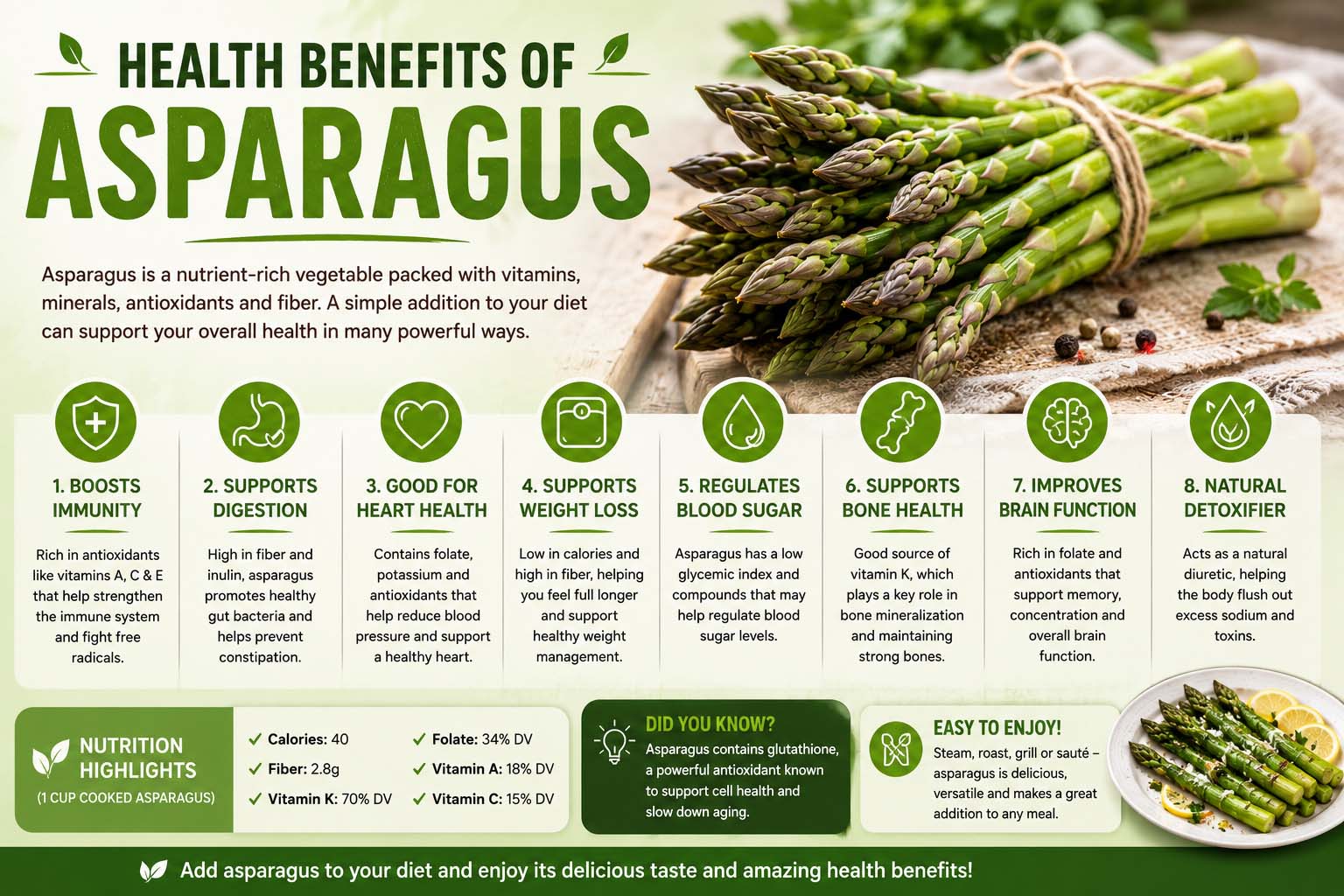
One cup (about 134 grams) of cooked asparagus provides approximately:
| Nutrient | Approximate Amount |
|---|---|
| Calories | 40 |
| Protein | 4 g |
| Fiber | 4 g |
| Vitamin K | High |
| Folate | High |
| Vitamin C | Good source |
| Vitamin A | Moderate |
| Potassium | Moderate |
| Antioxidants | Rich source |
The exact nutrient content varies slightly depending on preparation and serving size.
Health Benefits of Asparagus
Health Benefits of Asparagus for Digestive Health
One of the biggest health benefits of asparagus is its fiber content.
Dietary fiber supports regular bowel movements and helps nourish beneficial gut bacteria.
If you’re trying to eat more foods high in fiber, asparagus is an excellent vegetable to include alongside fruits, beans, and whole grains.
A balanced gut microbiome plays a role in digestion, immune function, and overall health.
Supports Heart Health
A heart-friendly diet includes vegetables rich in vitamins, minerals, and antioxidants, and asparagus fits that description well.
Several nutrients contribute to cardiovascular wellness:
- Potassium helps maintain normal blood pressure.
- Folate supports healthy homocysteine metabolism.
- Fiber may help improve cholesterol levels when combined with an overall healthy diet.
- Antioxidants help protect cells from oxidative stress.
Eating asparagus alone won’t prevent heart disease, but it can contribute to a balanced eating pattern that supports cardiovascular health.
Rich in Antioxidants
Asparagus contains several antioxidant compounds, including:
- Glutathione
- Flavonoids
- Vitamin C
- Vitamin E
- Polyphenols
These compounds help protect cells from damage caused by free radicals.
Although antioxidants are widely studied, they work best as part of an overall healthy lifestyle rather than as a cure for disease.
Helps You Meet Folate Needs
Folate is especially important for healthy cell growth and DNA production.
Pregnant women or those planning pregnancy need adequate folate because it supports early fetal development.
Asparagus is naturally rich in this vitamin, making it a smart addition to prenatal-friendly meals. Still, healthcare providers often recommend prenatal vitamins to ensure sufficient intake.
May Support Healthy Blood Sugar
Fiber slows digestion and may help moderate blood sugar responses after meals.
Pairing asparagus with lean protein and whole grains creates a balanced meal that supports steady energy levels throughout the day.
Current research continues to explore how vegetables like asparagus fit into healthy eating plans for people managing blood sugar.
Health Benefits of Eating Asparagus for Weight Management
When discussing the health benefits of eating asparagus, weight management often comes up.
Asparagus is:
- Naturally low in calories
- High in water
- Rich in fiber
- Filling without adding many calories
These qualities make it easier to feel satisfied while maintaining a calorie-conscious eating pattern.
Instead of relying on restrictive diets, filling your plate with vegetables like asparagus can help support long-term healthy eating habits.
A Good Source of Vitamin K
Vitamin K plays a major role in:
- Normal blood clotting
- Bone health
- Calcium regulation
Many people don’t realize that asparagus provides a significant amount of this essential nutrient.
However, individuals taking blood-thinning medications should speak with their healthcare provider before making major changes to vitamin K intake, since consistent intake is generally recommended.
Supports Bone Health
Strong bones depend on several nutrients working together.
Asparagus contributes:
- Vitamin K
- Folate
- Small amounts of calcium
- Phosphorus
Although dairy products and fortified foods remain major calcium sources, vegetables like asparagus add valuable nutrients that support overall bone health.
Hydration and Wellness
Fresh asparagus contains a high percentage of water.
Combined with its potassium content, this supports normal hydration as part of a balanced diet.
Many people also enjoy pairing asparagus with refreshing drinks such as those discussed in benefits of cucumber water, especially during warmer months when staying hydrated is a priority.
Health Benefits of Asparagus for Men
Many readers search for the health benefits of asparagus for men.
The truth is that asparagus offers benefits for everyone, but several nutrients may be especially helpful for men’s overall wellness.
These include:
- Folate for healthy cell function
- Fiber for digestive health
- Antioxidants that support cellular health
- Potassium for cardiovascular wellness
Despite some claims online, there is no strong scientific evidence that asparagus alone boosts testosterone or treats erectile dysfunction.
A healthy diet, regular exercise, quality sleep, and routine medical care remain the most effective ways to support men’s health.
Can Asparagus Support Immune Health?
Several nutrients found in asparagus contribute to normal immune function.
These include:
- Vitamin C
- Vitamin E
- Folate
- Antioxidants
No food can prevent illness on its own, but eating a variety of nutrient-rich vegetables helps support the immune system over time.
Fresh, Frozen, or Canned: Which Is Best?
Fresh asparagus is often preferred because of its texture and flavor.
However, frozen asparagus also retains many nutrients.
Here’s a quick comparison:
| Type | Benefits |
|---|---|
| Fresh | Best texture and flavor |
| Frozen | Convenient and nutrient-rich |
| Canned | Longer shelf life but may contain added sodium |
Choose the option that best fits your budget and cooking routine.
Healthy Ways to Prepare Asparagus
Cooking methods affect both flavor and nutrient retention.
Good options include:
Roasting
Roasting brings out a naturally sweet, slightly nutty flavor.
A drizzle of olive oil, garlic, and black pepper is often all you need.
Steaming
Steaming preserves texture while requiring little added fat.
Grilling
Grilled asparagus develops a smoky flavor that’s perfect for summer meals.
Stir-Frying
Quick stir-frying keeps asparagus crisp while pairing well with lean proteins.
Some people also enjoy fresh vegetable juices. While asparagus isn’t commonly juiced on its own, learning about the benefits of juicing can provide ideas for incorporating a wider variety of vegetables into your routine.
Who Should Be Careful With Asparagus?
Although asparagus is safe for most people, there are situations where caution is appropriate.
Kidney Disease
Asparagus contains potassium.
For people with advanced kidney disease, potassium intake may need to be limited.
If you’ve been advised to follow a potassium-restricted diet, check with your healthcare provider before increasing asparagus intake. You may also find it helpful to understand which high potassium foods to avoid as part of your overall nutrition plan.
Food Allergies
Asparagus allergy is uncommon but possible.
Symptoms may include:
- Itching
- Swelling
- Hives
- Difficulty breathing
Seek immediate medical attention if severe allergic reactions occur.
Blood Thinners
Because asparagus contains vitamin K, individuals taking medications such as warfarin should maintain consistent vitamin K intake and follow medical advice.
Common Myths About Asparagus
Myth: Asparagus Detoxes the Body
Your liver and kidneys naturally perform detoxification.
Asparagus supports good nutrition, but it doesn’t “cleanse” toxins from the body.
Myth: Eating Asparagus Burns Fat
No single food burns fat.
Weight loss depends on overall calorie balance, physical activity, sleep, and sustainable eating habits.
Myth: More Is Always Better
Eating large amounts of any one food isn’t necessary.
A balanced diet that includes many different vegetables provides the greatest nutritional benefit.
Practical Tips for Buying and Storing Asparagus
Choose asparagus with:
- Firm stalks
- Closed tips
- Bright green color
- Fresh appearance
To keep it fresh:
- Store upright in a container with a small amount of water.
- Refrigerate loosely covered.
- Use within several days for the best texture.
Frequently Asked Questions
What are the health benefits of asparagus?
Asparagus provides fiber, folate, vitamin K, antioxidants, and potassium. These nutrients support digestive health, heart health, bone health, and overall wellness as part of a balanced diet.
What are the health benefits of eating asparagus every week?
Regularly eating asparagus may help increase vegetable intake, improve fiber consumption, support digestive health, and contribute essential vitamins and minerals to your diet.
Is asparagus good for weight loss?
Yes. It’s naturally low in calories, high in water, and contains fiber that promotes fullness.
Can I eat asparagus every day?
Most healthy adults can enjoy asparagus regularly as part of a varied diet. Variety remains important for meeting all nutrient needs.
Is raw or cooked asparagus healthier?
Both offer nutritional benefits. Cooking may reduce some vitamins slightly while making other nutrients easier to absorb. Including both forms can be part of a healthy eating pattern.
Simple Ways to Add More Asparagus to Your Meals
Adding asparagus to your weekly menu doesn’t require complicated recipes. Roast it as a side dish, toss it into pasta, add it to omelets, include it in grain bowls, or mix it into salads for extra crunch and nutrition.
The health benefits of asparagus come from its combination of fiber, vitamins, minerals, and antioxidants—not from any single “superfood” claim. When paired with other nutrient-rich foods and an active lifestyle, asparagus can be a flavorful and practical choice that supports long-term health and wellness.