
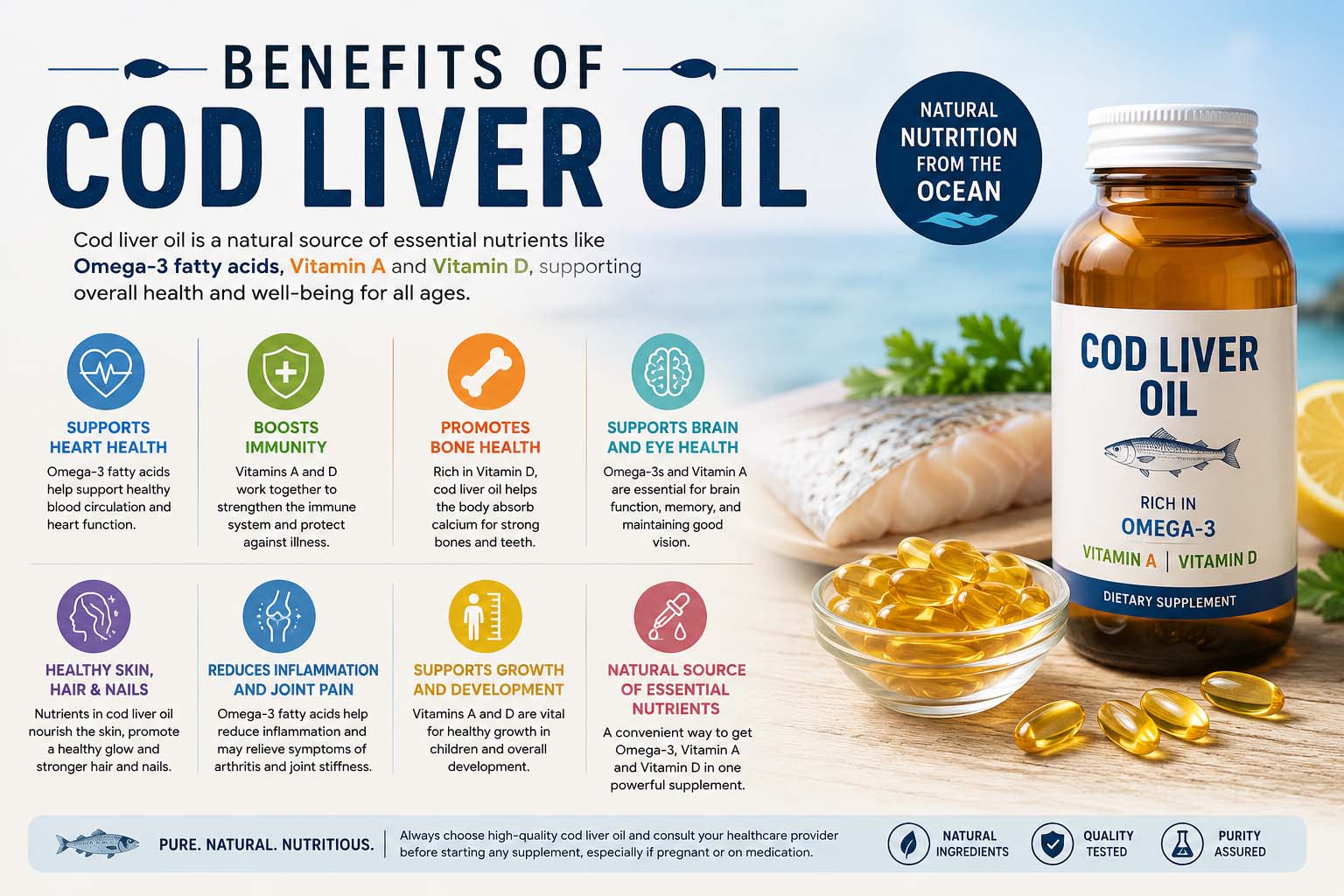
Cod liver oil has been used for generations as a nutritional supplement. Manufacturers produce it from cod liver, and it provides omega-3 fatty acids along with vitamins A and D. Many people explore the benefits of cod liver oil when looking for nutritional support for the heart, brain, bones, immune system, skin, and general wellness.
However, cod liver oil is not simply another type of fish oil. Its vitamin A and vitamin D content makes it nutritionally different from many standard fish oil supplements. Therefore, anyone considering regular use should understand both its potential benefits and its safety considerations.
What Is Cod Liver Oil?
Cod liver oil is a dietary supplement derived from cod liver. It contains the long-chain omega-3 fatty acids EPA and DHA. In addition, many cod liver oil supplements provide vitamins A and D.
The NIH Office of Dietary Supplements’ information on omega-3 fatty acids identifies cod liver oil as one type of omega-3 dietary supplement and notes that these products can also provide vitamins A and D.
Unlike standard fish oil, cod liver oil can supply meaningful amounts of vitamins A and D. However, nutrient amounts vary between products. Therefore, consumers should check the Supplement Facts label rather than assume that every brand provides the same amounts.
People interested in vitamin combinations may also want to learn about the benefits of d3 and k2 and how these nutrients relate to bone and calcium-focused wellness.
Health Benefits of Cod Liver Oil
The potential nutritional value of cod liver benefits of cod liver oil comes mainly from three components: EPA and DHA omega-3 fatty acids, vitamin A, and vitamin D.
Each nutrient performs different functions in the body. As a result, this supplement may contribute to several aspects of nutrition when it fits a person’s dietary needs.
Supports Omega-3 Intake
Cod liver oil provides EPA and DHA, two long-chain omega-3 fatty acids commonly found in fish and seafood.
Omega-3 fatty acids form part of cell membranes and participate in several body functions. Therefore, people who rarely eat seafood may consider their overall omega-3 intake when reviewing their diet.
However, supplementation does not automatically provide the same benefits as a balanced eating pattern. Food choices, lifestyle, medical history, and total nutrient intake also matter.
Supports Heart-Focused Nutrition
EPA and DHA have been widely studied in relation to cardiovascular health. Therefore, omega-3 intake often appears in discussions about heart-focused nutrition.
Cod liver oil can provide these fatty acids. However, people should not view the supplement as a treatment for cardiovascular disease or a replacement for prescribed medication.
A heart-supportive lifestyle also includes balanced nutrition, physical activity, adequate sleep, and appropriate medical care.
Similarly, information about the best time to take coq10 may help people organize another supplement commonly associated with heart-focused wellness.
Brain Health and Omega-3 Fatty Acids
DHA is an important structural component of the brain. Consequently, omega-3 fatty acids often appear in discussions about brain health and nutrition.
Cod liver oil provides DHA as well as EPA. However, evidence for specific cognitive or mood benefits from supplementation varies according to the population, dose, health condition, and outcome researchers study.
Therefore, it is better to view cod liver oil as a source of nutrients rather than a guaranteed way to improve memory, concentration, or mood.
A balanced diet, regular activity, sufficient sleep, social interaction, and appropriate medical care also support overall brain health.
Joint Wellness and Omega-3 Intake
People often take fish-oil products because they are interested in omega-3 fatty acids and inflammatory processes in the body.
For this reason, some people also use cod liver oil as part of a joint-focused wellness routine. However, results can vary, and the supplement should not replace evaluation or treatment for persistent joint pain.
Regular movement can also support mobility and general joint function. For example, walking, swimming, cycling, and suitable strength exercises can help people remain active.
In addition, understanding the best time to workout may help you establish a more consistent activity routine.
Vitamins A and D for Immune Support
Cod liver oil contains vitamins A and D, although the amount varies considerably among products.
Both nutrients support normal immune function. Vitamin A also contributes to normal vision and tissue maintenance, while vitamin D has several roles throughout the body.
However, more is not always better. Because cod liver oil can contain preformed vitamin A, taking excessive amounts may increase the risk of consuming too much vitamin A.
Therefore, check the product label and consider vitamin A and D from other supplements before combining several products.
Cod Liver Oil and Vitamin D
Vitamin D supports normal calcium absorption and plays an established role in bone health.
Cod liver oil can provide vitamin D. However, the amount varies by product, so consumers should not assume that one serving will meet their individual vitamin D needs.
People concerned about vitamin D deficiency should discuss appropriate testing and supplementation with a healthcare professional. Symptoms alone cannot reliably confirm a deficiency.
Sun exposure, diet, supplements, age, skin pigmentation, geographic location, and other factors can affect vitamin D status.
Understanding Cod Liver Oil Health Claims
Many people search for information from health organizations because they want reliable guidance about cod liver oil, fish oil, vitamins, and supplements.
This approach makes sense because supplement claims can easily become exaggerated online. Therefore, consumers should distinguish established nutrient functions from claims that a supplement can prevent or treat specific diseases.
Cod liver oil can contribute omega-3 fatty acids and vitamins A and D to the diet. However, whether someone needs supplementation depends on their existing diet, health status, medications, and other nutrient sources.
If you have a medical condition or take medications, discuss regular supplement use with a qualified healthcare professional.
Skin Health and Cod Liver Oil
Nutrition plays a role in maintaining normal skin, and cod liver oil supplies fats and vitamin A.
Omega-3 fatty acids form part of cell membranes, while vitamin A supports normal tissues. Therefore, these nutrients contribute to normal body functions that include the skin.
However, cod liver oil should not be presented as a treatment for acne, eczema, redness, or other skin conditions. Persistent skin problems require appropriate evaluation.
Hydration and a balanced diet also support general wellness. Likewise, understanding the benefits of cucumber water may help you consider another hydration-focused habit.
Similarly, information about the best time to take collagen may help people organize a supplement routine associated with skin and connective-tissue wellness.
Bone Health and Vitamin D
Vitamin D helps the body absorb calcium, making it an important nutrient for maintaining healthy bones.
Because cod liver oil can provide vitamin D, it may contribute to overall vitamin D intake. However, the amount of vitamin D in one product may differ substantially from another.
For this reason, read the Supplement Facts label carefully. Also, consider whether you already take a multivitamin, vitamin D supplement, or another product containing vitamin D.
Bone health depends on more than one nutrient. Calcium intake, physical activity, age, hormones, medical conditions, and other lifestyle factors also play important roles.
Signs of Possible Nutrient Deficiency
People sometimes connect symptoms such as fatigue, low mood, dry skin, or discomfort with vitamin or omega-3 deficiencies. However, these symptoms have many possible causes.
Therefore, symptoms alone cannot establish a nutrient deficiency. A healthcare professional can assess your diet, medical history, symptoms, and appropriate laboratory tests when necessary.
Cod liver oil may help increase intake of EPA, DHA, vitamin A, and vitamin D. However, people should choose supplementation based on their nutritional needs rather than self-diagnosing a deficiency.
A varied diet that includes nutrient-rich foods remains an important foundation for long-term health.
Tips for Taking Cod Liver Oil
People who decide to use cod liver oil should make it part of a broader healthy lifestyle rather than rely on the supplement alone.
First, follow the serving instructions on the specific product. Nutrient concentrations differ among brands, so one product’s serving size may not apply to another.
Next, check other supplements for vitamins A and D. Combining several products can unintentionally increase total intake.
Also, maintain balanced meals, regular movement, hydration, and sufficient sleep. Supplements work best as additions to appropriate nutrition rather than replacements for healthy habits.
Finally, talk with a healthcare professional if you have questions about dosage, interactions, pregnancy, medical conditions, or long-term use.
Cod Liver Oil vs. Regular Fish Oil
Cod liver oil and standard fish oil both provide omega-3 fatty acids, but they are not identical supplements.
Regular fish oil primarily serves as a source of EPA and DHA. In contrast, cod liver oil also provides vitamins A and D, although exact amounts vary.
This difference can be useful for some people, but it also creates additional safety considerations. For example, someone who already takes vitamin A or vitamin D may need to consider their total intake before adding cod liver oil.
Therefore, the better choice depends on nutritional goals, diet, other supplements, and professional guidance when needed.
Possible Side Effects and Safety Considerations
Cod liver benefits of cod liver oil can cause side effects in some people. For example, fish-oil supplements may cause an unpleasant taste, bad breath, heartburn, nausea, stomach discomfort, diarrhea, or other gastrointestinal symptoms.
The vitamin A content also deserves attention. Excessive preformed vitamin A can cause harmful effects, so taking more than the recommended amount is not a good strategy for increasing potential benefits.
In addition, omega-3 supplements may interact with certain medications, particularly at higher doses. Therefore, people taking medications should discuss supplement use with a healthcare professional.
Pregnant people should take particular care with supplements containing preformed vitamin A. Instead of starting cod liver oil without guidance, they should discuss appropriate vitamin and omega-3 intake with their healthcare provider.
Frequently Asked Questions
What Are the Benefits of Cod Liver Oil?
Cod liver oil provides EPA and DHA omega-3 fatty acids along with vitamins A and D. These nutrients have established roles in normal body functions, including cell membranes, vision, immune function, and bone health. However, specific effects depend on a person’s nutritional needs and overall diet.
Is Cod Liver Oil Better Than Regular Fish Oil?
Neither option is automatically better. Standard fish oil mainly provides EPA and DHA, while cod liver oil also contains vitamins A and D. Therefore, the best choice depends on which nutrients you need and what other supplements you already use.
Can I Take Cod Liver Oil Every Day?
Some products provide instructions for daily use. However, serving sizes and vitamin concentrations differ among brands. Therefore, follow the product label and consider your total vitamin A and D intake from all sources.
Who May Consider Cod Liver Oil?
People who want additional EPA and DHA and who understand the vitamin A and D content may consider it. However, individual nutritional needs vary, so people with health conditions, medication use, pregnancy, or specific nutrient concerns should seek professional advice.
Does Cod Liver Oil Support Skin Health?
Cod liver oil provides fats and vitamin A, nutrients involved in normal body and tissue functions. However, evidence does not support treating it as a cure for specific skin conditions.
Can Cod Liver Oil Replace a Healthy Diet?
No. Cod liver oil can supplement nutrient intake, but it cannot provide all the protein, fiber, minerals, vitamins, and other compounds available from a balanced diet.
Conclusion
The benefits of cod liver oil mainly relate to the nutrients it provides: EPA and DHA omega-3 fatty acids plus vitamins A and D. These nutrients contribute to several normal body functions, including those involving the heart, brain, immune system, bones, and tissues.
However, cod liver oil is not a cure-all supplement. Product formulations vary, and its vitamin A content means that taking excessive amounts can create unnecessary risks.
Therefore, check the Supplement Facts label, consider nutrients from your diet and other supplements, and follow appropriate serving guidance. When used thoughtfully as part of balanced nutrition, cod liver oil can serve as one dietary source of omega-3 fatty acids and vitamins A and D.