Have you ever searched for zero calorie foods hoping to find foods you can eat without affecting your daily calorie intake? It’s a popular topic, especially among people trying to lose weight or maintain a healthy lifestyle. The truth is a little more complicated than many headlines suggest.
Most foods contain at least a small number of calories. However, many vegetables, herbs, and low-calorie foods provide so few calories per serving that they can easily fit into a balanced eating plan. Better yet, many are packed with vitamins, minerals, water, and fiber that help you feel satisfied.
What Are Zero Calorie Foods?
If you’re wondering what are zero calorie foods, the answer is that truly calorie-free foods are very rare.
Water, plain tea, and black coffee contain virtually no calories. Most fruits and vegetables marketed as “zero calorie” actually contain small amounts of energy, but the calorie content is very low.
For example:
- Celery contains about 6 calories per stalk.
- Cucumber contains about 8 calories per half cup.
- Lettuce provides around 5 calories per cup.
- Spinach contains roughly 7 calories per cup.
These foods are often called zero calorie foods because their calorie content is minimal compared to their volume.
Why Low-Calorie Foods Can Be Helpful
Foods that are naturally low in calories often provide much more than just fewer calories.
Many also offer:
- Fiber
- Vitamins
- Minerals
- Water
- Antioxidants
These nutrients support overall health while helping meals feel more filling.
Choosing more foods high in fiber alongside low-calorie vegetables can improve fullness and support healthy digestion, making it easier to stick with balanced eating habits.
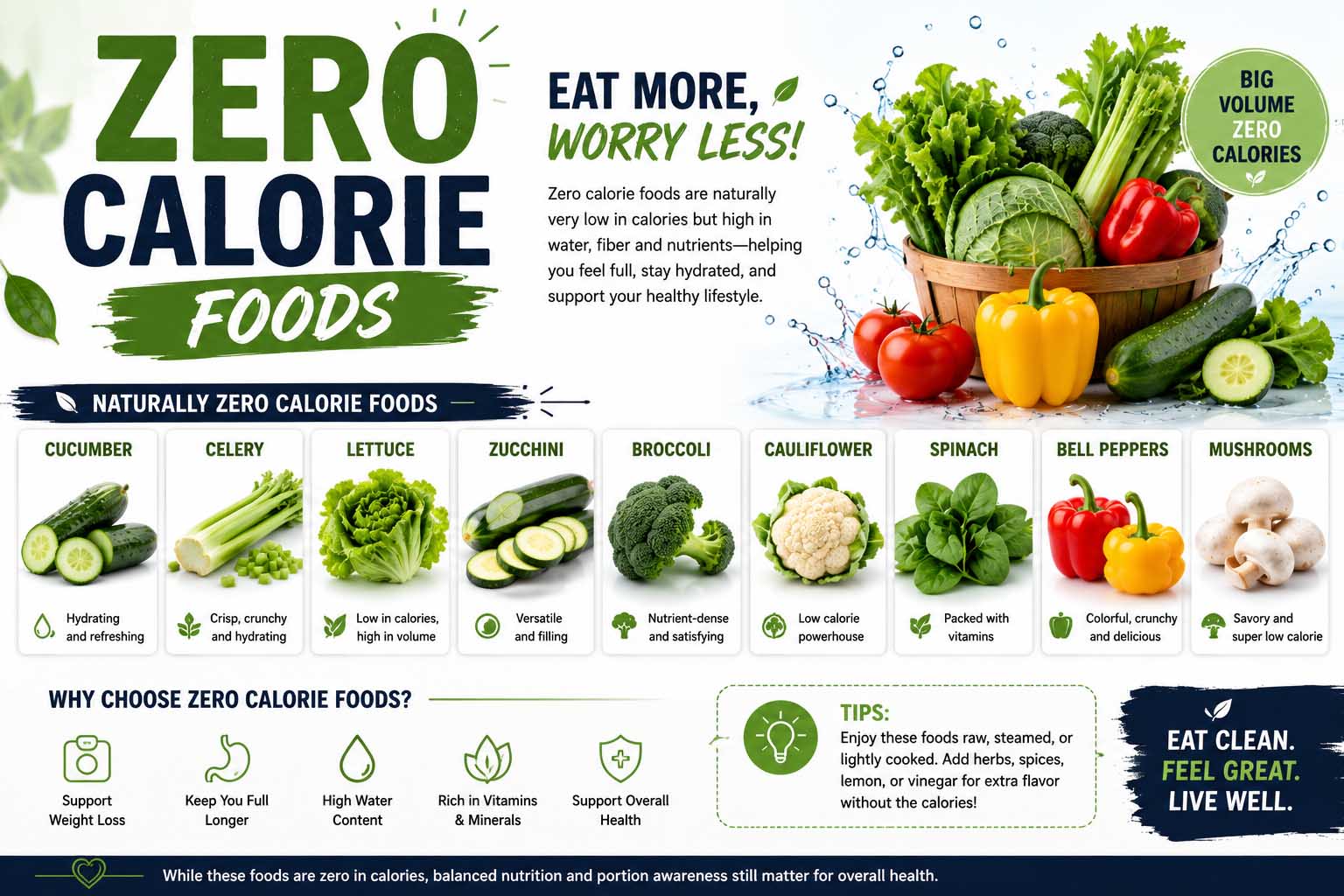
Zero Calorie Foods List
Although no solid food is completely calorie-free, these foods are among the lowest in calories.
| Food | Approximate Calories |
|---|---|
| Celery | 6 per stalk |
| Cucumber | 8 per ½ cup |
| Lettuce | 5 per cup |
| Spinach | 7 per cup |
| Zucchini | 10 per ½ cup |
| Mushrooms | 8 per ½ cup |
| Cabbage | 11 per cup |
| Radishes | 9 per ½ cup |
| Tomatoes | 11 per small tomato |
| Asparagus | 20 per 5 spears |
| Broccoli | 15 per ½ cup |
| Cauliflower | 13 per ½ cup |
These foods can add volume to meals without dramatically increasing total calorie intake.
Are There Really Negative-Calorie Foods?
You may have heard claims that certain foods burn more calories during digestion than they provide.
Current scientific evidence doesn’t support this idea.
Digesting food does require energy, a process called the thermic effect of food. However, the body doesn’t burn enough calories digesting celery or similar vegetables to completely offset their calorie content.
That doesn’t make these foods any less healthy. They’re still excellent choices because they’re filling, nutritious, and naturally low in calories.
Zero Calorie Foods That Fill You Up
Many people searching for zero calorie foods that fill you up are really looking for foods that control hunger without adding many calories.
The best options usually combine high water content with dietary fiber.
Cucumbers
Cucumbers are made up of about 95% water.
They provide:
- Hydration
- Crunch
- Very few calories
- Small amounts of vitamin K
Adding cucumber slices to meals or snacks can increase volume without adding much energy.
You can also enjoy cucumber in flavored water. Many people appreciate the refreshing benefits of cucumber water, especially as a simple way to stay hydrated throughout the day.
Leafy Greens
Lettuce, spinach, arugula, cabbage, and similar vegetables help create larger, more satisfying meals.
A large salad often contains surprisingly few calories while providing vitamins, minerals, and fiber.
Asparagus is another excellent choice because it’s naturally low in calories while supplying valuable nutrients. Learning more about the health benefits of asparagus may encourage you to include it in more meals throughout the week.
Mushrooms
Mushrooms are naturally low in calories yet surprisingly satisfying.
Their meaty texture makes them a popular substitute for higher-calorie ingredients in:
- Stir-fries
- Omelets
- Pasta dishes
- Soups
They also contain vitamins, minerals, and antioxidants.
Broccoli and Cauliflower
These cruciferous vegetables are nutrient-dense and filling.
They’re rich in:
- Fiber
- Vitamin C
- Folate
- Plant compounds
Roasting or steaming them creates a flavorful side dish without many calories.
Benefits of Including More Low-Calorie Foods
Rather than focusing only on calorie numbers, think about how foods contribute to your overall eating pattern.
Adding more low-calorie vegetables may help:
- Increase daily vegetable intake.
- Improve meal satisfaction.
- Support healthy weight management.
- Add vitamins and minerals.
- Reduce reliance on highly processed snacks.
Replacing part of a calorie-dense side dish with vegetables is often easier than trying to eliminate favorite foods altogether.
Smart Ways to Build Filling Meals
The most satisfying meals usually contain more than just vegetables.
Try combining low-calorie foods with:
- Lean protein
- Whole grains
- Healthy fats
- Beans or lentils
For example:
- Grilled chicken over spinach and cucumber salad
- Vegetable soup with beans
- Stir-fried mushrooms and broccoli with tofu
- Egg white omelet with tomatoes and spinach
These combinations provide better nutrition than relying only on very low-calorie foods.
Can Zero Calorie Foods Help With Weight Loss?
Low-calorie foods can certainly support weight management, but they aren’t a magic solution.
Healthy weight loss usually comes from creating sustainable eating habits rather than searching for foods with almost no calories.
Many people enjoy incorporating vegetables into smoothies and fresh drinks. If that’s part of your routine, exploring the benefits of juicing can provide helpful ideas while reminding you to include whole fruits and vegetables regularly for extra fiber.
Focusing on balanced meals, regular physical activity, quality sleep, and consistent habits generally produces better long-term results than any single food choice.
Zero Calorie Foods for Intermittent Fasting
Many people ask about zero calorie foods for intermittent fasting, but there’s an important distinction to understand.
During a strict fasting window, eating solid foods—even very low-calorie vegetables—typically breaks the fast because they contain calories and trigger digestion.
- Plain water
- Sparkling water without added sugar
- Black coffee
- Unsweetened tea
Some fasting approaches are more flexible and allow very small amounts of low-calorie foods, but the rules vary depending on your goals. If you’re fasting for medical reasons or to manage a health condition, follow your healthcare provider’s guidance.
Foods That Add Volume Without Many Calories
If you’re trying to eat fewer calories while staying satisfied, focus on foods with a high water and fiber content.
Some of the best options include:
- Lettuce
- Cucumbers
- Celery
- Spinach
- Zucchini
- Cabbage
- Tomatoes
- Radishes
- Broccoli
- Cauliflower
- Bell peppers
These vegetables can increase the size of your meals without dramatically increasing calorie intake.
Easy Meal and Snack Ideas
Low-calorie foods are most effective when they’re part of balanced meals.
Here are a few simple ideas.
Breakfast
- Vegetable omelet with spinach and mushrooms
- Plain Greek yogurt topped with fresh berries
Lunch
- Large mixed salad with grilled chicken
- Vegetable soup with beans
Dinner
- Baked fish with roasted broccoli and cauliflower
- Turkey lettuce wraps with sliced cucumbers
Snacks
- Celery sticks
- Cherry tomatoes
- Cucumber slices
- Bell pepper strips
- Radishes
These meals provide protein, fiber, vitamins, and minerals while keeping calories reasonable.
Common Myths About Zero Calorie Foods
Myth: You Can Eat Unlimited Amounts
Not exactly.
Even foods with very few calories still contribute to your total daily intake. Large portions can add up over time.
Fortunately, most low-calorie vegetables are filling enough that overeating them is less common than with highly processed snack foods.
Myth: Low-Calorie Foods Are Less Nutritious
Quite the opposite.
Many vegetables with very few calories are packed with nutrients.
They often provide:
- Vitamin C
- Vitamin K
- Folate
- Potassium
- Fiber
- Antioxidants
That’s one reason health experts encourage eating a wide variety of colorful produce every day.
Myth: Weight Loss Depends Only on Zero-Calorie Foods
Healthy weight management depends on your overall eating pattern, activity level, sleep, stress, and long-term habits.
Low-calorie vegetables can help, but they work best as part of a balanced lifestyle rather than as the entire focus of your diet.
Are There Any Risks?
For most healthy adults, eating more vegetables is safe and beneficial.
However, eating only extremely low-calorie foods for extended periods can make it difficult to get enough:
- Protein
- Healthy fats
- Iron
- Calcium
- Vitamin B12
- Essential fatty acids
Very restrictive diets may also lead to fatigue, hunger, muscle loss, and nutrient deficiencies.
Aim for balance instead of trying to eliminate calories completely.
Tips for Shopping and Food Safety
Fresh vegetables are healthiest when they’re properly handled.
Keep these tips in mind:
- Wash produce under running water before eating.
- Refrigerate perishable vegetables promptly.
- Choose produce that’s firm and free from mold.
- Buy seasonal vegetables when possible.
- Frozen vegetables are also nutritious and convenient.
If you’re curious about pesticide residues on produce, learning about the dirty dozen foods can help you make informed shopping decisions while remembering that eating plenty of fruits and vegetables remains the priority.
Lifestyle Habits That Support Healthy Weight Management
Low-calorie foods are only one piece of the puzzle.
For lasting results:
- Fill half your plate with vegetables.
- Include protein at every meal.
- Stay physically active.
- Drink enough water throughout the day.
- Sleep seven to nine hours each night.
- Limit sugary drinks and heavily processed snacks.
These habits are generally more effective than chasing a single “superfood” or diet trend.
Frequently Asked Questions
Are there truly zero calorie foods?
No solid food is completely calorie-free. The term usually refers to foods that contain very few calories per serving, such as celery, lettuce, cucumbers, and spinach.
What are the best zero calorie foods that fill you up?
Vegetables with high water and fiber content—including broccoli, cabbage, cucumbers, leafy greens, mushrooms, and cauliflower—are among the most filling low-calorie choices.
Can I lose weight by eating only zero calorie foods?
No. Extremely restrictive diets aren’t healthy or sustainable. Successful weight management depends on balanced nutrition, regular activity, and long-term habits.
Can I eat these foods during intermittent fasting?
Most solid foods contain calories and will generally break a strict fast. During fasting windows, plain water, black coffee, and unsweetened tea are usually preferred.
Are frozen vegetables as healthy as fresh ones?
Yes. Frozen vegetables are often processed shortly after harvest and retain many of their nutrients, making them an excellent option throughout the year.
Which low-calorie vegetables are also high in nutrients?
Spinach, broccoli, cauliflower, asparagus, cabbage, tomatoes, and mushrooms all provide valuable vitamins, minerals, and plant compounds while remaining relatively low in calories.
Healthy Eating Starts With Smart Choices
Zero calorie foods may not be truly calorie-free, but they can still play an important role in a healthy diet. Vegetables like celery, cucumbers, spinach, lettuce, mushrooms, broccoli, and cabbage provide plenty of volume with relatively few calories, making meals more satisfying without adding excessive energy.
Rather than focusing on eating as few calories as possible, build balanced meals that include vegetables, lean protein, healthy fats, and whole grains. Small, consistent habits are far more effective for long-term health than relying on any single food or dieting trend.