Thinking about quitting but wondering if it’s really worth it? The benefits of quitting vaping begin sooner than many people realize. While recovery looks different for everyone, stopping vaping gives your body a chance to recover from ongoing exposure to nicotine and other substances found in many vape products.
Whether you’ve been vaping for a few months or several years, quitting can support your overall health. Some changes may become noticeable relatively quickly, while others can develop over weeks or months. Your age, general health, nicotine use, and vaping history can all influence how recovery feels.
This guide explains the benefits of quitting vaping, what happens to your body after you stop, how long it may take for cardio and breathing to improve, and practical ways to make quitting easier.
Why Quitting Vaping Can Benefit Your Health
Many people start vaping because they believe it’s less harmful than smoking cigarettes or because they want to quit smoking. However, vaping is not risk-free. Many products contain nicotine, which is highly addictive, along with flavoring chemicals and other substances that may affect the lungs and cardiovascular system.
When you stop vaping, your body no longer receives repeated exposure to vape aerosol. As a result, normal recovery processes can begin, although the pace differs from person to person.
The health benefits of quitting vaping can extend beyond your lungs. Breaking nicotine dependence, improving physical fitness, and gaining freedom from vaping routines are also important reasons to stop.
For evidence-based help with nicotine withdrawal and quitting, see the U.S. National Cancer Institute’s Smokefree vaping resources. Smokefree notes that nicotine withdrawal differs among individuals and that planning for cravings, triggers, and withdrawal can make quitting more manageable. Smokefree
Benefits of Quitting Vaping Timeline
There isn’t one exact recovery timeline that applies to everyone. In particular, evidence about the precise timeline after quitting vaping is still developing, so timelines based mainly on cigarette smoking shouldn’t automatically be applied to vaping.
Still, several changes can occur as your body adjusts to being vape-free:
| Time After Quitting | What You May Experience |
|---|---|
| First days | Nicotine withdrawal and cravings may become noticeable. |
| First few weeks | Withdrawal symptoms often become easier to manage over time. |
| Following weeks and months | Some people notice changes in breathing, exercise comfort, and daily routines. |
| Longer term | Staying vape-free eliminates continued exposure to vape aerosol and helps break nicotine dependence. |
Withdrawal symptoms can include cravings, irritability, restlessness, headaches, difficulty concentrating, sleep changes, and increased appetite. Fortunately, these symptoms generally become less intense as your body adjusts to being nicotine-free. Smokefree
If you’re curious about lung recovery in more detail, our guide on how long does it take for your lungs to heal from vaping explains the healing process and factors that can influence it.
Benefits of Quitting Vaping for Your Body
Stopping vaping removes repeated exposure to vape aerosol and nicotine. Therefore, quitting can affect several areas of your physical health and everyday life.
Your Lungs Get a Chance to Recover
Vaping exposes your lungs to aerosol and substances that can irritate the respiratory system. Once you stop, that ongoing exposure ends.
Over time, some people may notice changes such as:
- Less throat irritation
- Less coughing
- Easier breathing during activities
- Greater comfort during exercise
However, lung symptoms should not automatically be assumed to come from vaping or withdrawal. Persistent coughing, wheezing, chest pain, or breathing difficulties should be evaluated by a healthcare professional.
Cardiovascular Benefits of Quitting Vaping
Nicotine can affect heart rate and blood pressure. Therefore, quitting nicotine-containing vapes removes repeated nicotine exposure from your daily routine.
Your cardiovascular health also depends on exercise, diet, sleep, genetics, medical conditions, and whether you smoke or use other tobacco products.
For that reason, quitting vaping should be viewed as one part of a broader heart-healthy lifestyle.
Sleep May Improve After Nicotine Withdrawal
Nicotine is a stimulant, and nicotine withdrawal can also temporarily disrupt sleep.
As a result, some people initially experience:
- Trouble falling asleep
- Restlessness
- Daytime tiredness
- Changes in sleep patterns
However, these withdrawal effects tend to improve with time. Maintaining a regular sleep schedule can also make the adjustment easier. Smokefree
You May Feel More Comfortable During Physical Activity
Some former vapers may notice that physical activity feels easier after they stop vaping.
Walking, climbing stairs, cycling, running, and other forms of exercise can also help build cardiovascular fitness independently of quitting.
Therefore, gradual exercise can become a useful part of your vape-free routine.
How Long After Quitting Vaping Does Cardio Improve?
There isn’t one scientifically established number of days after quitting vaping when everyone’s cardio performance improves.
Recovery depends on factors such as:
- How frequently you vaped
- How long you vaped
- Whether you also smoke cigarettes
- Your existing cardiovascular fitness
- Lung health
- Age
- Exercise habits
- Other medical conditions
Some people may notice exercise becoming more comfortable over the following weeks or months, while others may need longer.
Furthermore, cardio fitness improves through training itself. Walking, cycling, swimming, or other aerobic exercise can gradually improve endurance after you quit.
If you have chest pain, unusual shortness of breath, fainting, or significant exercise intolerance, seek medical advice instead of trying to push through the symptoms.
Benefits of Quitting Vaping for Skin and Appearance
Another area people ask about is whether quitting vaping can improve their appearance.
Skin health depends on many factors, including circulation, hydration, nutrition, sleep, sun exposure, genetics, and skincare habits.
Reducing nicotine exposure may remove one factor that can affect normal circulation. However, dramatic or immediate skin changes shouldn’t be expected simply because you’ve stopped vaping.
Instead, support your skin by combining your vape-free lifestyle with:
- Adequate hydration
- Balanced nutrition
- Regular sleep
- Sun protection
- Appropriate skincare
Over time, these habits can support overall skin health.
Mental and Lifestyle Benefits of Quitting Vaping
The benefits of quitting vaping aren’t limited to physical health. Breaking dependence on nicotine can also change your everyday routine.
Potential lifestyle benefits include:
- Feeling less controlled by nicotine cravings
- Greater confidence after reaching a personal goal
- Freedom from planning around vaping breaks
- Spending less money on vape products
- No longer worrying about carrying or charging a vape
- Building healthier ways to manage stress
However, the first stage can be difficult.
Nicotine withdrawal may temporarily cause irritability, anxiety, restlessness, trouble concentrating, sleep problems, or strong cravings. These symptoms don’t mean quitting isn’t working. Instead, they can occur while your body adjusts to being nicotine-free. Smokefree
Common Withdrawal Symptoms After Quitting Vaping
Knowing what to expect can make the quitting process feel more manageable.
Common nicotine withdrawal symptoms include:
- Strong cravings
- Irritability
- Restlessness
- Headaches
- Difficulty concentrating
- Increased appetite
- Sleep problems
- Anxiety or low mood
- Feeling tired or groggy
Withdrawal varies considerably from person to person. However, these uncomfortable effects generally fade with time if you remain vape-free. Smokefree
If symptoms become difficult to manage, talk with a healthcare professional about appropriate support.
Benefits of Quitting Vaping for Exercise and Fitness
Stopping vaping can also support your broader fitness goals by removing vaping from your exercise routine.
However, quitting alone doesn’t instantly create cardiovascular fitness.
Regular activity remains important.
Start Gradually
If you haven’t exercised regularly, start with manageable activities such as:
- Walking
- Easy cycling
- Swimming
- Light strength training
- Gentle jogging when appropriate
Then, gradually increase your activity as your fitness improves.
Track How Exercise Feels
Instead of expecting a dramatic change overnight, notice practical signs of progress.
For example, you might track:
- Walking distance
- Exercise duration
- Recovery after activity
- Perceived effort
- How easily you climb stairs
This can help you see gradual improvements that may otherwise be difficult to notice.
What Happens to Your Body After You Stop Vaping?
One of the strongest questions people have is simply: What happens after I stop?
Initially, your body begins adjusting to the absence of nicotine if you used nicotine-containing vapes.
Consequently, cravings and withdrawal symptoms may appear.
Over time, you may notice changes in your routines, appetite, sleep, concentration, mood, and exercise habits. Meanwhile, your lungs are no longer being repeatedly exposed to vape aerosol.
The experience is different for everyone. Therefore, avoid comparing your recovery too closely with someone else’s timeline.
Tips to Make Quitting Vaping Easier
There’s no single quitting method that works for everyone. However, preparing for cravings and triggers can make the process more manageable.
Identify Your Vaping Triggers
Many people vape in response to particular situations.
Common triggers include:
- Drinking coffee
- Driving
- Feeling stressed
- Social gatherings
- Taking work breaks
- Seeing other people vape
- Using a phone or social media
Recognizing these patterns allows you to prepare alternatives before a craving appears. Smokefree also recommends identifying personal triggers and making a plan for dealing with them. Smokefree
Build New Habits
Replacing vaping with another activity can help you handle cravings.
Consider:
- Walking
- Drinking water
- Deep breathing
- Chewing sugar-free gum
- Stretching
- Calling a friend
- Keeping your hands occupied
Even a short change in activity can help you move through a craving without vaping. Smokefree
Talk to a Healthcare Professional
If you’re struggling with nicotine cravings, professional support may help.
Some people ask about products designed to manage nicotine dependence. If you’re curious about these options, our article on benefits of nicotine patch for non smokers explains how nicotine patches work and why they should only be used under appropriate medical guidance.
Notably, medications such as nicotine replacement therapy, varenicline, and bupropion are used for cigarette smoking cessation, but the FDA has not approved them specifically for quitting vaping. Therefore, discuss medication options with a healthcare professional rather than starting them on your own. Smokefree
Keep Track of Your Progress
Celebrate meaningful milestones, such as:
- One day vape-free
- One week
- One month
- Three months
- Six months
Recognizing your progress can help maintain motivation during difficult periods.
When to Seek Medical Advice After Quitting
Most nicotine withdrawal symptoms are uncomfortable rather than dangerous. However, serious symptoms should not automatically be blamed on quitting.
Seek prompt medical attention if you experience symptoms such as:
- Persistent or severe chest pain
- Severe shortness of breath
- Coughing up blood
- High fever with respiratory symptoms
- Severe or worsening wheezing
- Fainting or severe dizziness
If you notice ongoing breathing problems after quitting, learning how to stop wheezing may help you understand common causes and when professional evaluation is recommended. Self-care measures can be useful, but persistent symptoms should be assessed by a qualified healthcare provider.
Healthy Habits That Support Recovery After Quitting Vaping
Quitting vaping is a major step. However, your everyday habits can also affect how you feel during the transition.
Stay Hydrated
Keeping hydrated supports normal body function and can also give you something to reach for when you’re accustomed to holding a vape.
Additionally, keeping a reusable water bottle nearby can become part of your replacement routine.
Eat Balanced Meals
Nicotine withdrawal may change your appetite.
Therefore, build meals around nutritious foods such as:
- Fruits and vegetables
- Whole grains
- Lean protein
- Healthy fats
Healthy snacks can also give your hands and mouth something to do during cravings. Smokefree
Be Physically Active
Exercise doesn’t need to be intense to be useful.
Walking, cycling, swimming, or strength training can:
- Support cardiovascular fitness
- Improve mood
- Help manage stress
- Provide a distraction from cravings
- Create a new healthy routine
Choose activities you enjoy so they’re easier to maintain.
Prioritize Sleep
Good sleep supports physical and emotional well-being.
If nicotine withdrawal temporarily affects your sleep, try:
- Maintaining a regular bedtime
- Limiting caffeine later in the day
- Reducing screen use before bed
- Keeping your bedroom comfortable
- Exercising during the day
Sleep problems can occur during nicotine withdrawal, but they generally improve as the body adjusts. Smokefree
Common Myths About the Benefits of Quitting Vaping
Several misconceptions can create unrealistic expectations about recovery.
Myth: Your Body Completely Recovers Immediately
Stopping vaping ends continued exposure, but recovery isn’t instantaneous.
Instead, your body needs time to adjust, particularly if you’re dependent on nicotine.
Myth: Withdrawal Lasts Forever
Withdrawal can feel difficult at first. However, symptoms generally become less intense with time.
Cravings may occasionally return because of familiar situations or triggers, so having a plan can help.
Myth: Quitting Isn’t Worth It if You’ve Vaped for Years
Stopping continued exposure can still benefit your health and break nicotine dependence, regardless of how long you’ve been vaping.
Therefore, a long history of vaping isn’t a reason to continue.
Myth: Quitting Vaping Instantly Fixes Your Cardio
Cardiovascular fitness depends on many factors.
Quitting removes vaping from the equation, but regular exercise, sleep, nutrition, existing health conditions, and fitness level still matter.
Can Quitting Reduce Respiratory Problems?
No one can guarantee that quitting vaping will prevent respiratory illness because many factors affect lung health.
However, stopping vaping eliminates continued exposure to vape aerosol.
Respiratory symptoms can also have many causes, including infections and underlying medical conditions. If you develop fever, persistent coughing, or breathing difficulty, it’s helpful to understand conditions such as is pneumonia contagious and when medical evaluation is appropriate.
Frequently Asked Questions About the Benefits of Quitting Vaping
What Are the Main Benefits of Quitting Vaping?
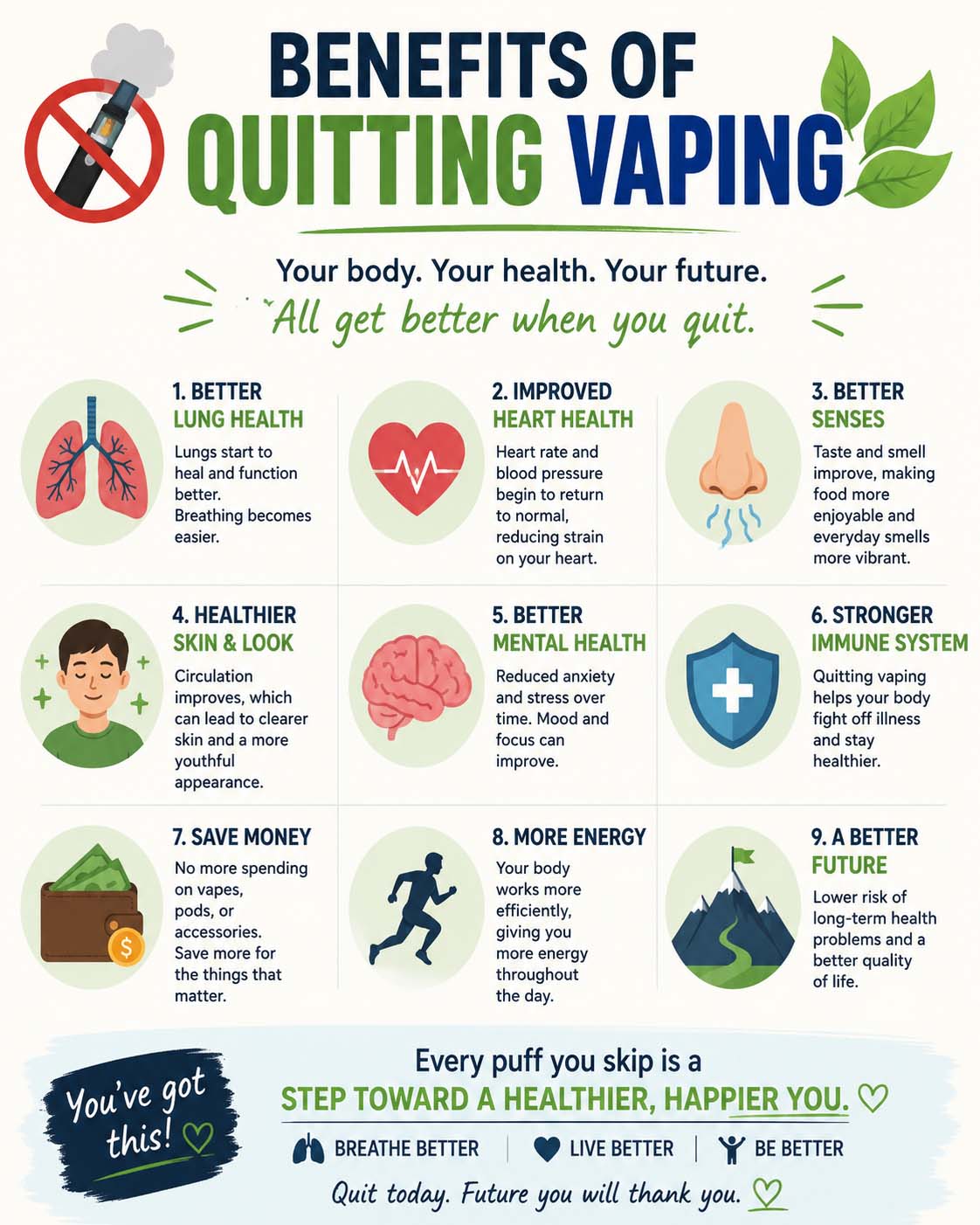
The benefits of quitting vaping include ending continued exposure to vape aerosol, breaking nicotine dependence, saving money, and creating opportunities for healthier routines.
Some people may also notice changes in breathing, exercise comfort, sleep, and general well-being over time.
What Happens to Your Body After You Stop Vaping?
If your vape contains nicotine, your body begins adjusting to the absence of nicotine.
Therefore, you may initially experience cravings, irritability, difficulty concentrating, sleep changes, headaches, or increased appetite.
Meanwhile, your lungs are no longer receiving repeated exposure to vape aerosol.
How Long After Quitting Vaping Does Cardio Improve?
There is no single timeline that applies to everyone.
Some people may notice exercise becoming easier over the following weeks or months, while others may take longer. Your vaping history, fitness level, smoking status, lung health, and exercise routine all influence the experience.
How Long Do Nicotine Cravings Last?
Cravings are often particularly difficult during the early stages of quitting. However, they generally become less intense and frequent over time.
Triggers can sometimes cause cravings later, which is why developing coping strategies remains useful. Smokefree
Will I Gain Weight After Quitting Vaping?
Some people experience increased appetite during nicotine withdrawal.
However, weight gain isn’t inevitable. Balanced meals, appropriate portions, healthy snacks, and regular activity can help you manage appetite changes.
Is It Normal to Cough After Quitting Vaping?
Some people may notice changes in coughing after stopping vaping.
However, don’t assume persistent or worsening coughing is simply a normal part of recovery. If a cough is severe, lasts a long time, or occurs with chest pain, fever, blood, or breathing difficulty, seek medical advice.
When Do the Benefits of Quitting Vaping Begin?
The process begins as soon as you stop because you’re no longer continuing the same vaping exposure.
However, noticeable changes vary widely. Some effects of nicotine withdrawal appear early, while improvements in habits, dependence, exercise comfort, and overall well-being may take longer.
Is Quitting Vaping Worth It?
Yes. Stopping vaping eliminates ongoing exposure to vape aerosol and can help you become free from nicotine dependence.
In addition, quitting can save money and remove the need to organize everyday activities around vaping.
Should I Quit Vaping on My Own or Get Professional Help?
Some people quit without formal support, while others benefit from healthcare guidance, quitlines, counseling, or structured quit programs.
Seeking support is a practical option, particularly if cravings or withdrawal make quitting difficult. Smokefree recommends building a support system and planning ahead for withdrawal and triggers. Smokefree
Benefits of Quitting Vaping: Looking Ahead
The benefits of quitting vaping can affect your health, daily habits, finances, fitness goals, and relationship with nicotine. Most importantly, once you stop, your body is no longer exposed to vape aerosol each day.
Recovery doesn’t follow one universal timeline. Some people notice changes relatively quickly, while others need more time. Therefore, focus on staying vape-free rather than expecting your body to meet an exact schedule.
If you’re working with a healthcare provider during recovery, they may perform a routine head to toe assessment as part of a broader evaluation of your health, especially if you have ongoing symptoms or other medical conditions.
Finally, choose a quitting plan you can realistically maintain. Identify your triggers, prepare for cravings, build healthier replacement habits, and seek professional support when necessary. Each day without vaping reduces continued exposure and moves you further toward a vape-free routine.