Nicotine patches are primarily designed to help people quit smoking by delivering controlled amounts of nicotine through the skin. However, growing online discussions have led some people to wonder about the benefits of nicotine patch for non smokers.
Can nicotine patches improve focus, energy, or cognitive performance in people who have never smoked? Are there proven health benefits? Or do the risks outweigh any potential advantages?
This guide explores current research, potential effects, safety concerns, and what non-smokers should know before considering nicotine patches.
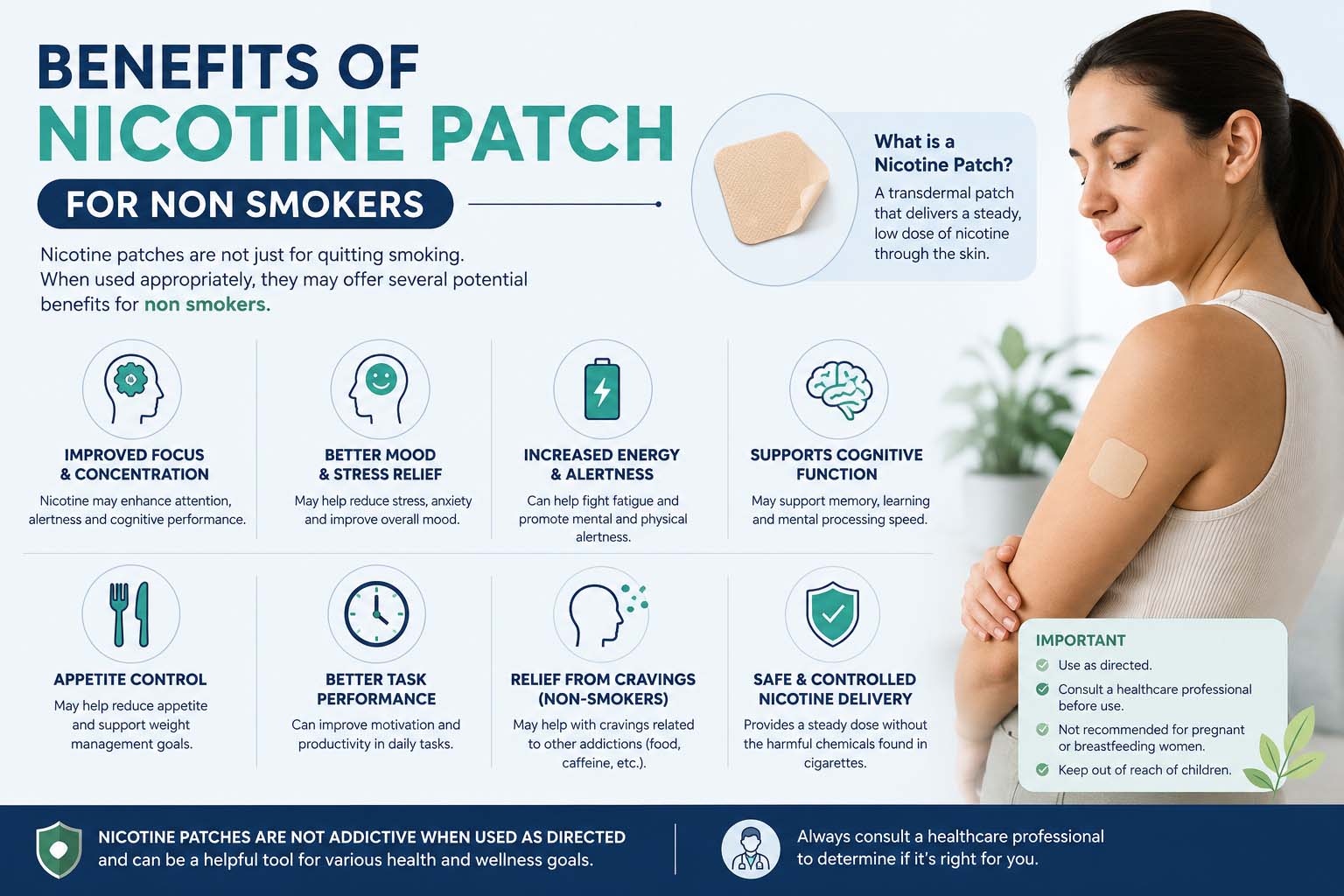
What Is a Nicotine Patch?
It works by:
- Delivering nicotine slowly through the skin
- Reducing nicotine withdrawal symptoms
- Helping smokers quit tobacco products
Unlike cigarettes or vaping products, patches do not involve inhaling smoke or aerosol.
Common patch strengths include:
- 7 mg
- 14 mg
- 21 mg
These products are generally intended for people who are trying to stop smoking.
Why Are Non-Smokers Interested in Nicotine Patches?
Interest in nicotine patches among non-smokers has increased due to discussions about:
- Focus
- Attention
- Mental alertness
- Productivity
- Cognitive performance
Some people believe nicotine may enhance concentration because it interacts with neurotransmitters in the brain.
However, it is important to distinguish between scientific evidence and internet claims.
Understanding Nicotine’s Effects on the Brain
Nicotine affects several brain chemicals, including:
- Dopamine
- Acetylcholine
- Norepinephrine
These chemicals play roles in:
- Attention
- Learning
- Memory
- Mood regulation
Because of these effects, researchers have explored nicotine’s potential influence on cognitive performance.
However, research findings remain mixed, especially for healthy non-smokers.
Benefits of Nicotine Patch for Non Smokers: What Research Suggests
When discussing the benefits of a nicotine patch for non smokers, it’s important to note that nicotine patches are not approved as cognitive enhancement products.
That said, some research has examined possible effects.
Temporary Attention Support
Certain studies suggest nicotine may temporarily improve attention and alertness in some individuals.
Researchers have observed short-term changes in:
- Reaction time
- Focus
- Task performance
However, these effects are often modest and may not outweigh potential risks.
Increased Alertness
Nicotine can stimulate the nervous system.
Some individuals report feeling:
- More awake
- More mentally engaged
- More focused
However, these effects vary greatly between individuals and are not guaranteed.
Potential Memory Effects
Researchers have investigated nicotine’s role in memory and learning processes.
Some early findings suggest possible short-term effects on specific cognitive tasks, though evidence remains limited and inconsistent.
Health Benefits of Nicotine Patch for Non Smokers: Is There Evidence?
Many people search for possible health advantages of nicotine patches for non-smokers.
Currently, there are no widely accepted health guidelines recommending nicotine patches for healthy non-smokers.
Unlike exercise, healthy eating, sleep optimization, and stress management, nicotine patch use has not been established as a wellness strategy for the general population.
Instead, most medical organizations continue to view nicotine replacement therapy primarily as a smoking cessation tool.
Benefits of the Nicotine Patch for Non Smokers Compared to Smoking
If nicotine exposure occurs, patches may offer some advantages compared to smoking tobacco.
No Combustion
Patches do not produce:
- Tar
- Carbon monoxide
- Smoke-related toxins
Stable Nicotine Delivery
Unlike cigarettes, patches provide a slower and more controlled release of nicotine.
Reduced Exposure to Harmful Chemicals
Traditional tobacco smoke contains thousands of chemicals that are not present in nicotine patches.
However, this does not mean nicotine patches are risk-free for non-smokers.
Benefits of Nicotine Patch for Non Smokers ADHD Discussions
One frequently searched topic is benefits of nicotine patch for non smokers ADHD.
Researchers have explored nicotine’s interaction with attention-related pathways in the brain.
Some small studies have investigated whether nicotine could influence:
- Attention
- Executive function
- Cognitive performance
However:
- Nicotine patches are not a standard ADHD treatment
- More research is needed
- Medical supervision is essential for treatment decisions
Therefore, individuals with ADHD should follow evidence-based treatment plans recommended by qualified healthcare professionals.
Potential Risks for Non-Smokers
Any discussion about benefits must also address risks.
Nicotine Dependence
Nicotine is addictive.
Increased Heart Rate
Nicotine may temporarily raise:
- Heart rate
- Blood pressure
Sleep Disturbances
Some users experience:
- Vivid dreams
- Insomnia
- Difficulty sleeping
Nausea and Dizziness
Nicotine can cause side effects, especially in people who have never used nicotine products before.
Common symptoms include:
- Nausea
- Headaches
- Dizziness
- Upset stomach
Symptoms of Nicotine Sensitivity
Non-smokers may be more sensitive to nicotine than former smokers.
Possible symptoms include:
- Sweating
- Rapid heartbeat
- Anxiety
- Lightheadedness
- Headaches
Wellness Alternatives for Focus and Cognitive Performance
Individuals seeking better concentration may benefit from evidence-based approaches.
Exercise
Regular physical activity can support:
- Brain health
- Mood
- Memory
- Focus
Additionally, understanding the best time to workout may help you establish a more consistent activity routine.
Likewise, learning about the benefits of a weighted vest may help you explore another form of resistance-based activity.
Quality Sleep
Adults generally benefit from:
- 7–9 hours of sleep per night
In fact, sleep is one of the most effective ways to improve cognitive performance naturally.
Nutrition
A balanced diet supports brain function.
Helpful foods include:
- Fruits
- Vegetables
- Whole grains
- Lean proteins
- Healthy fats
For example, people considering protein supplements may find information about the best protein powder useful when reviewing their nutrition goals.
Similarly, learning about the benefits of cod liver oil may help you understand another supplement associated with healthy fats and general wellness.
Stress Management
Chronic stress can impair attention and productivity.
Useful techniques include:
- Meditation
- Deep breathing
- Yoga
- Walking
Overall, these strategies carry significantly fewer risks than nicotine use.
Additionally, people organizing other supplements may find information about the best time to take coq10 useful when discussing their wellness routine with a healthcare professional.
Who Should Avoid Nicotine Patches?
Individuals should consult healthcare professionals before using nicotine products.
Extra caution may be necessary for people with:
- Heart conditions
- High blood pressure
- Pregnancy
- Certain medications
- Nicotine sensitivity
Above all, professional guidance is important whenever nicotine products are being considered.
FAQ About the Benefits of Nicotine Patch for Non Smokers
Are There Proven Advantages for Non-Smokers?
Research has explored potential effects on attention and alertness, but nicotine patches are not approved as cognitive enhancement tools for healthy non-smokers.
Can Nicotine Patches Improve Focus?
Some studies suggest temporary improvements in attention, but results vary and potential risks must be considered.
Are Nicotine Patches Safe for People Who Never Smoked?
Non-smokers may experience side effects and nicotine dependence. Therefore, medical advice is recommended before use.
What Are the Health Benefits of Nicotine Patch for Non Smokers?
Currently, there are no widely accepted health recommendations supporting nicotine patch use for healthy non-smokers.
Can Nicotine Patches Help With ADHD?
Research is ongoing, but nicotine patches are not considered a standard ADHD treatment.
What Are Safer Alternatives for Improving Focus?
Exercise, quality sleep, balanced nutrition, and stress management are generally safer and more evidence-based options.
Conclusion
Interest in the benefits of nicotine patch for non smokers continues to grow, particularly regarding attention, focus, and cognitive performance. While some research suggests nicotine may influence certain brain functions, evidence remains limited, and nicotine patches are not approved as wellness or productivity tools for healthy non-smokers.
However, potential benefits must be weighed against important risks such as dependence, cardiovascular effects, and side effects. For most people seeking better concentration and overall health, proven lifestyle strategies—including exercise, sleep, proper nutrition, and stress management—remain the safest and most sustainable approaches.
Anyone considering nicotine patch use should discuss the decision with a qualified healthcare professional to ensure it aligns with their individual health needs.