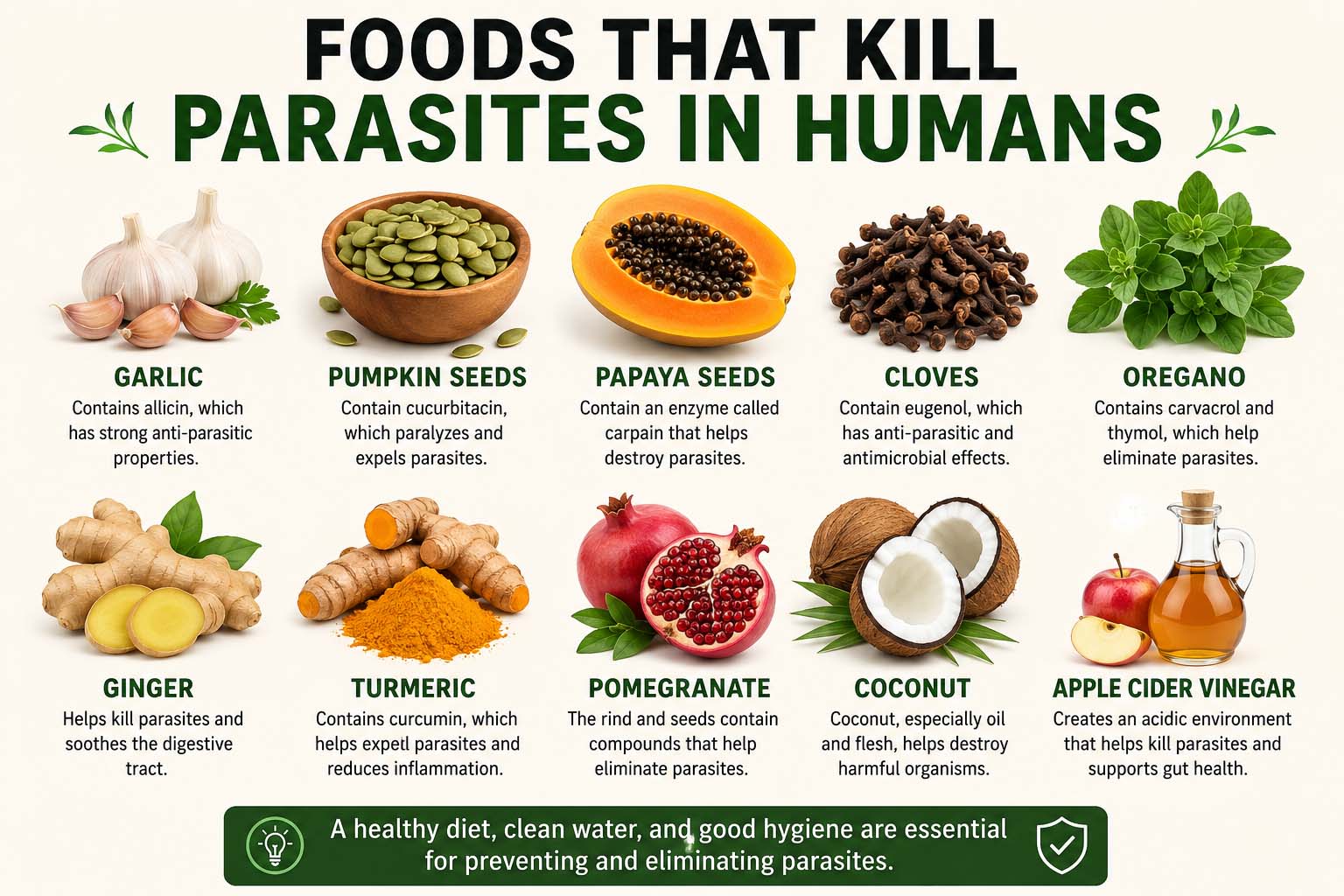
Foods That Kill Parasites in Humans is a common search topic for people looking for natural ways to support their health. Garlic, pumpkin seeds, papaya seeds, ginger, and other foods are often discussed as possible natural remedies. However, eating these foods does not reliably eliminate parasitic infections in humans. The right treatment depends on the parasite involved, so it is important to understand what research actually supports.
This guide explains the potential benefits of commonly discussed foods, the limits of available evidence, and when medical testing and treatment may be necessary.
Foods That Kill Parasites in Humans: What Science Says
Many foods contain nutrients and plant compounds that support general health. Researchers have also studied some compounds for their effects on parasites in laboratory and animal studies. However, results from these studies do not automatically prove that eating the same foods can cure a human infection.
For example, a substance may affect a parasite in a laboratory but fail to reach the same concentration in the human body after eating it. Therefore, natural foods should not be considered a replacement for proven antiparasitic medication.
Foods That Kill Parasites in Humans: Understanding the Evidence
Research on natural remedies varies in quality. Some findings are preliminary, while others concern general digestive health rather than parasite elimination.
Before relying on a food as a remedy, consider whether human clinical studies support the claim, whether the amount used is safe, and whether the research tested the specific parasite involved.
Foods That Kill Parasites in Humans: Garlic and Its Potential Effects
Garlic contains compounds such as allicin, which have been studied for various biological effects. Some laboratory research has explored garlic compounds and their activity against certain microorganisms, including some parasites.
However, these findings do not establish that eating garlic can cure a parasitic infection in humans. Garlic can still be part of a balanced diet, but it should not replace testing or prescribed treatment.
Can Garlic Kill Parasites in Humans?
There is not enough reliable clinical evidence to recommend garlic alone as a treatment for human parasitic infections. Eating raw garlic in large amounts may cause stomach discomfort, heartburn, or irritation. Garlic supplements can also interact with certain medicines, including blood-thinning medications.
Foods That Kill Parasites in Humans: Pumpkin Seeds and Research
Pumpkin seeds provide protein, healthy fats, magnesium, zinc, and other nutrients. They are sometimes promoted as a natural remedy for intestinal parasites because certain compounds in pumpkin seeds have been investigated in traditional and preliminary research.
Nevertheless, Research has not established pumpkin seeds as a reliable treatment for parasitic infections in humans Enjoy them as part of a nutritious diet, but seek appropriate medical advice if you suspect an infection.
Are Pumpkin Seeds a Proven Parasite Treatment?
No. Pumpkin seeds can contribute useful nutrients, but eating them does not guarantee that intestinal parasites will be removed. A confirmed infection may require a specific medication chosen according to the parasite and the person’s circumstances.
Natural Foods for Parasites: Papaya Seeds and the Evidence
Papaya seeds are another popular ingredient in natural parasite remedies. Some preliminary research has explored papaya seed preparations, but the evidence is limited and does not establish a safe, effective dose for treating human infections.
Eating papaya as a fruit can contribute to a balanced diet. However, Do not rely on papaya seeds as a proven deworming medicine. Avoid using concentrated preparations or large amounts without qualified medical guidance, particularly for children or during pregnancy.
Natural Foods for Parasites: Pineapple and Bromelain
Pineapple contains bromelain, a group of enzymes that has been studied for several biological effects. Online claims sometimes suggest that pineapple can eliminate intestinal parasites, but strong clinical evidence does not support using pineapple as a cure for parasitic infections.
Pineapple can provide vitamin C, fluids, and other nutrients. It is best viewed as a healthy food rather than a parasite treatment. People who experience mouth irritation or digestive discomfort after eating pineapple may need to limit their intake.
Natural Foods for Parasites: Ginger and Turmeric
Ginger and turmeric contain plant compounds that have been researched for their potential biological properties. Both ingredients can add flavor to meals and fit into a varied, balanced diet.
However, laboratory findings about individual compounds do not prove that ginger tea, turmeric drinks, or food preparations can eliminate parasites in the human body.
Do Ginger and Turmeric Kill Parasites in Humans?
There is insufficient clinical evidence to recommend ginger or turmeric as standalone treatments for human parasitic infections. Concentrated supplements may also cause side effects or interact with medications. Use them as foods if tolerated, and discuss supplements with a healthcare professional when needed.
Foods That Kill Parasites in Humans: Coconut Oil Claims
Coconut oil contains fats, including lauric acid, that have been studied for antimicrobial activity in certain settings. Some online sources claim that coconut oil can remove intestinal parasites, but reliable human evidence does not establish it as an effective treatment.
Coconut oil can be consumed in moderation if it suits your diet. Because it is high in saturated fat, excessive intake may not be appropriate for everyone. It should not replace diagnosis or prescribed antiparasitic medicine.
Foods That Support Gut Health During Parasite Recovery
Although no specific food reliably cures parasitic infections, good nutrition can help support general health during recovery. The most suitable diet depends on symptoms, hydration needs, and any advice from a healthcare professional.
Consider these practical choices:
- Fruits and vegetables: Provide vitamins, minerals, and dietary fiber.
- Whole grains: Supply fiber and energy when tolerated.
- Protein-rich foods: Eggs, beans, fish, poultry, and other protein sources help meet nutritional needs.
- Water and suitable fluids: Help replace fluids lost through diarrhea or vomiting.
- Fermented foods: Yogurt with live cultures and other fermented foods may fit into a balanced diet, although they do not eliminate parasites.
For more information, read this guide to the best time to take probiotics. You can also explore the best time to eat sauerkraut for gut health.
Foods That Kill Parasites in Humans: Can Food Replace Medication?
No food has been established as a reliable substitute for appropriate antiparasitic treatment. Different parasites require different approaches, and some infections may cause complications if left untreated.
A healthcare professional may recommend a specific medicine based on symptoms, test results, travel history, and the suspected organism. Do not stop a prescribed treatment or delay medical care in favor of a food-based remedy.
Why Parasite Treatment Depends on the Organism
Parasites are not all the same. Some affect the intestines, while others affect different organs or tissues. A treatment that works for one parasite may not work for another.
For this reason, identifying the infection is often more useful than trying several foods or supplements without a diagnosis.
Foods That Kill Parasites in Humans: Diagnosis and Testing
Symptoms alone cannot reliably confirm a parasitic infection. Diarrhea, abdominal pain, bloating, fatigue, and nausea can have many causes, including conditions unrelated to parasites.
Depending on the suspected infection, a healthcare professional may recommend stool testing, blood tests, or other investigations. The appropriate test depends on the parasite and the person’s symptoms and exposure history.
For reliable information about testing, consult the CDC’s guide to parasite testing and diagnosis.
When Should You Seek Medical Advice?
Speak with a healthcare professional if you have persistent digestive symptoms, unexplained weight loss, ongoing diarrhea, or a possible exposure to contaminated food or water. Seek urgent medical care for severe abdominal pain, blood in the stool, signs of significant dehydration, or other severe symptoms.
Children, pregnant people, older adults, and people with weakened immune systems may need prompt medical advice because some infections can carry greater risks.
Preventing Human Parasites Through Safe Food Practices
Food safety and hygiene can reduce the risk of several parasitic infections. Although these habits cannot prevent every infection, they are useful everyday precautions.
- Wash your hands with soap and water before preparing or eating food and after using the toilet.
- Wash fruits and vegetables under clean running water.
- Cook meat, fish, and seafood to safe temperatures.
- Avoid untreated water when traveling in areas where water safety is uncertain.
- Prevent cross-contamination by keeping raw meat separate from ready-to-eat foods.
- Follow local food safety advice when handling or preparing raw produce and animal products.
Good hygiene, safe cooking, and access to clean water are more dependable prevention strategies than relying on foods marketed as parasite cleansers.
Foods That Kill Parasites in Humans: Common Myths and Facts
Several popular claims about natural parasite remedies can be misleading. Understanding the difference between preliminary research and proven treatment helps people make safer decisions.
Myth: Garlic removes every type of parasite.
Fact: Garlic has been studied for biological activity, but it is not a proven cure for all human parasitic infections.
Myth: Pumpkin seeds can replace deworming medicine.
Fact: Pumpkin seeds are nutritious, but they are not an established replacement for prescribed treatment.
Myth: A parasite cleanse is necessary for everyone.
Fact: People do not generally need parasite cleanses without a specific medical reason. Unnecessary supplements or restrictive diets may cause harm or delay proper diagnosis.
Myth: Digestive symptoms always mean parasites are present.
Fact: Many digestive conditions cause similar symptoms. Appropriate assessment and testing can help determine the cause.
Foods That Kill Parasites in Humans: Frequently Asked Questions
What foods are commonly discussed as natural parasite remedies?
Garlic, pumpkin seeds, papaya seeds, ginger, turmeric, pineapple, and coconut oil are often mentioned. However, none should be relied on as a proven cure for a human parasitic infection.
Can I remove intestinal parasites without medication?
Whether medication is necessary depends on the parasite and the infection. Do not assume that dietary changes alone will clear an infection. Seek medical advice for appropriate testing and treatment.
Are parasite cleanses safe?
Not necessarily. Some products contain ingredients that cause side effects or interact with medicines. Their claims may lack reliable clinical evidence. Ask a healthcare professional before using a parasite cleanse or concentrated supplement.
How can I tell if I have a parasite?
Symptoms may include diarrhea, abdominal discomfort, nausea, or unexplained weight loss, but these symptoms have many possible causes. A healthcare professional can determine whether testing is appropriate.
What should I eat while recovering from a parasitic infection?
Choose a balanced diet with foods you can tolerate, and maintain adequate fluid intake. Follow any dietary recommendations provided for your specific infection or symptoms.
Foods That Kill Parasites in Humans: Key Takeaways
Garlic, pumpkin seeds, papaya seeds, ginger, turmeric, pineapple, and coconut oil are frequently discussed as natural parasite remedies. However, current evidence does not establish these foods as reliable cures for parasitic infections in humans.
The safest approach is to maintain good nutrition, practice food safety, and seek medical assessment when an infection is suspected. Proper testing can help identify the cause, while appropriate treatment can reduce the risk of complications. Use food to support general health, not as a replacement for proven medical care.