
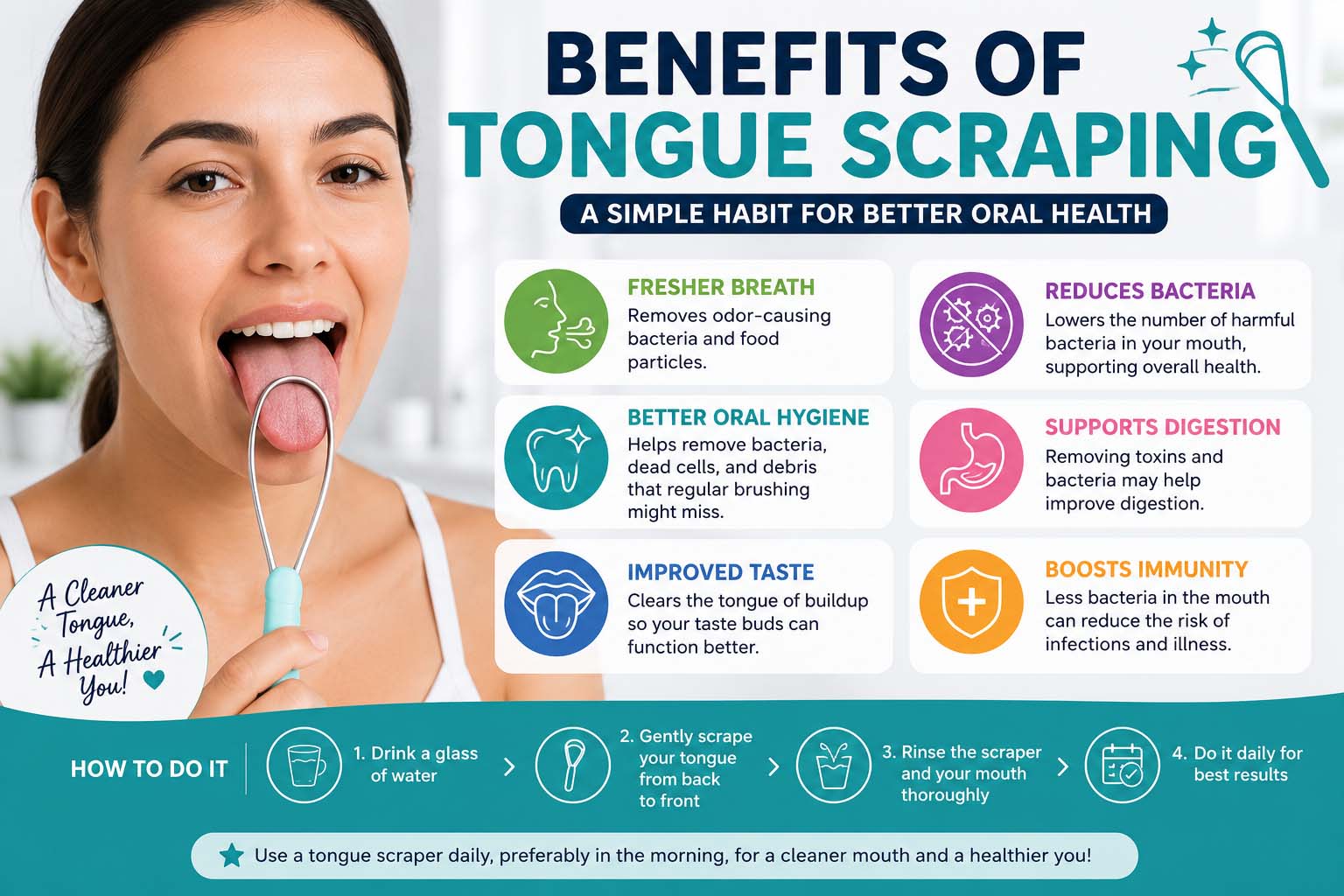
The benefits of tongue scraping include removing buildup from the tongue, helping reduce bad breath, and supporting a cleaner-feeling mouth. Although brushing and flossing are essential for good oral hygiene, your tongue can also collect bacteria, food particles, and dead cells that contribute to unpleasant breath.
Understanding the benefits of tongue scraping can help you decide whether this simple habit belongs in your daily oral care routine. When performed gently, tongue scraping can complement brushing, flossing, and regular dental checkups.
However, it is important to understand what tongue scraping can and cannot do. It is not a replacement for brushing, flossing, or regular dental checkups. Instead, it works best as an additional step in a consistent oral hygiene routine.
What Is Tongue Scraping?
Tongue scraping is an oral hygiene practice that involves gently running a small tool across the surface of your tongue to remove accumulated debris. These tools are usually made from stainless steel, plastic, or copper.
The tongue has a naturally textured surface that can trap bacteria, food particles, and dead cells. This buildup may contribute to bad breath, particularly when oral hygiene is inconsistent.
A tongue scraper is designed to remove some of this material without requiring vigorous brushing. When used correctly, it can be a quick and straightforward addition to your morning or evening routine.
7 Benefits of Tongue Scraping
1. Helps Reduce Bad Breath
One of the main benefits of tongue scraping is that it may help reduce bad breath, also known as halitosis.
Bacteria on the tongue can break down proteins and release unpleasant-smelling sulfur compounds. These compounds may contribute to persistent mouth odor, especially when a coating develops on the back of the tongue.
Gently scraping your tongue can remove some of the bacteria and debris responsible for these odors. Although it may improve breath freshness, persistent bad breath can also result from gum disease, tooth decay, dry mouth, or other health conditions.
If bad breath continues despite good oral hygiene, consider consulting a dentist.
2. Removes Buildup From the Tongue
The tongue’s uneven surface can collect food particles, dead cells, and microorganisms. Over time, this material may create a visible coating.
Tongue scraping helps remove some of this buildup more directly than simply rinsing your mouth with water. As a result, your tongue may feel cleaner after scraping.
For the best results, use gentle pressure and clean the scraper after each pass. Scraping harder does not necessarily provide better results and may irritate the tongue.
3. May Improve Your Sense of Taste
Another possible benefit of tongue scraping is a cleaner-feeling tongue that may help you enjoy food more comfortably.
A thick coating can interfere with the normal sensation of taste for some people. Removing excess debris may improve the overall feeling of cleanliness in your mouth.
However, evidence that tongue scraping significantly improves taste perception is limited. If you experience a persistent change in taste, speak with a healthcare professional to identify the cause.
4. Supports a More Complete Oral Hygiene Routine
Brushing and flossing remain essential for removing plaque from teeth and cleaning between them. However, these habits do not always remove all the buildup from the tongue.
Adding tongue scraping to your routine addresses another surface inside your mouth. This can make your oral care routine more comprehensive without adding much time.
You can also learn about other everyday wellness habits, including the best time to take probiotics, although probiotics and tongue scraping serve different purposes and should not be considered interchangeable.
5. Helps Your Mouth Feel Fresher
Some people notice that their mouths feel cleaner after using a tongue scraper. Removing the coating from the tongue can reduce the sensation of residue and leave the mouth feeling fresher.
This effect is especially noticeable for people who wake up with a coated tongue or unpleasant morning breath.
Nevertheless, tongue scraping does not prevent every cause of oral odor. Staying hydrated, brushing twice daily, cleaning between your teeth, and maintaining regular dental visits are still important.
6. May Help Reduce Certain Odor-Causing Bacteria
Tongue scraping physically removes some of the material on which bacteria accumulate. Therefore, it may temporarily reduce certain odor-producing microorganisms on the tongue’s surface.
However, it does not sterilize the mouth or permanently eliminate oral bacteria. Many bacteria naturally live in the mouth and play a role in the oral environment.
The goal is to manage excess buildup rather than remove all bacteria. Gentle, consistent cleaning is more appropriate than aggressive scraping.
7. Encourages Better Awareness of Oral Health
Tongue scraping can help you become more aware of changes in your tongue’s appearance and condition.
For example, you may notice unusual discoloration, persistent coating, soreness, or areas that look different from normal. While these changes are not always a sign of a serious problem, paying attention to them can encourage you to seek advice when needed.
A persistent white patch, unexplained bleeding, pain, or a sore that does not heal should be assessed by a dentist or healthcare professional rather than treated through repeated scraping.
How to Scrape Your Tongue Correctly
Using a tongue scraper is generally straightforward. Follow these steps to clean your tongue without causing unnecessary irritation.
- Choose a suitable scraper: Select a clean tool designed for tongue cleaning. Stainless steel and plastic options are both commonly available.
- Stick out your tongue: Extend your tongue comfortably so you can reach its surface.
- Position the scraper gently: Place the curved edge toward the back of your tongue only as far as you can comfortably tolerate.
- Pull forward: Apply light pressure and move the scraper from the back toward the tip of your tongue.
- Rinse the tool: Wash away the collected debris after each pass.
- Repeat if needed: Two or three gentle passes may be sufficient. Stop if your tongue becomes sore or irritated.
- Clean and store the scraper: Rinse it thoroughly and let it dry according to the manufacturer’s instructions.
Avoid pushing the scraper too far back, as this may trigger your gag reflex. Never scrape aggressively or use a damaged tool.
For a visual demonstration, watch this tongue-scraping video.
When Should You Scrape Your Tongue?
Many people find it convenient to scrape their tongues in the morning, before or after brushing their teeth. You can also do it in the evening if that fits your routine better.
There is no universally required time of day. The most important factors are using the scraper gently, keeping it clean, and maintaining your other oral hygiene habits.
If your tongue feels sensitive, reduce the pressure or frequency. Stop using the tool if it causes persistent pain, bleeding, or irritation.
Tongue Scraping vs. Brushing Your Tongue
Both tongue scraping and tongue brushing can remove some debris from the tongue. However, they use different tools and techniques.
| Feature | Tongue Scraping | Tongue Brushing |
|---|---|---|
| Tool | Dedicated scraper | Toothbrush or tongue brush |
| Technique | Gentle forward strokes | Gentle brushing strokes |
| Main purpose | Remove surface coating and debris | Clean the tongue’s surface |
| Ease of use | May require a little practice | Familiar to people who brush regularly |
| Best option | Depends on comfort and preference | Depends on comfort and preference |
Neither method replaces brushing your teeth or cleaning between them. Choose the method you can use comfortably and consistently.
Other Habits That Support Oral Health
Tongue scraping works best as part of a broader oral care routine. These habits can help support cleaner teeth, healthier gums, and fresher breath.
- Brush twice daily: Use fluoride toothpaste and a soft-bristled toothbrush.
- Clean between your teeth: Use dental floss or another interdental cleaning tool every day.
- Drink enough water: Hydration helps support saliva production, which naturally helps clean the mouth.
- Limit frequent sugary snacks: Frequent sugar exposure can increase the risk of tooth decay.
- Eat a balanced diet: Include a variety of nutrient-rich foods, such as foods high in fiber, as part of an overall healthy eating pattern.
- Consider dry-mouth triggers: Some medications and health conditions can reduce saliva production. Ask a healthcare professional about persistent dry mouth.
- Maintain regular dental visits: Dental professionals can identify gum disease, cavities, and other problems that home care may not resolve.
If you are comparing nutrition products to support your broader fitness goals, review this guide to the best protein powder. Protein supplements do not replace a balanced diet or routine dental care.
Common Myths About Tongue Scraping
Myth 1: Tongue Scraping Removes All Bacteria
Tongue scraping removes some surface debris and microorganisms, but it does not eliminate all bacteria from the mouth. Complete bacterial removal is neither possible nor necessary.
Myth 2: Scraping Harder Produces Better Results
Excessive pressure can irritate or injure the tongue. Gentle strokes are generally sufficient, so there is no need to press hard or scrape repeatedly until the tongue looks completely clear.
Myth 3: Tongue Scraping Cures Persistent Bad Breath
Tongue scraping may help when tongue coating contributes to bad breath. However, odor can also originate from gum disease, tooth decay, dry mouth, sinus problems, or other medical conditions.
If bad breath persists, a dentist can help determine the cause. For other types of recurring discomfort, such as headaches, you may find general information in this guide on how to get rid of a headache, but persistent or severe symptoms should be assessed appropriately.
Are There Any Risks of Tongue Scraping?
Tongue scraping is generally low risk when performed gently with a clean, suitable tool. However, excessive pressure, sharp edges, or repeated scraping can cause soreness, irritation, or bleeding.
To reduce these risks:
- Use a scraper with smooth, undamaged edges.
- Apply light pressure.
- Avoid scraping over sores or injured areas.
- Clean the tool after use and do not share it.
- Stop if you experience pain or bleeding.
If your tongue is persistently coated, painful, swollen, or discolored, seek professional advice instead of relying on scraping alone.
For more information on maintaining oral health, consult the American Dental Association’s oral health resources.
Frequently Asked Questions
Is tongue scraping safe every day?
For most people, gentle daily tongue scraping is generally safe. Use light pressure and stop if irritation develops. You do not need to scrape repeatedly or forcefully to maintain oral hygiene.
Should I scrape my tongue before or after brushing?
Either order can work. Choose the sequence that helps you maintain a consistent routine. The key is to clean your tongue gently while continuing to brush with fluoride toothpaste and clean between your teeth.
Can tongue scraping replace mouthwash?
No. Tongue scraping and mouthwash serve different purposes. A scraper physically removes some surface buildup, while mouthwash may provide additional benefits depending on its ingredients. Neither replaces brushing and interdental cleaning.
How long does tongue scraping take to work?
Some people notice a fresher-feeling mouth or reduced tongue coating immediately. However, results vary, and tongue scraping may not resolve bad breath caused by other conditions.
What should I do if my tongue keeps looking white?
A white tongue can have several causes, including ordinary buildup, dry mouth, irritation, or certain infections. Maintain gentle oral hygiene, but consult a dentist or healthcare professional if the coating persists, causes pain, bleeds, or cannot be explained.
Final Thoughts
The benefits of tongue scraping include removing some surface buildup, helping manage tongue-related bad breath, and making your mouth feel cleaner. It is a simple habit that can complement brushing, flossing, hydration, and regular dental care.
The benefits of tongue scraping include removing surface buildup, helping manage tongue-related bad breath, and making your mouth feel cleaner. This simple habit can complement brushing, flossing, hydration, and regular dental care.