
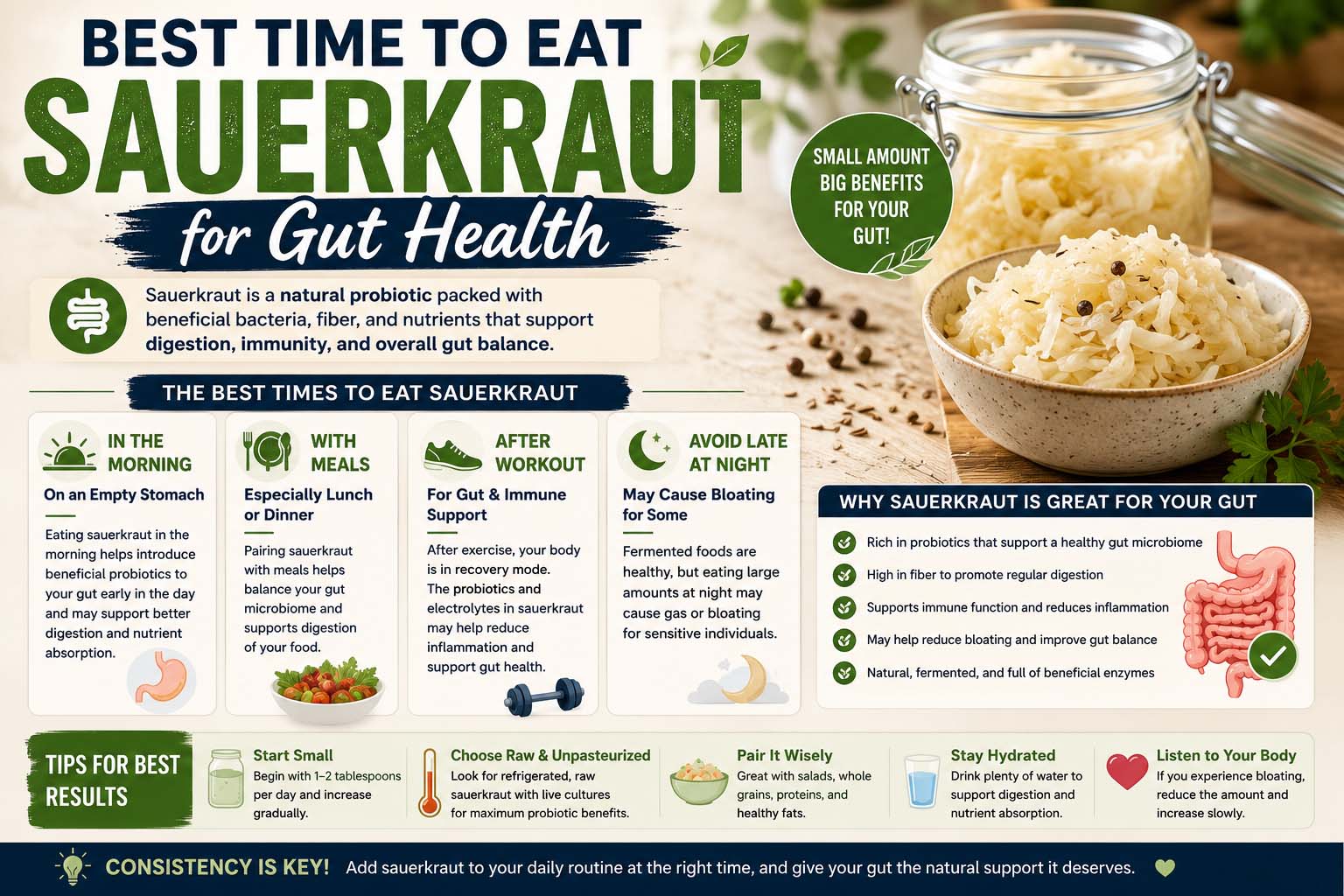
If you’re adding fermented foods to your diet, you may be wondering about the best time to eat sauerkraut for gut health. Is it better before meals, with food, or does the timing not matter?
For most people, the answer is shortly before or during a meal. Eating it this way may make it easier to include in your daily routine, and many people find it gentler on the stomach than eating it by itself.
While timing can help, consistency is even more valuable. In fact, regularly eating small portions of quality sauerkraut as part of a balanced diet is likely to have a bigger impact than focusing on the exact hour of the day.
This guide explains when to eat sauerkraut, its potential gut health benefits, how much to eat, and practical tips for getting started.
Quick Answer: Best Time to Eat Sauerkraut for Gut Health
| Goal | Recommended Timing |
|---|---|
| Daily gut health | Before or with a meal |
| Beginner | Small serving with lunch or dinner |
| Sensitive stomach | During a meal |
| Consistency | Same time each day |
| Maximum convenience | Add to your regular meals |
What Is Sauerkraut?
Sauerkraut is fermented cabbage made by allowing naturally occurring beneficial bacteria to convert sugars into lactic acid.
Traditional sauerkraut usually contains:
- Cabbage
- Salt
The fermentation process gives sauerkraut its distinctive tangy flavor and helps preserve the food naturally.
However, many refrigerated, unpasteurized varieties contain live cultures, while pasteurized products may contain fewer or no live probiotic bacteria because heat processing can reduce them.
Why Is Sauerkraut Popular for Gut Health?
Fermented foods have gained attention because they may help support a healthy gut microbiome.
The gut microbiome is made up of trillions of microorganisms that play roles in:
- Digestion
- Immune function
- Nutrient metabolism
- Overall digestive health
Traditional fermented foods like sauerkraut can contribute beneficial bacteria as part of a varied, balanced diet.
However, research on fermented foods is still growing, and individual responses may differ.
Similarly, learning about the best time to take probiotics may help you understand how other sources of beneficial microorganisms can fit into a routine.
Best Time to Eat Sauerkraut for Gut Health
Generally, this timing is before or alongside a meal.
Many people enjoy adding it to lunch or dinner because it naturally pairs with many foods.
Eating sauerkraut with meals may:
- Make it easier to digest
- Help establish a daily habit
- Reduce the chance of stomach discomfort in sensitive individuals
However, there is no strong evidence that one exact time of day is significantly better than another.
Ultimately, the key is eating it regularly.
Should You Eat Sauerkraut Before Meals?
Some people like eating a small serving about 10 to 20 minutes before a meal.
Possible reasons include:
- It becomes part of a consistent eating routine.
- It may stimulate appetite for some people.
- It allows fermented foods to be included daily.
However, scientific evidence does not clearly show that eating sauerkraut before meals is superior to eating it during meals for gut health.
Is It Better With Food?
For many beginners, yes.
Eating sauerkraut with other foods can make it:
- Easier to enjoy
- Gentler on digestion
- Simpler to include every day
Popular meal combinations include:
- Sandwiches
- Salads
- Grain bowls
- Eggs
- Roasted vegetables
- Grilled chicken
- Sausages
- Rice dishes
Overall, adding small portions to meals often works better than eating a large serving by itself.
Morning, Afternoon, or Evening?
People often wonder if one part of the day is better than another.
Morning
Some people enjoy sauerkraut with eggs or avocado toast.
Therefore, morning works well if it fits your breakfast routine.
Lunch
Lunch is one of the easiest times to include sauerkraut.
For example, it pairs well with:
- Salads
- Wraps
- Sandwiches
- Grain bowls
Dinner
Dinner is another popular option.
Sauerkraut is commonly served with:
- Pork
- Chicken
- Potatoes
- Roasted vegetables
However, there is no strong evidence that morning, afternoon, or evening provides greater probiotic benefits.
In fact, consistency matters more than the clock.
How Much Sauerkraut Should You Eat?
If you’re new to fermented foods, start slowly.
A common starting portion is:
- 1 to 2 tablespoons per day
After your digestive system adjusts, many people gradually increase to:
- ¼ to ½ cup daily
For this reason, starting with small amounts may help reduce temporary digestive discomfort.
Potential Gut Health Benefits
Sauerkraut offers more than just probiotics.
Supports a Healthy Gut Microbiome
Traditional fermented sauerkraut contains beneficial bacteria that contribute to dietary microbial diversity.
Provides Dietary Fiber
Cabbage naturally contains fiber.
In particular, fiber helps support normal digestion and feeds beneficial gut bacteria.
Additionally, learning about foods high in fiber may help you add more dietary variety alongside fermented foods.
Contains Vitamins
Sauerkraut provides nutrients including:
- Vitamin C
- Vitamin K
- Certain B vitamins
However, the exact nutrient content depends on the preparation method.
Adds Variety to Your Diet
Including different fermented foods may help diversify your eating pattern.
Examples include:
- Yogurt
- Kefir
- Kimchi
- Miso
- Tempeh
Overall, eating a wide variety of plant-based foods and fermented foods may support gut health.
Likewise, knowing the best time to drink kombucha may help you decide how another fermented product fits into your routine.
Choosing the Best Sauerkraut
Not every jar is the same.
Look for products that are:
- Refrigerated
- Naturally fermented
- Labeled with live cultures when available
- Low in unnecessary additives
Many shelf-stable products have been pasteurized.
Although pasteurization improves shelf life, it may reduce live probiotic bacteria.
Therefore, if your goal is probiotic intake, refrigerated, unpasteurized options are often preferred.
Who Should Be Careful?
Although sauerkraut is healthy for many people, it isn’t ideal for everyone.
- Need a low-sodium diet
- Have kidney disease
- Have digestive conditions requiring special diets
- Experience ongoing digestive symptoms
In particular, sauerkraut can be high in sodium, so portion size matters.
Possible Side Effects
When starting fermented foods, some people notice temporary digestive changes.
These may include:
- Gas
- Bloating
- Mild stomach discomfort
Generally, these effects improve as your body adjusts.
However, if symptoms are severe or persistent, stop eating the food and seek medical advice.
Tips for Adding Sauerkraut to Your Diet
Simple ideas include:
- Top avocado toast
- Add to salads
- Mix into grain bowls
- Serve with grilled meats
- Add to wraps
- Pair with roasted vegetables
- Stir into potato dishes after cooking
However, avoid prolonged cooking if you’re choosing unpasteurized sauerkraut for its live cultures, as high heat can reduce the number of living bacteria.
Common Myths About Sauerkraut
Myth: More Is Always Better
Not true.
In fact, large servings may increase digestive discomfort, especially for beginners.
Myth: You Must Eat It on an Empty Stomach
False.
Many people tolerate sauerkraut better when eaten with meals.
Myth: All Sauerkraut Contains Probiotics
Not necessarily.
Pasteurized products may contain fewer or no live probiotic bacteria.
Therefore, check the label if live cultures are important to you.
Myth: Sauerkraut Alone Fixes Gut Problems
No single food can solve digestive issues.
Instead, gut health depends on many lifestyle factors, including:
- Overall diet
- Fiber intake
- Sleep
- Exercise
- Stress management
- Medical conditions
Healthy Habits That Support Gut Health
Sauerkraut works best alongside healthy daily habits.
Consider:
- Eating plenty of fruits and vegetables
- Including whole grains
- Drinking enough water
- Exercising regularly
- Getting quality sleep
- Managing stress
- Limiting highly processed foods
Ultimately, a balanced lifestyle supports a healthier digestive system.
Additionally, understanding the benefits of cucumber water may help you consider another simple way to support daily hydration.
Frequently Asked Questions About the Best Time to Eat Sauerkraut for Gut Health
What Time Should I Eat Sauerkraut for Gut Health?
For most people, eating sauerkraut shortly before or during a meal is convenient and easy to maintain as part of a daily routine.
Should I Eat Sauerkraut Every Day?
Many people enjoy small daily servings. However, if you’re new to fermented foods, start with a small amount and increase gradually if tolerated.
Is It Better to Eat Sauerkraut Before or After Meals?
Either can work well. In particular, many people prefer eating it before or with meals because it fits naturally into their eating habits.
How Much Sauerkraut Should I Eat for Gut Health?
A beginner may start with 1 to 2 tablespoons daily and slowly increase the amount if comfortable.
Does Cooking Sauerkraut Remove Probiotics?
High heat can reduce or eliminate live probiotic bacteria in unpasteurized sauerkraut. Therefore, if you’re eating it for its live cultures, adding it after cooking or serving it cold may help preserve them.
Can Everyone Eat Sauerkraut?
Most healthy adults can enjoy sauerkraut as part of a balanced diet, but people with certain medical conditions or sodium restrictions should consult their healthcare provider first.
Making Sauerkraut Part of a Healthy Routine
Finding the best time to eat sauerkraut for gut health is less about choosing the perfect hour and more about creating a habit you can maintain. Eating small servings before or with meals is a practical approach for many people, especially beginners. Choose a naturally fermented variety when possible, start with modest portions, and combine sauerkraut with a balanced, fiber-rich diet and other healthy lifestyle habits to support your digestive health over the long term.