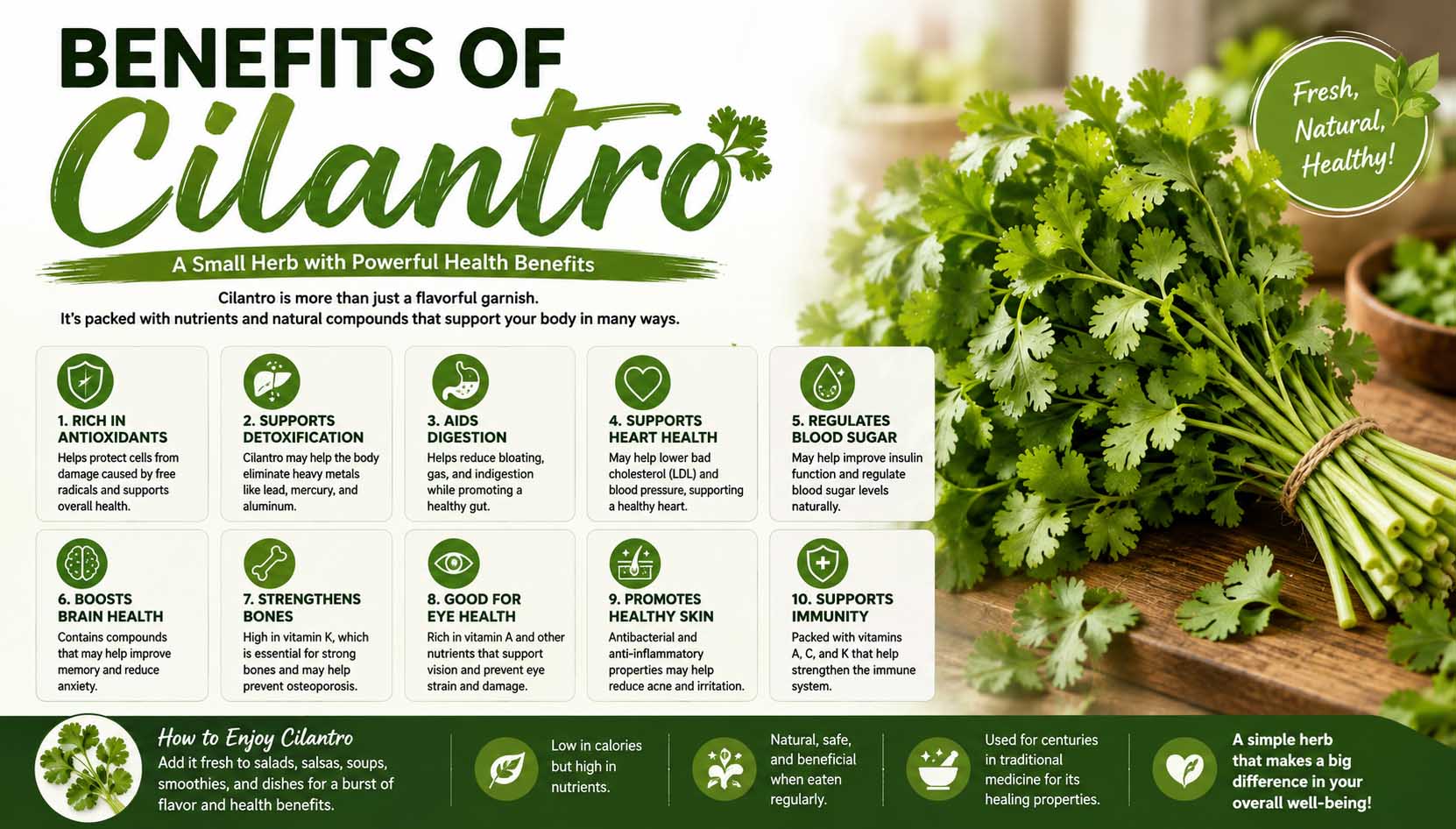
Cilantro often appears as a finishing touch on tacos, curries, and salads, but the benefits of cilantro go far beyond adding fresh flavor. This leafy herb contains vitamins, minerals, antioxidants, and other plant compounds that can contribute to a healthy eating pattern. While cilantro isn’t a miracle food, including it regularly as part of a balanced diet can help increase your intake of nutrient-rich plant foods.
Whether you’re trying to eat more vegetables, reduce added salt, or simply add more variety to your meals, cilantro is an easy ingredient to keep on hand.
What Is Cilantro?
Cilantro is the fresh green leaf of the coriander plant (Coriandrum sativum). Although the leaves are called cilantro in many countries, the dried seeds are known as coriander.
Cilantro is popular in cuisines from around the world, including:
- Mexican
- Indian
- Thai
- Vietnamese
- Middle Eastern
- Mediterranean
Its bright, citrus-like taste complements vegetables, beans, seafood, poultry, rice, and soups.
Some people say cilantro tastes like soap. Scientists believe this happens because certain inherited genes affect how its natural compounds are perceived.
Nutritional Value of Cilantro
Cilantro is very low in calories but rich in several essential nutrients.
A serving of fresh cilantro provides:
- Vitamin K
- Vitamin A
- Vitamin C
- Folate
- Potassium
- Small amounts of calcium
- Manganese
- Antioxidant plant compounds
Although the serving size is usually small, herbs like cilantro contribute valuable nutrients when eaten regularly alongside fruits and vegetables.
For overall digestive wellness, it’s also helpful to include foods high in fiber, since fiber and nutrient-rich herbs work together as part of a balanced diet.
Health Benefits of Cilantro
The health benefits of cilantro come from its combination of vitamins and naturally occurring plant compounds rather than a single ingredient.
Research continues to explore how herbs like cilantro fit into healthy dietary patterns.
Rich in Antioxidants
Cilantro contains antioxidants that help protect cells from oxidative stress.
Oxidative stress occurs when unstable molecules called free radicals outnumber the body’s natural defenses.
Eating a variety of antioxidant-rich foods may support overall health, especially when combined with regular exercise, quality sleep, and a balanced diet.
Supports Normal Immune Function
Vitamin A and vitamin C both contribute to normal immune function.
Although cilantro isn’t a major source compared with larger servings of fruits and vegetables, every nutrient-rich food contributes to the overall quality of your diet.
Provides Vitamin K
Vitamin K is one of cilantro’s standout nutrients.
This vitamin helps support:
- Normal blood clotting
- Healthy bones
- Overall bone metabolism
People taking blood-thinning medications should speak with their healthcare provider before making large changes to their intake of vitamin K-rich foods.
Benefits of Eating Cilantro Every Week
Among the many benefits of eating cilantro, one of the simplest is making healthy meals taste better.
Fresh herbs encourage people to eat more vegetables without relying heavily on salt or sugary sauces.
Adding cilantro to meals can help you enjoy:
- Fresh salads
- Homemade salsa
- Vegetable soups
- Grain bowls
- Bean dishes
- Lean protein meals
When healthy food tastes better, it’s often easier to maintain nutritious eating habits over time.
Many people who enjoy fresh vegetables also explore the benefits of juicing as another way to include more plant-based ingredients in their diet, although whole vegetables and herbs still provide valuable dietary fiber.
Benefits of Cilantro Leaves for Everyday Wellness
The benefits of cilantro leaves go beyond their nutritional content.
Fresh herbs can improve meal quality by adding flavor, color, and variety while reducing the need for excess sodium.
Simple ways cilantro supports healthy eating include:
- Replacing salty toppings
- Brightening homemade dressings
- Flavoring grilled vegetables
- Adding freshness to sandwiches
- Mixing into yogurt dips
Small dietary changes like these can have a meaningful impact when practiced consistently.
Plant Compounds Found in Cilantro
Scientists continue studying the natural compounds present in cilantro.
Research has identified several beneficial plant substances, including:
- Polyphenols
- Flavonoids
- Carotenoids
- Essential oils
Laboratory studies suggest these compounds have antioxidant activity.
However, many findings come from laboratory or animal research. More high-quality human studies are needed before drawing firm conclusions about specific medical effects.
Cilantro Compared with Other Fresh Herbs
Every herb offers its own nutritional strengths.
| Herb | Key Nutrients | Common Uses |
|---|---|---|
| Cilantro | Vitamins K, A, C | Salsa, soups, salads |
| Parsley | Vitamins K and C | Garnishes, sauces |
| Basil | Vitamin K, antioxidants | Pasta, pesto |
| Dill | Vitamin A, manganese | Seafood, yogurt sauces |
| Mint | Vitamin A, antioxidants | Tea, desserts, salads |
Rotating different herbs throughout the week increases dietary variety and exposes you to a broader range of beneficial plant compounds.
Who May Benefit Most from Eating Cilantro?
Most healthy adults can safely enjoy cilantro as part of a balanced eating pattern.
It may be especially useful for people who:
- Want more vegetables in their diet
- Prefer fresh, natural flavoring
- Are reducing sodium intake
- Enjoy Mediterranean-style meals
- Want more variety in healthy recipes
Cilantro pairs especially well with vegetables discussed in the health benefits of asparagus, making both easy additions to nutrient-rich meals.
Easy Ways to Add More Cilantro to Your Diet
You don’t need complicated recipes to enjoy cilantro.
Try adding it to:
- Omelets
- Guacamole
- Smoothies
- Burrito bowls
- Chicken soup
- Bean salads
- Brown rice
- Grilled fish
- Fresh salsa
For the best flavor, stir fresh cilantro into cooked dishes just before serving.
Fresh herbs lose some aroma during prolonged cooking, so adding them at the end helps preserve their taste.
What Are the Benefits of Cilantro Beyond Nutrition?
When people ask, what are the benefits of cilantro, they’re often looking for more than a list of vitamins. While cilantro is nutritious, its biggest strength is how easily it fits into a healthy eating pattern.
Adding fresh herbs to meals can help you:
- Increase your intake of plant-based foods
- Add flavor without excess salt
- Make vegetables more appealing
- Create balanced, colorful meals
- Enjoy more variety in your diet
Healthy eating is built on consistent habits, and cilantro is one simple ingredient that can make nutritious meals more enjoyable.
May Support Heart-Healthy Eating
Replacing salty seasonings with fresh herbs is a practical way to reduce sodium intake.
Although cilantro itself isn’t a treatment for heart disease or high blood pressure, using herbs instead of excessive salt can support dietary patterns that align with heart health recommendations.
Pair cilantro with vegetables, legumes, lean proteins, and whole grains for a balanced meal.
Supports a Plant-Rich Diet
Nutrition experts consistently recommend eating a variety of fruits, vegetables, herbs, legumes, and whole grains.
Cilantro helps increase plant diversity without adding significant calories.
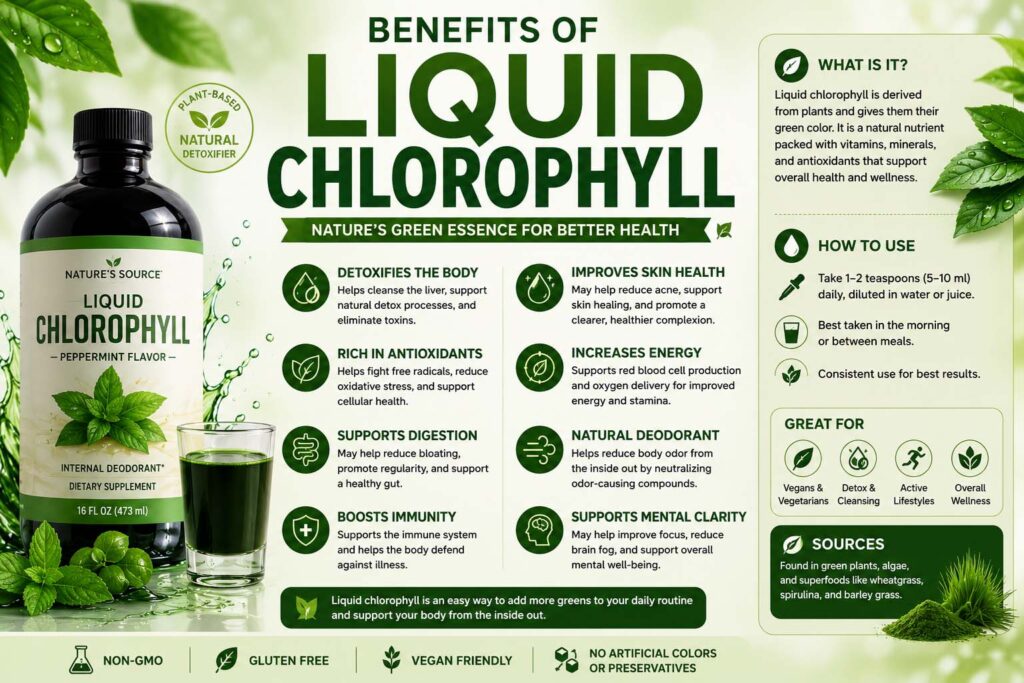
People who enjoy green foods sometimes compare whole herbs with supplements and may also read about the benefits of liquid chlorophyll. While chlorophyll supplements are popular, eating whole herbs and vegetables provides additional nutrients and naturally occurring dietary fiber that supplements may not offer.
A Flavorful Way to Reduce Processed Ingredients
Many packaged sauces and seasonings contain high amounts of sodium, added sugar, or saturated fat.
Fresh cilantro provides bold flavor naturally, making it easier to prepare meals with fewer processed ingredients.
For example, instead of using creamy dressings, try making a fresh cilantro sauce with:
- Cilantro
- Lime juice
- Garlic
- Olive oil
- Plain yogurt or avocado
This simple combination adds freshness without relying on heavily processed condiments.
Can Cilantro Help with Digestion?
Cilantro has been used traditionally in many cultures to accompany meals, especially dishes containing beans, grains, or rich foods.
Although research is still developing, cilantro can support healthy eating by encouraging people to consume more vegetables and fiber-rich foods.
Rather than viewing cilantro as a digestive remedy, it’s more accurate to think of it as one part of an overall balanced diet that supports digestive wellness.
Are There Any Risks of Eating Cilantro?
For most people, cilantro is safe when consumed in normal food amounts.
Still, there are a few situations to consider.
Allergic Reactions
Although uncommon, cilantro allergies can occur.
Possible symptoms include:
- Itching
- Skin rash
- Swelling
- Hives
- Difficulty breathing
Seek immediate medical attention if you experience signs of a severe allergic reaction after eating cilantro.
Medication Considerations
Because cilantro contains vitamin K, people taking blood-thinning medications such as warfarin should avoid making sudden, large changes to their vitamin K intake without discussing them with their healthcare provider.
Consistency is generally more important than completely avoiding vitamin K-rich foods.
Wash Fresh Herbs Before Eating
Like other fresh produce, cilantro may carry dirt or bacteria.
Wash it thoroughly under cool running water before eating or preparing meals.
Common Myths About Cilantro
There are many claims online about cilantro. Some are supported by evidence, while others are not.
Myth: Cilantro Detoxifies the Body
Your liver and kidneys naturally remove waste products from your body.
Although cilantro contains antioxidants and beneficial nutrients, there isn’t strong scientific evidence showing that cilantro alone detoxifies the body.
Myth: Eating More Cilantro Cures Disease
No single food can cure chronic illnesses; long-term health is supported by an overall balanced diet, healthy lifestyle habits, and appropriate medical care.
Good health is supported by a balanced lifestyle that includes a nutritious diet, regular physical activity, quality sleep, effective stress management, and appropriate medical care when needed.
Myth: You Need Large Amounts to Benefit
You don’t have to eat large servings.
Small amounts used regularly in meals can contribute nutrients while making healthy foods more enjoyable.
Including cilantro alongside sulfur rich foods such as onions, garlic, broccoli, cabbage, and Brussels sprouts is one simple way to create flavorful, nutrient-rich meals with a wide variety of plant compounds.
Frequently Asked Questions
Can I eat cilantro every day?
Yes. Most healthy adults can safely eat cilantro daily in normal food amounts as part of a balanced diet.
Is cilantro healthier raw or cooked?
Both forms provide nutrients, but raw cilantro generally retains more of its fresh flavor and heat-sensitive nutrients, such as vitamin C.
Does cilantro help with weight loss?
Cilantro doesn’t directly cause weight loss.
However, because it’s low in calories and adds flavor naturally, it can support healthy eating habits that contribute to weight management.
Is cilantro the same as coriander?
The fresh leaves are called cilantro, while the dried seeds from the same plant are known as coriander.
Although they come from the same plant, their flavors are quite different.
Who should avoid cilantro?
People with a known cilantro allergy or those advised by their healthcare provider to closely monitor vitamin K intake should discuss dietary changes before significantly increasing cilantro consumption.
Practical Tips for Buying and Storing Cilantro
To get the best quality cilantro:
- Choose bright green leaves without yellowing.
- Trim the stems before storing.
- Cover the leaves loosely with a plastic bag.
- Refrigerate and replace the water every few days.
If you buy extra cilantro, freeze chopped leaves in ice cube trays with water or olive oil for convenient use in soups and sauces.
Key Takeaways
The benefits of cilantro come from its ability to add flavor, nutrients, and variety to everyday meals. It provides vitamin K, vitamin A, vitamin C, antioxidants, and other beneficial plant compounds while remaining naturally low in calories.
Rather than viewing cilantro as a miracle ingredient, think of it as one part of a balanced eating pattern that includes plenty of fruits, vegetables, whole grains, legumes, and healthy fats. Small habits—such as adding fresh herbs to salads, soups, and homemade sauces—can make nutritious meals more enjoyable and easier to maintain over time.
If you have allergies, take medications that affect vitamin K, or have questions about your individual nutritional needs, speak with a qualified healthcare professional or registered dietitian before making significant dietary changes.