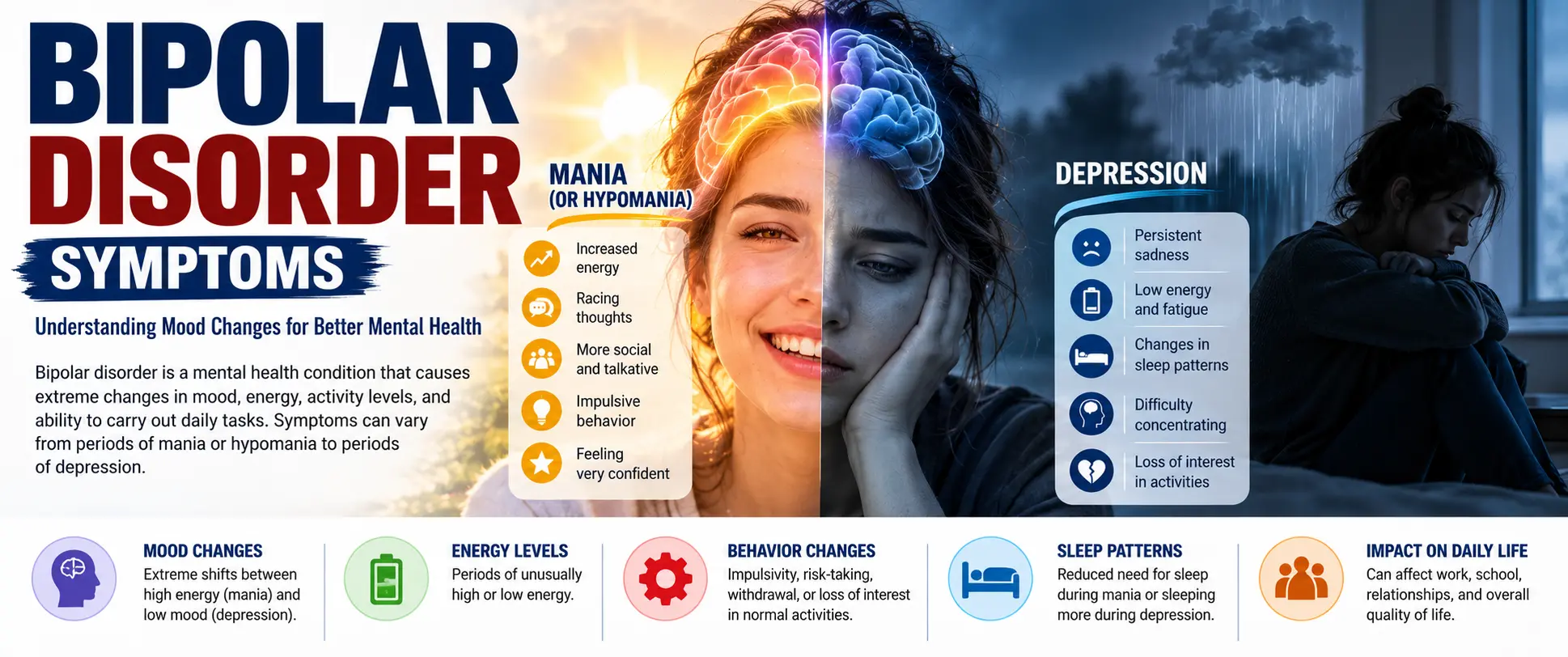
Bipolar disorder symptoms involve more than ordinary changes in mood. Bipolar disorder can cause distinct periods of unusually elevated, energized, or irritable mood as well as episodes of depression. During these episodes, changes can also affect sleep, thinking, speech, activity, judgment, and everyday functioning. Symptoms vary from person to person, so recognizing the overall pattern is often more useful than focusing on one isolated sign.
Some people experience severe mania, while others have the less intense elevated state known as hypomania. Depressive episodes can also be significant. Because several medical and mental health conditions can cause similar symptoms, a qualified healthcare professional should make the diagnosis.
What Are the Main Bipolar Disorder Symptoms?
The symptoms of bipolar disorder generally appear as episodes involving clear changes in mood, energy, and activity. These episodes may last for days or weeks, and many people have periods of more stable mood between them.
The main types of symptoms include:
- Mania
- Hypomania
- Depression
- Episodes with mixed features
A person does not necessarily experience every possible symptom. Likewise, the intensity, frequency, and pattern of episodes can change over time.
For that reason, bipolar disorder should not be reduced to simply feeling happy one day and sad the next. Clinicians consider the duration and severity of symptoms, changes from a person’s usual behavior, and the effect those changes have on everyday life.
Bipolar Disorder Symptoms During Mania
Mania involves a noticeable change in mood and energy that can become severe enough to disrupt work, relationships, finances, or personal safety.
A person experiencing mania may feel extremely happy, excited, powerful, or confident. However, mania does not always feel positive. Some people become unusually irritable, agitated, or argumentative instead.
Common signs can include:
- Very high or unusually irritable mood
- Increased energy and activity
- Needing much less sleep
- Racing thoughts
- Fast or excessive talking
- Distractibility
- Unusually high confidence
- Increased goal-directed activity
- Impulsive decisions
- Excessive spending or other risky behavior
In severe episodes, a person may also experience psychotic symptoms such as hallucinations or delusions. Severe mania can require hospital care, especially when safety or the ability to function becomes a concern.
One particularly useful warning sign is a decreased need for sleep. For example, someone may sleep only a few hours yet still feel highly energized rather than exhausted.
How Hypomania Is Different From Mania
Hypomania includes many of the same kinds of elevated mood, increased activity, reduced sleep, rapid speech, or racing thoughts seen in mania. However, it is less severe and does not cause the same degree of major functional impairment.
That can make hypomania harder to recognize.
Someone experiencing it may feel unusually energetic, productive, social, or confident. As a result, the person may not believe anything is wrong.
Family members or close friends, however, may notice that the behavior is noticeably different from the person’s usual personality.
Recognizing hypomania matters because it is a key part of bipolar II disorder.
Bipolar Disorder Symptoms During Depression
The depressive side of bipolar disorder can involve prolonged sadness, hopelessness, or loss of interest in activities that previously felt enjoyable.
Common symptoms include:
- Persistent sadness or low mood
- Loss of interest or pleasure
- Low energy
- Fatigue
- Difficulty concentrating
- Trouble making decisions
- Sleeping too little or too much
- Changes in appetite
- Feelings of worthlessness or hopelessness
- Social withdrawal
- Thoughts about death or suicide
During a depressive episode, even ordinary tasks can feel difficult. For instance, getting out of bed, preparing food, responding to messages, or completing work may require far more effort than usual.
Depression can occur in many conditions, so depressive symptoms alone do not establish bipolar disorder. A clinician will usually ask about past periods of elevated or unusually irritable mood, changes in energy, sleep patterns, and other possible signs of mania or hypomania.
Bipolar II Disorder Symptoms
Bipolar II disorder symptoms involve a pattern of depressive episodes and hypomanic episodes rather than the full manic episodes that define bipolar I disorder.
Therefore, bipolar II is not simply a mild version of bipolar I.
The hypomanic episodes are less severe than mania, yet the depressive episodes can still cause substantial distress and problems with everyday functioning. In fact, people may initially seek medical help because of depression while failing to recognize earlier periods of hypomania.
Common bipolar 2 disorder symptoms during hypomania may include increased energy, less need for sleep, greater talkativeness, racing thoughts, unusual confidence, increased activity, or impulsivity.
Meanwhile, depressive episodes can involve low mood, reduced motivation, fatigue, sleep changes, concentration problems, and hopelessness.
A detailed history of both high and low periods can therefore be very helpful during an assessment.
What Are Mixed Features?
Sometimes manic or hypomanic symptoms and depressive symptoms occur during the same mood episode. Clinicians describe this as an episode with mixed features.
For example, someone might have very high energy and racing thoughts while also feeling deeply hopeless or distressed.
This combination can be confusing because the person’s mood and energy do not fit neatly into a simple “high” or “low” pattern.
Therefore, any major or unusual change in mood, sleep, behavior, or energy deserves professional assessment when it persists or interferes with daily life.
Bipolar Disorder Symptoms in Females
Core bipolar disorder symptoms in females still involve mania or hypomania and depression. Bipolar disorder is not diagnosed from a separate female-specific symptom checklist.
Hormonal changes, however, can sometimes complicate the picture because mood, sleep, and energy can also change around menstruation, pregnancy, after childbirth, or during the menopausal transition.
Likewise, symptoms such as fatigue, sleep changes, and mood changes can have causes unrelated to bipolar disorder. For example, low estrogen symptoms may overlap with some nonspecific complaints involving mood or sleep, although they do not by themselves indicate bipolar disorder.
Rather than assuming that a mood change has a hormonal or psychiatric cause, discuss persistent or substantial changes with a healthcare professional. A clinician can consider the full medical history and decide whether further evaluation is appropriate.
How Doctors Diagnose Bipolar Disorder
There is no single blood test that confirms bipolar disorder.
Instead, diagnosis depends on a detailed assessment of symptoms over time. A healthcare professional may ask about mood, behavior, energy, sleep, relationships, family history, medications, substance use, and previous episodes.
The severity, duration, and frequency of symptoms also matter. In some cases, a physical examination or medical testing is used to investigate other conditions that might produce similar symptoms.
For instance, thyroid disease and the effects of certain drugs can sometimes mimic or worsen mood symptoms.
Hormonal concerns may also need their own assessment. If symptoms suggest a possible endocrine issue, information about when is the best time to test for hormone imbalance can provide useful background, although the appropriate tests and timing depend on the suspected condition and should be determined with a healthcare professional.
Because diagnosis looks at patterns across time, keeping notes about sleep, mood, energy, medication changes, and major life events may help during a clinical appointment.
Bipolar I vs Bipolar II: What’s the Difference?
The central difference involves mania.
| Feature | Bipolar I | Bipolar II |
|---|---|---|
| Full manic episode | Yes | No |
| Hypomania | May occur | Yes |
| Major depressive episodes | Common, but not required for the bipolar I diagnosis | Part of the typical diagnostic pattern |
| Severity of elevated episodes | Can be severe | Hypomania is less severe than mania |
| Professional treatment | Needed | Needed |
According to the National Institute of Mental Health, bipolar I is defined by manic episodes lasting at least seven days or by manic symptoms severe enough to require immediate hospital care. Bipolar II involves depressive and hypomanic episodes without the full mania characteristic of bipolar I.
However, only a qualified professional can determine which diagnosis fits a person’s history.
What Can Trigger or Worsen Mood Episodes?
Bipolar disorder does not have one simple cause. Research continues to examine genetic, biological, and environmental factors involved in the condition.
Once someone has bipolar disorder, certain circumstances may contribute to mood instability.
For example, insufficient sleep, stress, recreational drugs, excessive alcohol use, or major disruptions to routine can create problems for some people. Therefore, treatment plans often include attention to sleep and daily routines alongside medical care.
Still, lifestyle habits are not substitutes for treatment. Bipolar disorder generally requires ongoing professional management.
How Bipolar Disorder Is Treated
Treatment depends on the person’s symptoms, type of bipolar disorder, medical history, and current mood episode.
Common approaches include medication, psychotherapy, or a combination of both. Medications may include mood stabilizers and atypical antipsychotics, while treatment for bipolar depression requires careful clinical management.
People should not start, stop, or change psychiatric medication without guidance from the clinician managing their treatment.
Alongside prescribed treatment, regular sleep, physical activity, stress management, a consistent routine, and avoiding recreational drugs can support mood stability for some people.
Tracking early warning signs can also be useful. For example, a sudden decrease in sleep combined with rapidly increasing energy may deserve attention before symptoms become more severe.
When Should You Seek Professional Help?
Consider speaking with a healthcare professional if extreme changes in mood, sleep, energy, behavior, or activity persist or interfere with work, school, relationships, finances, or daily responsibilities.
Also, seek prompt professional help when symptoms involve hallucinations, delusions, severe agitation, dangerous impulsive behavior, or an inability to care for basic needs.
Suicidal thoughts or plans require urgent attention. If you or someone else may be in immediate danger, contact local emergency services or an appropriate crisis service in your country right away.
Practical Next Steps if You Notice Symptoms
Noticing possible bipolar disorder symptoms does not mean you should diagnose yourself from a checklist.
Instead, pay attention to patterns. Write down when major mood changes begin, how long they last, how much you sleep, whether your energy changes, and whether your behavior becomes noticeably different.
Then, share that information with a qualified healthcare professional. Input from a trusted family member or partner can sometimes help because people experiencing mania or hypomania may not recognize every change themselves.
With appropriate assessment and ongoing treatment, many people with bipolar disorder can manage symptoms and improve their day-to-day functioning and quality of life.