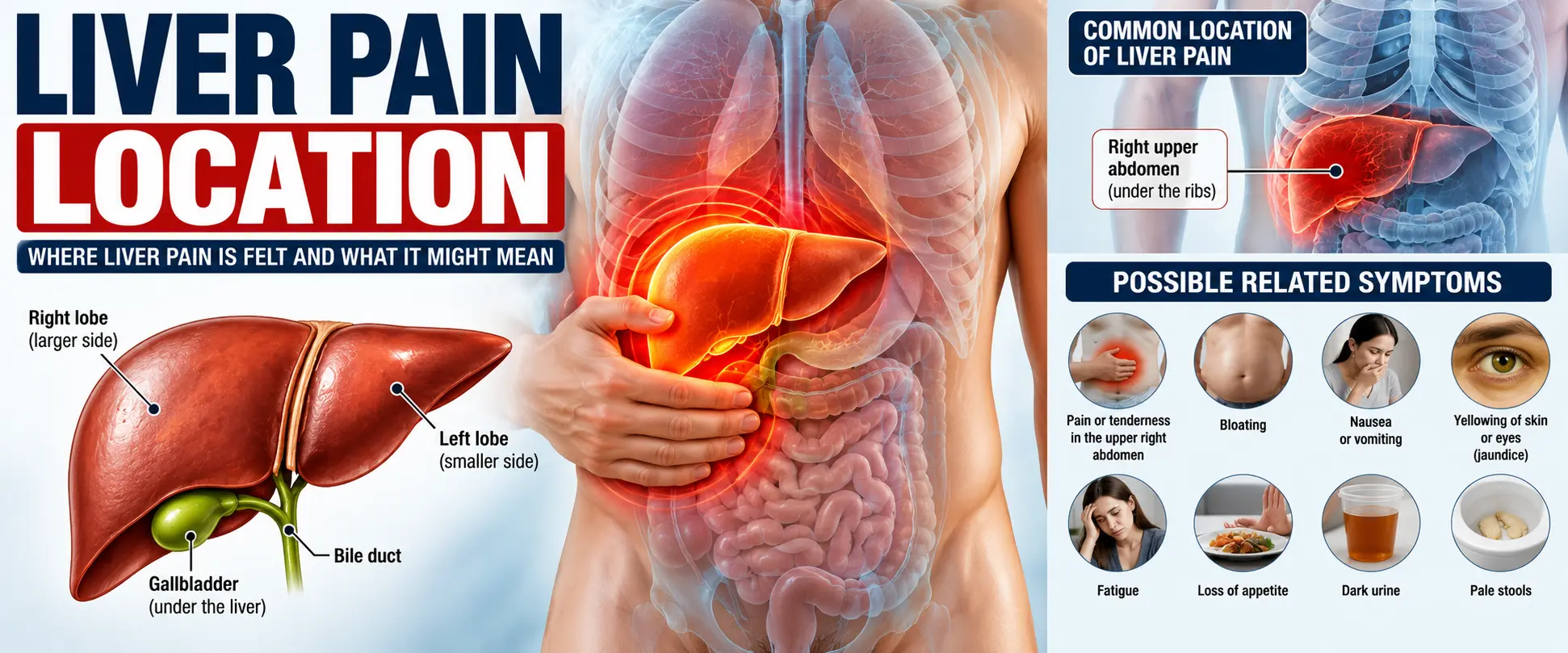
The typical liver pain location is the upper right side of the abdomen, just beneath the rib cage. However, discomfort related to the liver can sometimes feel vague, deep, or difficult to pinpoint. In some cases, pain may also seem to spread toward the right shoulder or upper back. Because several organs sit close together in this area, pain near the liver does not automatically mean that the liver itself is the cause.
Where Is the Liver Located?
The liver sits mainly in the upper right portion of the abdomen. It lies beneath the diaphragm and behind the lower ribs, although a smaller part extends toward the left side.
Because the liver is protected by the rib cage, a person usually cannot feel the organ directly. However, swelling, inflammation, or stretching of the tissue surrounding it may create pressure or discomfort.
Therefore, when people describe pain on right side of stomach, the source could involve the liver, gallbladder, stomach, intestines, muscles, ribs, or other nearby structures.
Liver Pain Location: What Does It Usually Feel Like?
The location of liver pain is most often in the right upper abdomen. Still, the sensation can vary from person to person.
Some people describe it as:
- A dull ache
- A feeling of fullness or pressure
- Tenderness beneath the right ribs
- Persistent discomfort rather than sharp pain
- Pain that occasionally spreads toward the right shoulder or upper back
The pain may stay mild, or it may become more noticeable as the underlying condition worsens.
However, sharp or sudden pain is not specific to the liver. Conditions involving the gallbladder, lungs, ribs, kidneys, or digestive system can produce symptoms in a similar area.
Fatty Liver Pain Location
The fatty liver pain location is generally the same upper-right abdominal region beneath the ribs. Yet many people with fatty liver disease experience no pain at all.
Fat buildup in the liver may cause the organ to enlarge. As a result, some people notice pressure, heaviness, or a mild ache in the upper abdomen.
Still, symptoms alone cannot confirm fatty liver disease. Many cases are discovered through blood tests or imaging performed for another reason.
Metabolic dysfunction-associated steatotic liver disease, formerly commonly called nonalcoholic fatty liver disease, often develops alongside factors such as obesity, insulin resistance, high cholesterol, or type 2 diabetes.
Therefore, persistent right-sided discomfort combined with metabolic risk factors deserves medical assessment rather than self-diagnosis.
Liver Pain Location in Females
The liver pain location female patients experience is generally the same as in males: the upper right abdomen beneath the ribs.
However, abdominal discomfort in women may have many other causes. For example, symptoms can come from digestive conditions, gallbladder disease, reproductive organs, pregnancy-related changes, muscle strain, or urinary problems.
Pain higher in the abdomen is more consistent with liver or gallbladder problems than pain located in the lower pelvis.
Likewise, pain under right breast may sometimes feel close to the liver area, yet the cause may involve the chest wall, ribs, muscles, breast tissue, lungs, or gallbladder instead.
Because location alone cannot identify the cause, persistent or unexplained pain should be evaluated clinically.
Common Causes of Pain Near the Liver
Several liver conditions can produce discomfort, although not every liver disorder causes pain.
Liver inflammation
Hepatitis means inflammation of the liver. It can result from viral infections, alcohol use, certain medications, autoimmune disease, toxins, or other causes.
Inflammation may cause tenderness in the upper right abdomen. However, some people have few symptoms during early stages.
Fatty liver disease
Fat accumulation can enlarge the liver and sometimes create discomfort or pressure beneath the ribs.
Yet many people remain symptom-free, so pain should not be used as the only clue.
Liver congestion
Heart conditions that cause blood to back up into the liver may lead to liver enlargement and abdominal discomfort.
Other symptoms can include swelling in the legs or abdomen and shortness of breath.
Liver abscess
A liver abscess is a collection of infection and pus within the liver. It can cause significant right upper abdominal pain, fever, chills, and general illness.
This condition needs medical treatment.
Liver tumors or cysts
Large liver cysts, benign growths, or tumors can sometimes stretch the liver capsule and cause pressure or discomfort.
However, many smaller growths cause no symptoms.
Could the Pain Be Coming From Somewhere Else?
Yes. This is one of the most useful things to understand about liver-area discomfort.
Several structures sit near the liver, so symptoms can overlap.
Gallbladder problems
The gallbladder lies beneath the liver. Gallstones or inflammation can cause strong pain in the upper right abdomen, particularly after eating fatty meals.
Gallbladder pain may spread toward the right shoulder blade or back.
Digestive causes
Gas, indigestion, ulcers, reflux, or intestinal conditions may create discomfort in the upper abdomen.
For example, stomach pain after eating can have many digestive causes and should not automatically be attributed to the liver.
Muscle and rib pain
Strained abdominal or chest muscles can cause pain near the liver area, especially after exercise, coughing, lifting, or injury.
Musculoskeletal pain often changes when you move, twist, press on the area, or take a deep breath.
Kidney problems
The right kidney sits farther back and lower than the liver. Kidney stones or infections may create pain in the flank or back rather than directly beneath the front ribs.
Because the symptoms can overlap, reviewing pain around ribs and back symptoms may help explain why location alone cannot identify the affected organ.
Liver Disease Back Pain Location
The phrase liver disease back pain location usually refers to discomfort felt in the upper right back or around the right shoulder blade.
Still, back pain is not considered a specific sign of liver disease. Far more common causes include muscle strain, posture problems, spinal conditions, kidney problems, or gallbladder disease.
If discomfort begins in the right upper abdomen and seems to radiate backward, a clinician may consider several abdominal organs during evaluation.
Therefore, persistent upper-right abdominal pain with back discomfort may require examination, especially if other symptoms are present.
Symptoms That May Occur With Liver Problems
Liver-related discomfort may appear alongside other symptoms, depending on the cause.
Possible signs include:
- Unusual fatigue
- Loss of appetite
- Nausea
- Abdominal swelling
- Yellow skin or eyes
- Dark urine
- Pale or clay-colored stools
- Persistent itching
- Unexplained weight loss
- Swelling in the legs
- Easy bruising
Jaundice, which causes yellowing of the skin or eyes, deserves prompt medical evaluation.
Likewise, liver problems may change certain blood test results. For instance, people worried about liver enzymes often ask what level of AST is dangerous, although AST must be interpreted alongside other tests, symptoms, medical history, and laboratory reference ranges.
How Doctors Diagnose Liver-Related Pain
Doctors rarely diagnose liver disease based only on where the pain is located.
Instead, they usually begin with a medical history and physical examination.
They may ask about:
- When the pain started
- Whether it is constant or intermittent
- Alcohol use
- Medications and supplements
- Recent infections
- Weight changes
- Digestive symptoms
- Past liver conditions
- Family history
Blood tests may measure liver enzymes, bilirubin, proteins, blood counts, and other markers.
Depending on the symptoms, imaging may also be used.
Ultrasound
Ultrasound can show liver size, fat accumulation, cysts, masses, or gallstones.
CT or MRI scans
These tests provide more detailed images when doctors need additional information.
Fibrosis assessment
Certain blood tests and imaging techniques can help estimate liver scarring.
In some situations, a liver biopsy may be needed, although doctors do not use it for every patient.
When Liver-Area Pain Needs Urgent Medical Care
Mild abdominal discomfort does not always mean an emergency. However, certain symptoms should not be ignored.
Seek urgent medical care for severe or worsening abdominal pain, especially if it occurs with:
- Yellow skin or eyes
- High fever
- Repeated vomiting
- Fainting or confusion
- Severe weakness
- Abdominal swelling
- Vomiting blood
- Black or bloody stools
- Difficulty breathing
- Severe tenderness after an injury
Sudden severe pain beneath the right ribs can also come from gallbladder disease or another abdominal condition rather than the liver itself.
Therefore, intense symptoms require proper medical assessment rather than home diagnosis.
Can Liver Pain Be Treated at Home?
There is no single home remedy for liver pain because treatment depends on the cause.
If discomfort comes from a temporary muscle strain or minor digestive issue, rest and simple lifestyle adjustments may help. However, persistent pain in the liver area should not be treated solely with supplements, detox drinks, or herbal products.
In fact, some herbal products and high-dose supplements can damage the liver.
Likewise, people with possible liver problems should avoid assuming that over-the-counter pain medicines are automatically safe. Certain medications can affect the liver, especially when taken in excessive doses or combined with alcohol.
Therefore, ask a healthcare professional before using medicines or supplements when liver disease is suspected.
Supporting Liver Health
Although lifestyle changes cannot replace medical treatment, several habits support overall liver health.
Limit alcohol
Heavy or long-term alcohol use can damage liver cells. If a clinician recommends avoiding alcohol completely, follow that advice.
Maintain a healthy weight
Excess body weight can increase the risk of fatty liver disease. Gradual weight loss through sustainable nutrition and physical activity may help reduce liver fat in some people.
Eat a balanced diet
Focus on vegetables, fruits, whole grains, lean proteins, and unsaturated fats.
Meanwhile, limit heavily processed foods, excess added sugars, and large amounts of saturated fat.
Use medications safely
Follow dosing instructions carefully, particularly for medicines that can affect the liver.
Also, tell your healthcare provider about supplements and herbal products because some can interact with medications or cause liver injury.
Reduce infection risk
Vaccines can help prevent hepatitis A and hepatitis B in people for whom they are recommended.
Safe hygiene practices and avoiding exposure to contaminated blood can also reduce infection risk.
Common Myths About Liver Pain
One common myth is that all pain on the upper right side comes from the liver. In reality, gallbladder, digestive, muscle, lung, and rib problems can feel very similar.
Another myth is that serious liver disease always causes pain. In fact, many liver conditions remain silent during their early stages.
People also sometimes believe detox drinks can remove liver disease. However, the liver already performs detoxification functions naturally, and no drink can replace diagnosis or appropriate treatment.
Therefore, persistent symptoms deserve medical evaluation rather than relying on cleansing products.
FAQs About Liver Pain Location
Where exactly would liver pain be felt?
It is usually felt beneath the lower ribs on the upper right side of the abdomen. However, some people describe pressure, fullness, or discomfort rather than clear pain.
Can liver pain be felt in the back?
Sometimes discomfort may seem to spread toward the upper right back or shoulder. Still, back pain has many more common causes, so it is not specific to liver disease.
Can fatty liver cause pain?
Fatty liver often causes no symptoms. However, an enlarged liver may sometimes create mild discomfort or pressure in the upper right abdomen.
Is liver pain sharp or dull?
Liver-related discomfort is often described as dull, aching, or pressure-like. Sharp pain may suggest another nearby structure, although symptoms alone cannot establish the diagnosis.
Does liver disease always change blood tests?
No. Some liver conditions can exist even when certain blood tests are normal or only slightly abnormal. Doctors usually interpret tests together with medical history, symptoms, and imaging.
When should I see a doctor for right upper abdominal pain?
Seek medical advice when the pain lasts, keeps returning, worsens, or appears with nausea, jaundice, fever, unexplained weight loss, swelling, or abnormal blood tests.
Practical Next Steps for Persistent Liver-Area Pain
Knowing the usual liver pain location can help you describe your symptoms, but location by itself cannot confirm liver disease. The liver sits beneath the right ribs, yet the gallbladder, stomach, intestines, muscles, ribs, kidneys, and lungs can all cause discomfort nearby.
If the pain is mild and brief, note when it happens and whether food, movement, or activity affects it. However, if the discomfort persists, repeatedly returns, or appears with jaundice, fever, vomiting, swelling, or unexplained fatigue, contact a qualified healthcare professional.
Early evaluation is especially useful because many liver problems are easier to manage when identified before advanced symptoms develop.