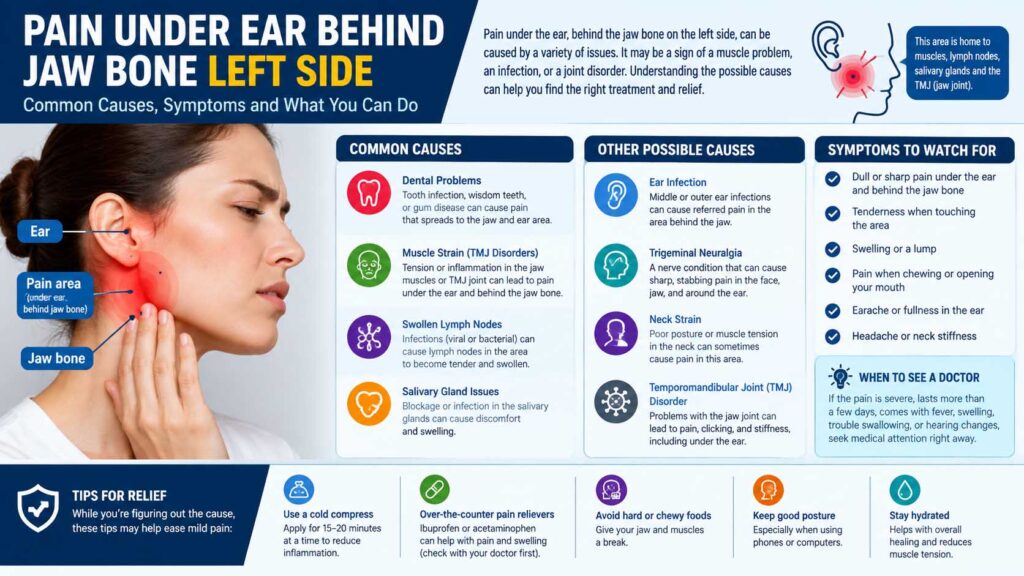
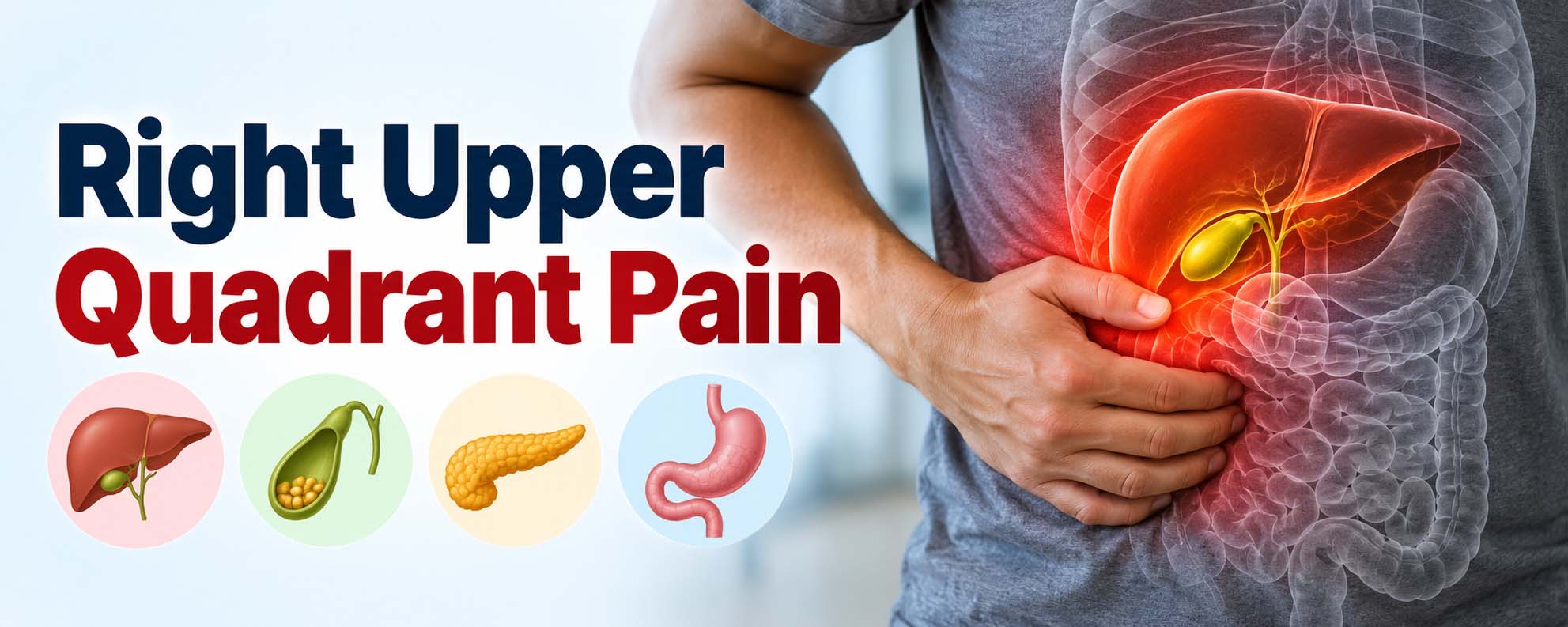
Right upper quadrant pain can come from several organs and tissues beneath the right ribs. Common sources include the gallbladder, liver, digestive tract, kidney, diaphragm, ribs, and nearby muscles. Some causes are minor, such as a muscle strain or temporary digestive discomfort. However, severe, persistent, or worsening pain can require prompt medical evaluation.
The timing and character of the discomfort can provide useful clues. For example, pain after a meal may have a different cause from sharp pain that worsens with deep breathing. Because several conditions can produce similar symptoms, though, the location alone cannot establish a diagnosis.
Where Is Right Upper Quadrant Pain Located?
Healthcare professionals commonly divide the abdomen into four quadrants. The right upper quadrant, or RUQ, occupies the upper-right section of the abdomen, beneath the lower ribs.
This area includes or lies close to the:
- Liver
- Gallbladder
- Bile ducts
- Part of the pancreas
- Part of the small intestine
- Part of the large intestine
- Right kidney
- Diaphragm
- Lower right ribs and nearby muscles
Because several structures occupy or border this region, pain there can have many possible causes.
People also describe abdominal locations differently. Someone searching for information about pain on right side of stomach, for example, may actually mean the upper abdomen rather than the stomach itself.
For that reason, it helps to note the exact location, timing, severity, and other symptoms. This information can help a healthcare professional narrow down the possible causes.
Common Causes
Several digestive, urinary, respiratory, and musculoskeletal conditions can cause discomfort in this area. Some are relatively common, while others need prompt assessment.
Gallstones and Gallbladder Problems
Gallstones can cause pain beneath the right ribs or in the upper middle abdomen. These hardened deposits can form inside the gallbladder and sometimes obstruct bile flow.
When a stone blocks a bile duct, pain can develop suddenly and become intense. The discomfort may also spread toward the right shoulder or back. Nausea and vomiting can occur at the same time.
Gallbladder inflammation, known as cholecystitis, can cause persistent pain and tenderness. Fever may also occur. Therefore, severe or ongoing pain accompanied by fever warrants medical assessment.
Liver Conditions
The liver occupies much of the upper-right abdomen. As a result, some liver conditions can cause discomfort or a feeling of fullness in this region.
However, liver conditions do not always cause pain, particularly in their early stages. When symptoms occur, they can include fatigue, nausea, swelling, dark urine, pale stools, itching, or jaundice, depending on the underlying condition.
Anyone researching liver pain location should remember that discomfort in this area can also come from the gallbladder, ribs, muscles, lungs, or digestive tract.
Therefore, pain in the liver area does not by itself confirm liver disease.
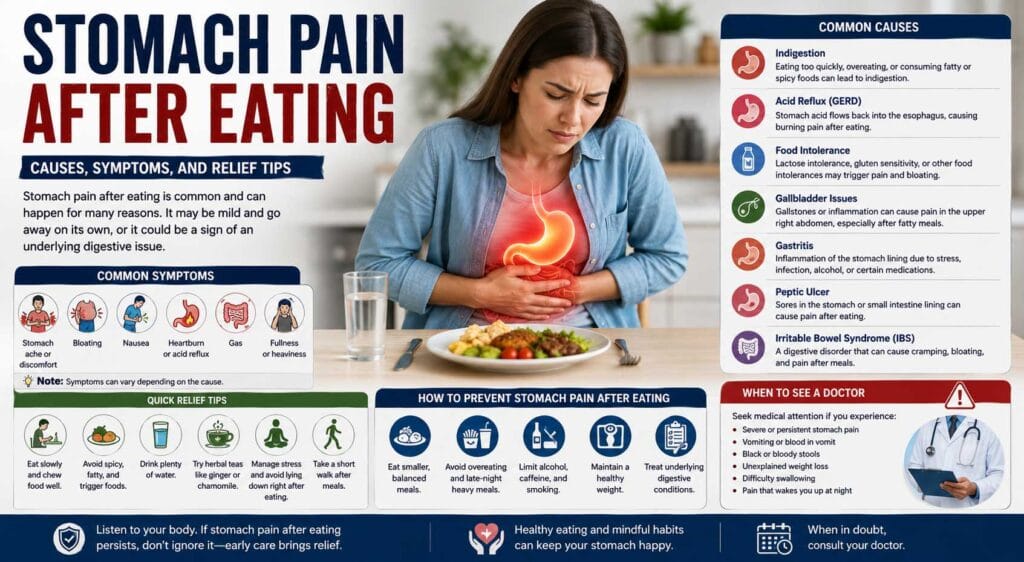
Pain After Eating
The relationship between meals and symptoms can sometimes provide a useful clue.
Gallbladder pain can occur after eating, particularly when a meal triggers gallbladder contraction. However, stomach and upper-intestinal conditions can also cause discomfort after meals.
Tracking stomach pain after eating can help you identify a recurring pattern. Note the foods you ate, when the discomfort began, how long it lasted, and where you felt it.
For example, symptoms may begin soon after eating or several hours later. Nausea, bloating, vomiting, bowel changes, or pain that spreads to the back can provide additional information.
Still, repeatedly avoiding foods without identifying the underlying cause does not replace medical evaluation when symptoms keep returning.
Pain Under the Right Ribs or Breast Area
Some people describe upper abdominal discomfort as pain under right breast because the lower ribs and upper abdomen sit close together.
A muscle strain can cause soreness in this area, particularly after exercise, lifting, coughing, or an awkward movement. In that situation, movement, twisting, reaching, or pressure on the area may make the pain more noticeable.
Rib injuries can cause similar symptoms.
However, internal organs can also produce discomfort beneath the right ribs. Gallbladder problems, liver conditions, and some lung or pleural problems can affect this region.
Therefore, the way the pain behaves matters. Soreness that follows a clear muscle injury differs from severe internal pain accompanied by vomiting, fever, breathing difficulty, or jaundice.
Can the Pain Spread to the Back?
Yes. Some conditions affecting the upper abdomen can produce referred or radiating pain.
Gallbladder pain, for example, can sometimes extend toward the back or right shoulder blade. Certain pancreatic conditions can also cause upper abdominal pain that reaches the back.
Meanwhile, problems involving muscles, ribs, or nerves can create discomfort that wraps around the torso.
If symptoms involve several nearby areas, reading about pain around ribs and back symptoms may help you describe the pattern more clearly when speaking with a healthcare professional.
However, spreading pain should be considered alongside the other symptoms rather than used to identify the cause on its own.
Kidney Problems Can Cause Similar Pain
The right kidney sits toward the back, behind many of the digestive organs. Kidney problems can still cause discomfort near the right side of the abdomen, flank, or back.
Kidney stones may cause intense pain that comes in waves. Depending on the stone’s location, the discomfort can move toward the lower abdomen or groin.
A kidney infection may cause flank or back pain along with fever, chills, nausea, or urinary symptoms.
Because kidney and abdominal pain can overlap, a clinician may consider the symptoms, physical examination, urine tests, blood tests, and imaging when determining the source.
Can the Lungs Cause Upper-Right Abdominal Pain?
Although it may seem unusual, problems involving the lower right lung or the tissues surrounding it can sometimes cause discomfort near the upper abdomen.
For example, pneumonia affecting the lower part of the right lung can cause pain near the lower ribs. Pleuritic pain may also become sharper during deep breathing or coughing.
This explains why healthcare professionals consider symptoms outside the digestive system when assessing upper abdominal pain.
Shortness of breath, chest pain, coughing, fever, or pain that changes significantly with breathing deserves medical attention, particularly when the symptoms are new or severe.
Symptoms That May Occur Alongside the Pain
The symptoms that occur with abdominal pain can help narrow the range of possible causes.
You may notice:
- Nausea or vomiting
- Fever or chills
- Abdominal bloating
- Loss of appetite
- Jaundice
- Dark urine
- Pale stools
- Diarrhea or constipation
- Back or shoulder discomfort
- Pain after meals
- Pain with deep breathing
- Changes in urination
For example, severe pain combined with fever may point to a different problem from mild soreness after physical activity.
Likewise, jaundice alongside abdominal pain needs medical evaluation because it can occur with problems affecting the liver or bile ducts.
When Should You Seek Emergency Care?
Mild, brief discomfort does not always require emergency treatment. However, certain symptoms need prompt medical attention.
Seek urgent medical care for severe or rapidly worsening abdominal pain, especially when it occurs with:
- High fever
- Persistent vomiting
- Yellowing of the skin or eyes
- Fainting or severe weakness
- Significant difficulty breathing
- Chest pressure or chest pain
- A rigid or very tender abdomen
- Vomiting blood
- Black or bloody stools
- Confusion
- Severe pain after an injury
Pregnant people should also contact a healthcare professional promptly about new or significant upper-right abdominal pain, particularly when it occurs with headache, vision changes, swelling, high blood pressure, bleeding, or other concerning symptoms.
When symptoms feel severe or unusual, timely medical care is safer than trying to identify the cause at home.
How Doctors Diagnose the Cause
Diagnosis usually begins with a detailed medical history.
A healthcare professional may ask when the pain started, whether it remains constant or comes and goes, and whether food, movement, breathing, or body position changes it.
They may also ask about fever, vomiting, bowel changes, urinary symptoms, alcohol use, medications, pregnancy, previous gallstones, and other medical conditions.
Next, a physical examination can help identify tenderness and determine where the discomfort is strongest.
Depending on the suspected cause, testing may include:
- Blood tests
- Liver-related laboratory tests
- Urine testing
- Pregnancy testing when appropriate
- Abdominal ultrasound
- CT imaging
- Other targeted tests
Ultrasound can be useful when gallbladder disease is suspected. Meanwhile, clinicians may choose different laboratory tests or imaging studies when kidney, liver, intestinal, pancreatic, or other conditions remain possible.
Right Upper Quadrant Pain and ICD-10 Coding
People reviewing medical paperwork may search for right upper quadrant pain ICD 10 information after seeing a code in their records.
In ICD-10-CM, R10.11 identifies right upper quadrant pain. The Centers for Disease Control and Prevention maintains the U.S. ICD-10-CM classification and provides access to its current code sets and browser tools. CDC ICD-10-CM information
Therefore, searches such as ICD 10 right upper quadrant pain or ICD 10 code for right upper quadrant pain generally refer to R10.11.
However, a symptom code does not identify the underlying disease. Instead, it describes the documented symptom when that symptom is what the clinician is coding.
For example, a clinician may document upper-right abdominal pain while testing is still underway. If the evaluation later establishes a specific diagnosis, the coding may reflect that condition according to the clinical documentation and applicable coding rules.
Patients should not use an ICD-10 code as a self-diagnosis.
Treatment Depends on the Cause
There is no single treatment for upper-right abdominal pain because many different conditions can produce it.
A mild muscle strain, for example, may improve with temporary activity modification and appropriate self-care. In contrast, gallbladder inflammation, a kidney infection, or another medical condition may require specific treatment.
Gallstones that repeatedly cause symptoms may require specialist assessment. Likewise, treatment for a liver condition depends on its underlying cause.
Kidney stones may require pain management, hydration guidance, medication, or a procedure depending on their size and location. Bacterial infections may require prescription antibiotics when a clinician determines that they are appropriate.
Therefore, treating the pain alone can sometimes delay treatment for the condition causing it.
What Can You Do at Home for Mild Symptoms?
If the discomfort is mild, short-lived, and does not occur with warning signs, start by observing its pattern.
Record when the pain occurs and how long it lasts. Also note meals, physical activity, bowel changes, urinary symptoms, and any medicines or supplements you take.
If a muscle strain seems possible, avoid heavy physical activity until the discomfort improves. Meanwhile, maintain adequate fluid intake unless a healthcare professional has told you to restrict fluids.
Use caution with over-the-counter pain medicines because some may not suit people with kidney disease, liver disease, stomach problems, pregnancy, or other medical conditions.
Most importantly, do not repeatedly mask unexplained pain that continues for days or keeps returning. Recurring symptoms deserve medical evaluation.
FAQs
Can gas cause pain in the upper-right abdomen?
Gas can cause pressure, bloating, and discomfort in different areas of the abdomen. However, persistent or severe localized pain should not automatically be attributed to gas.
Does gallbladder pain always happen after eating?
No. Gallbladder symptoms can occur at different times, although some people notice attacks after meals. A healthcare professional can assess whether the symptom pattern fits a gallbladder problem.
Can stress cause upper-right abdominal pain?
Stress can affect digestion and increase muscle tension, so it may contribute to some abdominal symptoms. Still, new or persistent localized pain should not automatically be attributed to stress without considering physical causes.
How long should upper-right abdominal pain last?
There is no universal safe duration because the underlying cause matters more than a specific number of hours or days. Severe symptoms may need immediate assessment, while mild discomfort that persists or repeatedly returns should be discussed with a healthcare professional.
Is pain in the right upper quadrant always related to the liver?
No. The gallbladder, digestive tract, kidney, muscles, ribs, diaphragm, and nearby chest structures can all produce pain in or near this region.
What to Do When Symptoms Keep Returning
Occasional mild abdominal discomfort may resolve without treatment. However, recurring symptoms deserve attention because repeated episodes can point to an underlying digestive, gallbladder, liver, kidney, or musculoskeletal problem.
Rather than focusing only on the location, notice what happens before and during each episode. Meal timing, movement, fever, nausea, urinary changes, bowel symptoms, and pain that spreads toward the shoulder or back can all provide useful information.
If the discomfort continues, returns frequently, or interferes with eating, sleeping, or normal activities, arrange a medical evaluation. Meanwhile, severe pain or symptoms such as fever, jaundice, persistent vomiting, breathing difficulty, fainting, or significant abdominal tenderness require prompt medical attention.