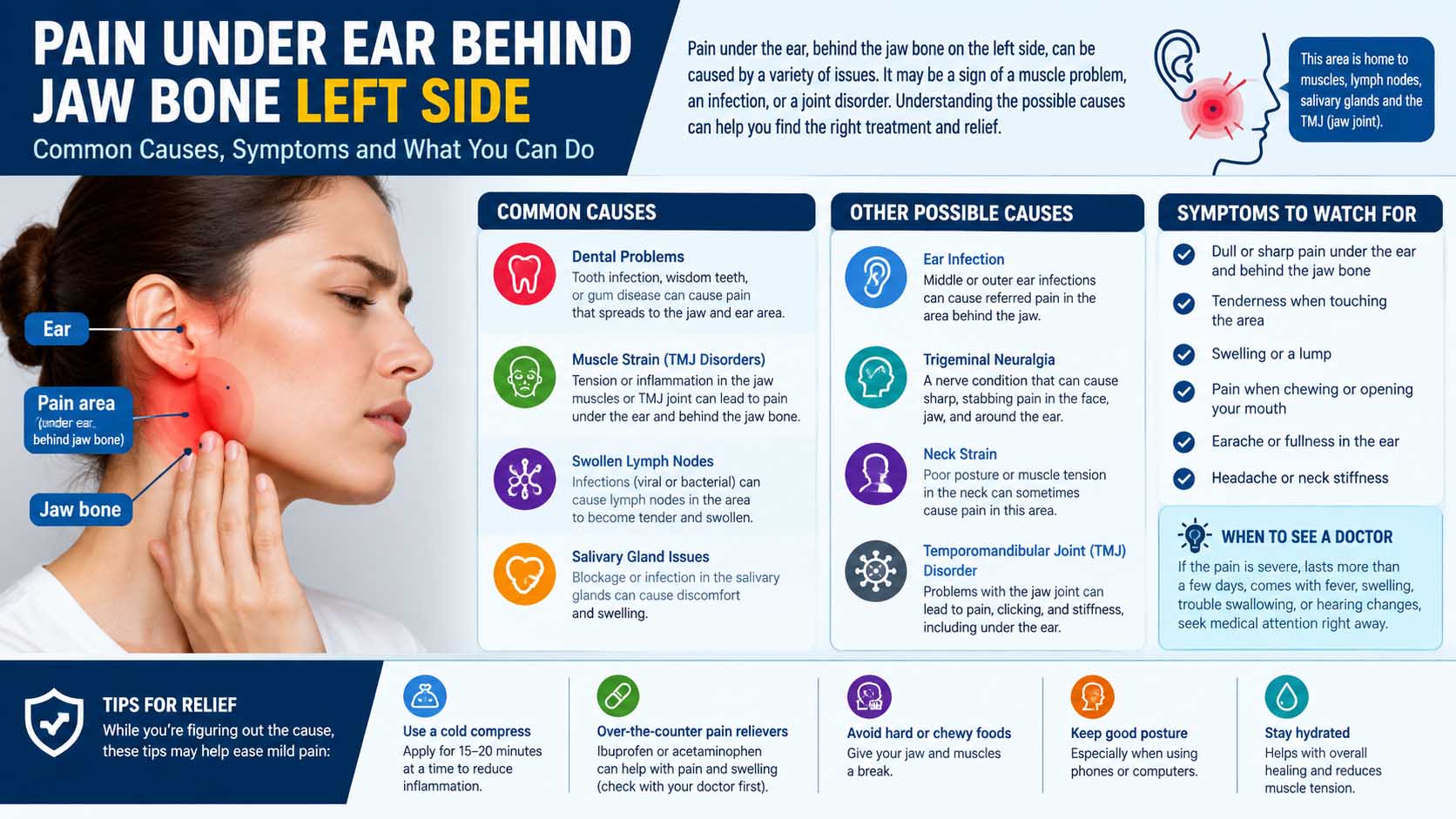
Experiencing pain under ear behind jaw bone left side can be uncomfortable and sometimes confusing because several structures sit close together in this small area. The jaw joint, chewing muscles, teeth, salivary glands, lymph nodes, ear, and throat can all cause pain that is felt near or behind the jaw. In many cases, the cause is manageable, but persistent pain, significant swelling, fever, trouble swallowing, or rapidly worsening symptoms deserve medical attention.
The location of the discomfort offers useful clues, although it cannot provide a diagnosis by itself. Therefore, noticing what triggers the pain and whether other symptoms are present can help a healthcare professional narrow down the cause.
What Can Cause Pain Under Ear Behind Jaw Bone Left Side?
Pain beneath the ear near the angle of the jaw can come from several conditions. Some involve the jaw itself, while others originate in nearby structures and cause referred pain.
Common possibilities include temporomandibular joint problems, muscle tension, dental infections, swollen lymph nodes, ear infections, and salivary gland problems. Less commonly, significant throat infections or other medical conditions may cause pain in this region.
The timing also matters. For example, pain that appears mainly while chewing suggests a different pattern from discomfort accompanied by fever and throat swelling.
Temporomandibular Joint Disorders
The temporomandibular joint, usually called the TMJ, connects the lower jaw to the skull just in front of each ear. Problems affecting this joint and the surrounding muscles can cause jaw tenderness, facial pain, clicking or popping, limited jaw movement, and discomfort around the ear.
Symptoms may worsen while chewing, yawning, or clenching the teeth. Likewise, some people notice morning discomfort if they grind or clench their teeth while sleeping.
However, clicking alone does not necessarily mean there is a serious joint problem. A clinician or dentist can assess persistent pain and determine whether the TMJ is involved.
Sharp Pain Under Ear Behind Jaw Bone Left Side
A sharp pain under ear behind jaw bone left side may develop from the jaw joint, muscles, teeth, nerves, or nearby tissues. Therefore, the quality of the pain is only one part of the picture.
For instance, a dental problem may cause pain that travels toward the ear or jaw. Tooth decay, an infected tooth, or inflammation around a partially erupted wisdom tooth can sometimes produce pain beyond the affected tooth.
Meanwhile, TMJ-related pain may feel aching in one person and sharper in another. As a result, trying to diagnose the condition based only on whether the pain feels sharp or dull is unreliable.
If the pain becomes intense, keeps returning, or occurs with swelling or fever, arrange a medical or dental assessment.
Swollen Lymph Nodes Below the Ear and Jaw
Lymph nodes are part of the immune system, and several groups are located around the jaw and neck. They can enlarge when the body responds to an infection.
For example, throat infections, dental infections, and some ear infections can cause tender lymph nodes. In that situation, you might notice a small, sore lump under the jaw or along the neck.
Often, lymph nodes related to a temporary infection settle as the underlying illness improves. However, a lump that persists, grows, feels hard or fixed, or occurs with unexplained weight loss, night sweats, or ongoing fever should be evaluated by a healthcare professional.
A clinician can examine both the painful area and nearby structures rather than assuming every lump beneath the ear is a lymph node.
Pain Under Ear Behind Jaw Bone Left Side Swollen: Could It Be a Salivary Gland?
If the area is visibly swollen, a salivary gland problem is another possibility. The parotid glands sit in front of and below the ears, while other salivary glands are located beneath the jaw and tongue.
A blocked salivary duct, sometimes caused by a salivary stone, can lead to pain and swelling. Symptoms may become more noticeable around mealtimes because eating stimulates saliva production.
Salivary gland infections can also cause swelling and tenderness. Depending on the cause, a person may develop fever, redness, an unpleasant taste, or drainage into the mouth.
Because treatment varies, persistent or painful salivary gland swelling should be medically assessed rather than squeezed or treated with unproven home remedies.
Ear Problems Can Cause Pain Near the Jaw
The close relationship between the ear and jaw means pain from one area may seem to come from the other.
For example, middle-ear or outer-ear infections can cause ear pain that spreads into nearby areas. Depending on the condition, there may also be hearing changes, drainage, fever, a feeling of fullness, or tenderness around the ear.
However, jaw disorders can also create sensations that feel like ear pain even when the ear itself is healthy.
Therefore, an examination may be necessary when the source is unclear. A healthcare professional can inspect the ear while also checking the jaw, mouth, throat, and neck.
Throat Infections and Pain Behind the Jaw
A significant throat infection can sometimes cause pain that extends toward the jaw or ear.
One condition that requires prompt medical attention is a peritonsillar abscess, which is a collection of pus that develops near a tonsil. Typical peritonsillar abscess symptoms can include severe throat pain, usually worse on one side, difficulty swallowing, fever, a muffled voice, drooling, and difficulty opening the mouth.
Because swelling near the throat can sometimes affect swallowing or breathing, suspected cases require urgent medical assessment.
A routine sore throat does not automatically mean an abscess is present. Still, rapidly worsening one-sided throat symptoms should not be ignored.
Dental and Oral Problems Worth Checking
Dental problems are another frequent source of jaw-area discomfort. In particular, cavities, tooth-root infections, gum disease, and wisdom-tooth problems can produce pain that spreads toward the ear.
Clues may include tooth sensitivity, pain when biting, swollen gums, bad taste, facial swelling, or sensitivity to hot and cold foods.
Meanwhile, changes inside the mouth can sometimes provide separate clues about oral health. A white bump on tongue, for instance, has several possible causes and is not automatically connected to jaw pain. However, persistent mouth sores, unexplained lumps, or other oral changes should be checked by a dentist or healthcare professional.
Regular dental examinations can help identify problems that may not be obvious from the outside.
Pain Under Ear Behind Jaw Bone Left Side Treatment
The right pain under ear behind jaw bone left side treatment depends entirely on what is causing the discomfort. Therefore, treatment for TMJ irritation will differ from treatment for a dental infection or blocked salivary gland.
For mild jaw discomfort that appears related to overuse, temporary self-care may help while you monitor symptoms. For example, choosing softer foods for a short period can reduce heavy chewing. Likewise, avoiding gum chewing and consciously relaxing a clenched jaw may reduce strain.
A warm or cold pack may provide temporary comfort for some types of jaw or muscle pain. However, wrap cold packs in cloth and avoid extreme temperatures directly against the skin.
Over-the-counter pain medicines may be appropriate for some people when taken according to the label, but they are not suitable for everyone. Ask a pharmacist or clinician if you have medical conditions, take other medicines, are pregnant, or are unsure which option is appropriate.
Most of all, do not use home care to delay evaluation of severe or worsening symptoms.
Everyday Habits That May Reduce Jaw Strain
If a clinician determines that your symptoms are related to jaw-muscle tension or TMJ irritation, small habit changes may help reduce unnecessary stress on the area.
Try not to hold your teeth tightly together when you are not eating. Also, limit habits such as chewing pens, biting fingernails, or frequently chewing gum if they trigger symptoms.
During a painful flare, cutting hard foods into smaller pieces may reduce the amount of force needed for chewing.
Good oral hygiene also supports overall dental and gum health. Although there are several proposed benefits of tongue scraping, tongue cleaning should complement rather than replace brushing with fluoride toothpaste, cleaning between the teeth, and regular professional dental care.
If nighttime tooth grinding appears to be contributing to the problem, a dentist can evaluate your teeth and jaw rather than relying on a generic mouthguard without an assessment.
How Doctors or Dentists Find the Cause
Diagnosis usually starts with a discussion about where the pain occurs, how long it has been present, and what makes it better or worse.
A clinician may feel around the jaw and neck for swelling or tender lymph nodes. They may also check jaw movement, inspect the throat and ears, and look for signs of infection.
Meanwhile, a dentist may examine the teeth and gums and assess whether biting, decay, infection, or grinding could explain the symptoms. Dental X-rays may be useful when a tooth-related problem is suspected.
Imaging or other tests are not necessary for every person. Instead, clinicians select them based on the examination and suspected cause.
When Jaw and Ear-Area Pain Needs Prompt Medical Care
Some symptoms should receive faster attention because they can indicate a significant infection or another urgent problem.
Seek prompt medical care if the pain occurs with:
- Rapidly increasing facial, jaw, or neck swelling
- High fever or feeling seriously unwell
- Severe or rapidly worsening pain
- Difficulty swallowing
- Difficulty opening the mouth
- Pus or significant drainage
- Persistent swelling or an unexplained lump
- New facial weakness
- Symptoms that do not improve or repeatedly return
Meanwhile, difficulty breathing, severe throat swelling, inability to swallow saliva, or rapidly progressing facial or neck swelling requires emergency medical attention.
Dental swelling can also spread beyond a tooth. Therefore, significant facial swelling associated with tooth pain should be assessed promptly.
Common Questions About Pain Under the Ear
Why does it hurt under my left ear when I chew?
Chewing-related pain can occur with TMJ problems, strained chewing muscles, dental conditions, or salivary gland problems. Because these conditions can overlap, persistent pain needs professional assessment.
Can stress cause pain near the jaw and ear?
Stress itself is not the only possible cause, but some people clench or grind their teeth more when stressed. Consequently, the jaw muscles and TMJ may become sore.
Why is there a lump behind my jaw under my ear?
A lump may represent a swollen lymph node, salivary gland swelling, a skin lesion, or another condition. Since the possibilities vary, persistent, enlarging, hard, or unexplained lumps should be examined.
Can a tooth infection cause pain near the ear?
Yes. Dental pain can radiate toward the jaw, face, and ear. Tooth sensitivity, gum swelling, pain while biting, or facial swelling may provide extra clues.
Should I worry if the pain is only on the left side?
One-sided pain is not automatically dangerous. Many jaw, dental, ear, throat, and salivary gland problems can affect only one side. However, the severity, duration, swelling, fever, and other associated symptoms matter more than the side alone.
Practical Next Steps for Persistent Pain
If pain under ear behind jaw bone left side is mild and clearly follows heavy chewing or temporary jaw strain, short-term conservative care may be reasonable. However, monitor whether the discomfort improves rather than repeatedly treating unexplained pain yourself.
If the pain persists, returns frequently, or comes with tooth problems, arrange a dental evaluation. On the other hand, symptoms involving the ear, throat, swollen glands, fever, or unexplained neck lumps may be better assessed initially by a healthcare professional.
Most causes can only be distinguished reliably after examining the area. Therefore, pay attention to accompanying symptoms, avoid repeatedly pressing swollen tissue, and seek timely care when the pain is severe, persistent, or associated with warning signs.