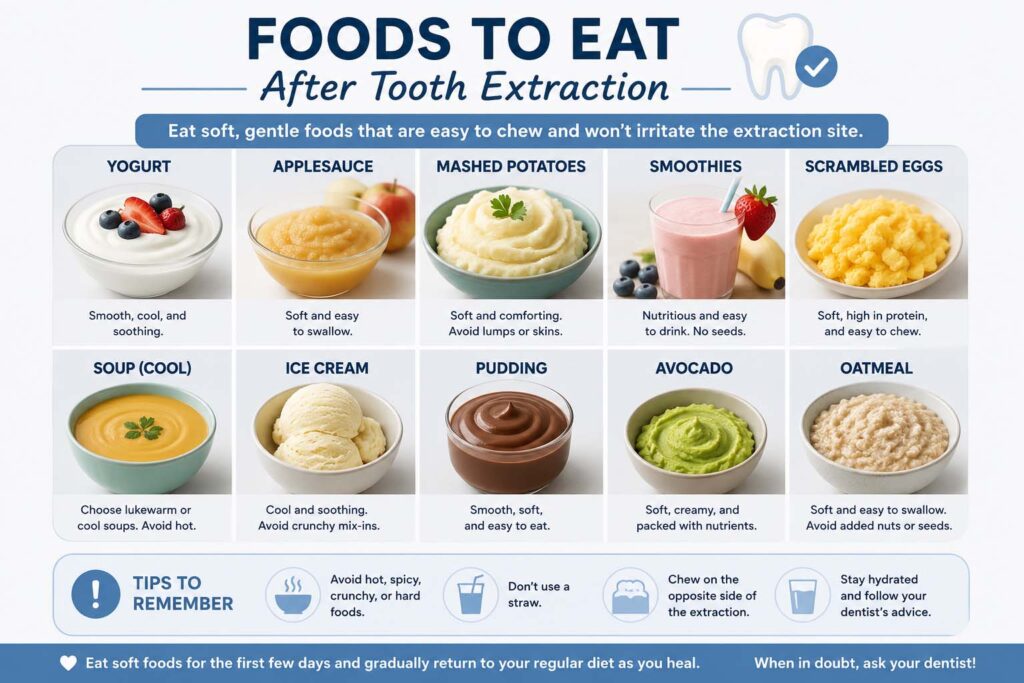
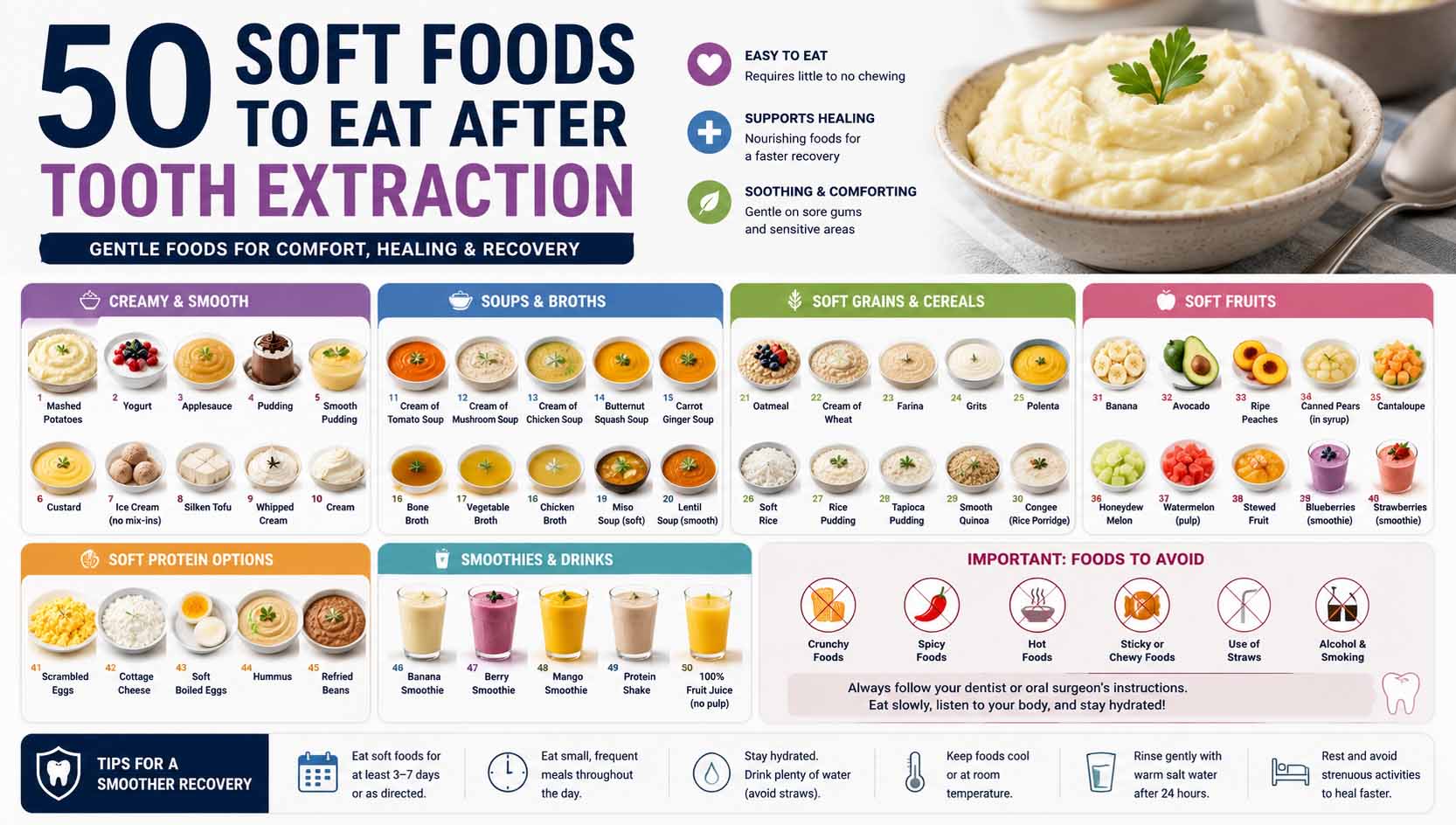
Wondering what you can safely eat after having a tooth removed? Choosing the right foods makes a big difference during recovery. The best 50 soft foods to eat after tooth extraction are easy to chew, gentle on the healing area, and packed with nutrients that help your body repair itself. Eating the wrong foods too soon can increase discomfort or even delay healing, so having a meal plan before your procedure is always a smart idea.
Whether you’ve had a simple extraction, wisdom teeth removed, or another oral surgery, this guide will help you find satisfying foods that support healing while keeping meals enjoyable.
Why Soft Foods Are Important After a Tooth Extraction
After a tooth is removed, your body forms a blood clot inside the socket. This clot protects the bone and nerves underneath while new tissue develops.
Hard, crunchy, or sticky foods can disturb the clot, irritate the area, or become trapped in the socket. That’s why dentists recommend eating soft foods during the first several days.
Soft foods help by:
- Protecting the extraction site
- Making chewing more comfortable
- Reducing irritation
- Supporting faster healing through proper nutrition
- Lowering the risk of complications such as dry socket
If you’re looking for even more meal ideas beyond this guide, our article on foods to eat after tooth extraction covers additional recovery-friendly options for different stages of healing.
50 Soft Foods to Eat After Tooth Extraction
Below are 50 foods that are generally easy to eat after most tooth extractions. Your dentist may recommend specific dietary changes depending on your procedure, so always follow their advice first.
| Food | Why It Works |
|---|---|
| Applesauce | Smooth and easy to swallow |
| Greek yogurt | High in protein |
| Regular yogurt | Gentle and cooling |
| Cottage cheese | Soft with plenty of protein |
| Scrambled eggs | Easy to chew |
| Mashed potatoes | Filling and comforting |
| Mashed sweet potatoes | Rich in vitamin A |
| Oatmeal (cooled slightly) | Soft and satisfying |
| Cream of wheat | Smooth texture |
| Rice porridge | Very gentle on healing gums |
| Polenta | Soft and filling |
| Avocado | Healthy fats and creamy texture |
| Hummus | Smooth plant protein |
| Mashed bananas | Naturally sweet |
| Pumpkin puree | Soft and nutritious |
| Butternut squash puree | Easy to digest |
| Carrot puree | Rich in vitamins |
| Cauliflower mash | Great mashed potato alternative |
| Tomato soup | Warm—not hot—and smooth |
| Pumpkin soup | Gentle and filling |
| Blended vegetable soup | Easy to swallow |
| Chicken broth | Helps with hydration |
| Bone broth | Protein and minerals |
| Lentil soup (blended) | Soft plant protein |
| Split pea soup | Smooth when pureed |
| Macaroni and cheese | Soft pasta option |
| Well-cooked noodles | Easy to chew |
| Soft pasta with butter | Gentle on sore gums |
| Risotto | Creamy texture |
| Soft rice | Mild and filling |
| Silken tofu | Excellent protein source |
| Flaked baked fish | Tender and nutritious |
| Shredded chicken | Once chewing is comfortable |
| Tuna mixed well | Soft consistency |
| Soft meatloaf | Easy to chew later in recovery |
| Smooth peanut butter | In moderation |
| Pudding | Cool and soothing |
| Gelatin | Easy dessert |
| Custard | Smooth texture |
| Ice cream (without chunks) | Comforting during the first days |
| Frozen yogurt | Cooling option |
| Smoothie eaten with a spoon | Nutritious meal |
| Protein pudding | Higher protein intake |
| Soft pancakes | Later in recovery |
| Cottage pie filling | Tender ingredients |
| Baked beans mashed | Soft fiber and protein |
| Ricotta cheese | Mild and creamy |
| Soft cheese spread | Easy snack |
| Chia pudding (well soaked) | Soft texture |
| Smooth mashed peas | Nutritious vegetable |
The Best Foods for the First 24 Hours
The first day usually brings the most swelling and tenderness.
Choose foods that require little or no chewing.
Good options include:
- Applesauce
- Yogurt
- Pudding
- Mashed potatoes
- Broth
- Smooth soups
- Mashed avocado
- Protein shakes served in a cup
- Cottage cheese
Avoid extremely hot foods during the first day because heat may increase bleeding or discomfort.
Cold Foods That May Help Reduce Swelling
Cool temperatures often feel soothing after oral surgery.
Good choices include:
- Chilled yogurt
- Applesauce
- Frozen yogurt
- Ice cream without crunchy mix-ins
- Cold pudding
- Smooth fruit puree
Avoid biting directly into frozen foods. Let them soften slightly first.
Soft Protein Foods for Faster Healing
Your body needs protein to repair damaged tissue.
Many people focus only on eating soft carbohydrates after oral surgery, but protein is just as important.
Excellent protein-rich choices include:
- Greek yogurt
- Cottage cheese
- Eggs
- Tofu
- Soft fish
- Shredded chicken
- Mashed beans
- Ricotta cheese
Some people also find that a best protein powder mixed into yogurt or a spoonable smoothie helps increase protein intake during the first few days when chewing feels difficult. Choose a product with minimal added sugar unless your healthcare provider recommends otherwise.
Recovery Timeline: What to Eat Each Day
Healing doesn’t happen overnight, so your meals should gradually change as your mouth becomes more comfortable.
Day 1
Stick with:
- Smooth foods
- Cool foods
- Liquids from a cup
- Soft dairy
- Broths
Avoid chewing whenever possible.
Days 2–3
Add foods like:
- Scrambled eggs
- Oatmeal
- Soft pasta
- Mashed vegetables
- Cottage cheese
- Hummus
Chew slowly and avoid the extraction site.
Days 4–7
Most people can begin eating:
- Tender fish
- Soft chicken
- Rice
- Macaroni and cheese
- Soft cooked vegetables
- Pancakes
Only move to firmer foods if your dentist says you’re healing well.
Foods to Avoid After Tooth Extraction
Knowing what not to eat is just as helpful as knowing what to eat.
Stay away from:
- Chips
- Popcorn
- Pretzels
- Nuts
- Seeds
- Hard bread
- Toast
- Raw carrots
- Apples
- Tough steak
- Sticky candy
- Chewing gum
- Crunchy cookies
These foods can irritate the extraction site or become lodged in the healing socket.
When a Full Liquid Diet May Be Recommended
Some patients need an even gentler diet after complex dental procedures.
Your dentist or oral surgeon may recommend full liquid diet foods for a short period if chewing isn’t comfortable yet. These include strained soups, milk, yogurt drinks, smooth pudding, meal replacement beverages, and other liquids that provide calories and nutrients without requiring chewing.
A full liquid diet is usually temporary. As healing progresses, most people can transition to thicker soft foods before returning to their regular meals.
Smart Eating Tips During Recovery
Small changes in how you eat can make recovery much easier.
Try these simple habits:
- Eat slowly.
- Take small bites.
- Drink plenty of water.
- Let hot foods cool before eating.
- Brush carefully around the surgical area as instructed by your dentist.
- Skip straws because the suction may dislodge the protective blood clot.
These habits help protect the extraction site while allowing you to stay well nourished.
Meal Ideas for the First Week
Planning simple meals ahead of time makes recovery much easier. You won’t have to wonder what to eat when your mouth is sore.
Breakfast
Try one of these gentle options:
- Greek yogurt with mashed banana
- Scrambled eggs
- Oatmeal with cinnamon
- Cottage cheese with applesauce
- Smooth fruit puree
- Cream of wheat
Lunch
Choose meals that are filling but easy to chew.
Ideas include:
- Creamy tomato soup
- Blended vegetable soup
- Mashed potatoes with gravy
- Macaroni and cheese
- Soft rice porridge
- Pumpkin soup
Dinner
As your mouth begins to feel better, you can slowly add more protein.
Good dinner choices include:
- Flaked baked salmon
- Tender shredded chicken
- Soft pasta with butter
- Tofu with mashed vegetables
- Cottage pie filling
- Risotto
Snacks
Healthy snacks help you meet your calorie needs while healing.
Try:
- Yogurt
- Pudding
- Cottage cheese
- Applesauce
- Mashed avocado
- Gelatin
- Frozen yogurt
- Smooth peanut butter
Nutrition Tips That Support Healing
Recovering after a tooth extraction isn’t just about avoiding crunchy foods. Your body also needs the right nutrients to repair tissue and fight infection.
Protein
Protein is one of the most valuable nutrients during recovery.
Good sources include:
- Eggs
- Greek yogurt
- Cottage cheese
- Fish
- Tofu
- Chicken
- Beans
Aim to include a protein source with every meal if possible.
Vitamin C
Vitamin C helps your body produce collagen, which plays a role in wound healing.
Choose soft sources such as:
- Mashed strawberries (if tolerated and seed-free)
- Mango puree
- Applesauce fortified with vitamin C
- Blended fruit smoothies eaten with a spoon
Healthy Fats
Healthy fats provide energy and support overall recovery.
Easy choices include:
- Avocado
- Olive oil mixed into mashed potatoes
- Full-fat yogurt
- Nut butter (only when smooth and approved by your dentist)
Staying Hydrated
Drinking enough fluids helps prevent dry mouth and supports healing.
Good options include:
- Water
- Milk
- Broth
- Herbal tea after it cools
- Electrolyte drinks if recommended
Drink from a cup rather than a straw during the early healing period.
Can You Eat Fiber After a Tooth Extraction?
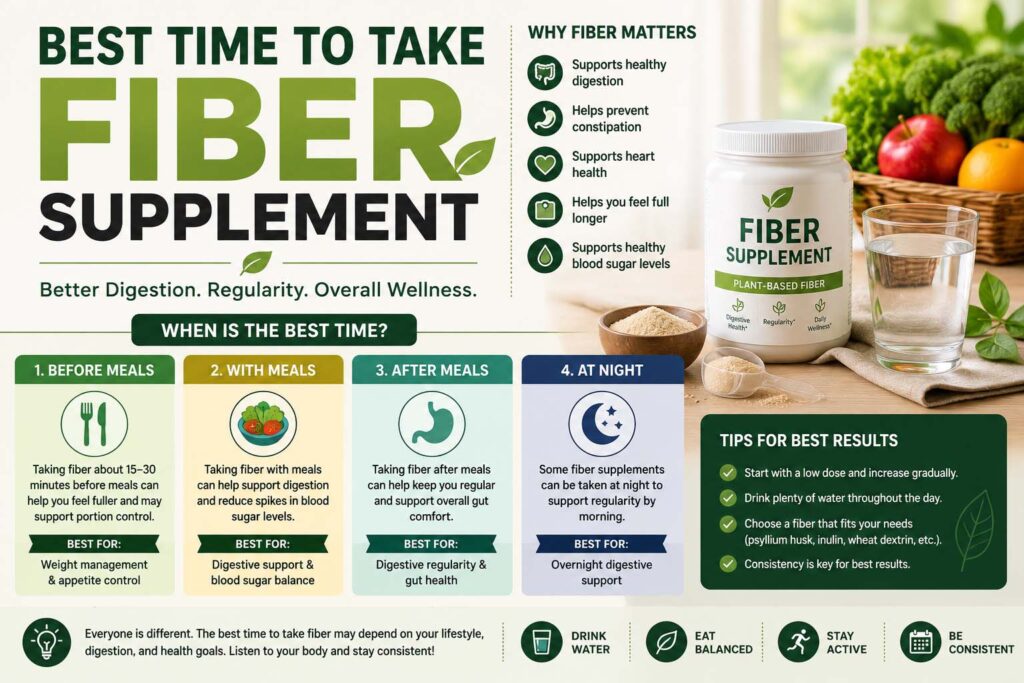
Fiber is part of a healthy diet, but very high-fiber foods can sometimes be difficult to chew during the first few days after surgery.
Foods like raw vegetables, whole nuts, popcorn, and seeded breads are better saved until you’re fully healed.
If chewing remains uncomfortable, your dentist may temporarily recommend low fiber foods that are softer and easier to tolerate before gradually returning to your normal diet.
Once healing progresses, slowly add fruits, vegetables, and whole grains back into your meals.
Common Mistakes That Can Slow Recovery
Many people recover quickly, but a few common habits can delay healing.
Avoid these mistakes:
Eating Crunchy Foods Too Soon
Even if you feel better after a couple of days, your mouth may still be healing underneath.
Drinking Through a Straw
The suction created by a straw can dislodge the blood clot that protects the extraction site, increasing the risk of dry socket.
Eating Extremely Hot Foods
Very hot soups or beverages can irritate sensitive tissues and may increase discomfort, so it’s best to let them cool to a warm, comfortable temperature before consuming.
Skipping Meals
Some people avoid eating because their mouth hurts. Unfortunately, your body needs calories and nutrients to heal properly.
Choose smaller meals throughout the day instead.
Forgetting Oral Hygiene
Keeping your mouth clean is still important.
Follow your dentist’s instructions carefully for brushing and rinsing without disturbing the surgical area.
Signs You’re Ready to Return to Normal Foods
Healing happens at different speeds for everyone.
You can usually begin adding firmer foods when:
- Chewing no longer causes pain
- Swelling has decreased
- Bleeding has stopped
- Your dentist says healing is progressing normally
Start with soft solid foods before moving to crunchy or chewy meals.
If something hurts, go back to softer foods for another day or two.
When to Contact Your Dentist
Some discomfort is expected after a tooth extraction.
However, you should contact your dentist or oral surgeon if you notice any signs of complications, such as persistent or worsening pain, excessive bleeding, increasing swelling, fever, or unusual discharge from the surgical site.
- Heavy bleeding that doesn’t improve
- Severe pain several days after surgery
- Fever
- Pus or bad-tasting drainage
- Swelling that becomes worse instead of better
- Difficulty swallowing or breathing
- Persistent numbness
These symptoms may require prompt medical evaluation.
Frequently Asked Questions
Can I eat scrambled eggs after a tooth extraction?
Yes. Scrambled eggs are one of the best recovery foods because they’re soft, high in protein, and require very little chewing.
Is ice cream okay after a tooth extraction?
Yes, plain ice cream without nuts, candy, or cookie pieces can be soothing during the first day or two. Eat it in moderation, as it is still high in sugar.
Can I drink coffee?
Many dentists recommend waiting at least 24 hours before drinking coffee. If you do have coffee afterward, let it cool so it’s warm rather than very hot.
When can I eat pizza again?
Most people should wait until they’re comfortably chewing and the extraction site has healed well. For many patients, this takes at least one to two weeks, depending on the procedure.
Are smoothies safe?
Yes, smoothies can be an excellent meal during recovery. Drink them from a cup or eat them with a spoon rather than using a straw.
How long should I stay on soft foods?
Many people eat soft foods for three to seven days after a simple extraction. Wisdom tooth removal or more complex oral surgery may require a soft diet for one to two weeks. Always follow your dentist’s instructions.
Simple Recovery Checklist
Use this checklist to make healing easier:
Choose soft, nutrient-rich meals.
Stay hydrated throughout the day.
Eat enough protein to support tissue repair.
Avoid crunchy, sticky, and spicy foods.✓ Skip drinking through a straw.
Brush gently around the extraction site.
Follow all instructions from your dentist.
Return to regular foods gradually.
Healthy Healing Starts with Smart Food Choices
The first few days after a tooth extraction don’t have to mean eating the same meal over and over. With these 50 soft foods to eat after tooth extraction, you can enjoy a variety of nutritious options while giving your mouth the best chance to heal comfortably.
Start with smooth foods during the first day, then slowly introduce softer solids as your recovery progresses. Listen to your body, avoid rushing back to crunchy foods, and follow your dentist’s advice every step of the way.
A little planning goes a long way. Stock your kitchen before your procedure, prepare a few easy meals in advance, and focus on gentle, balanced nutrition. Those simple steps can make your recovery more comfortable and help you get back to your normal routine sooner.