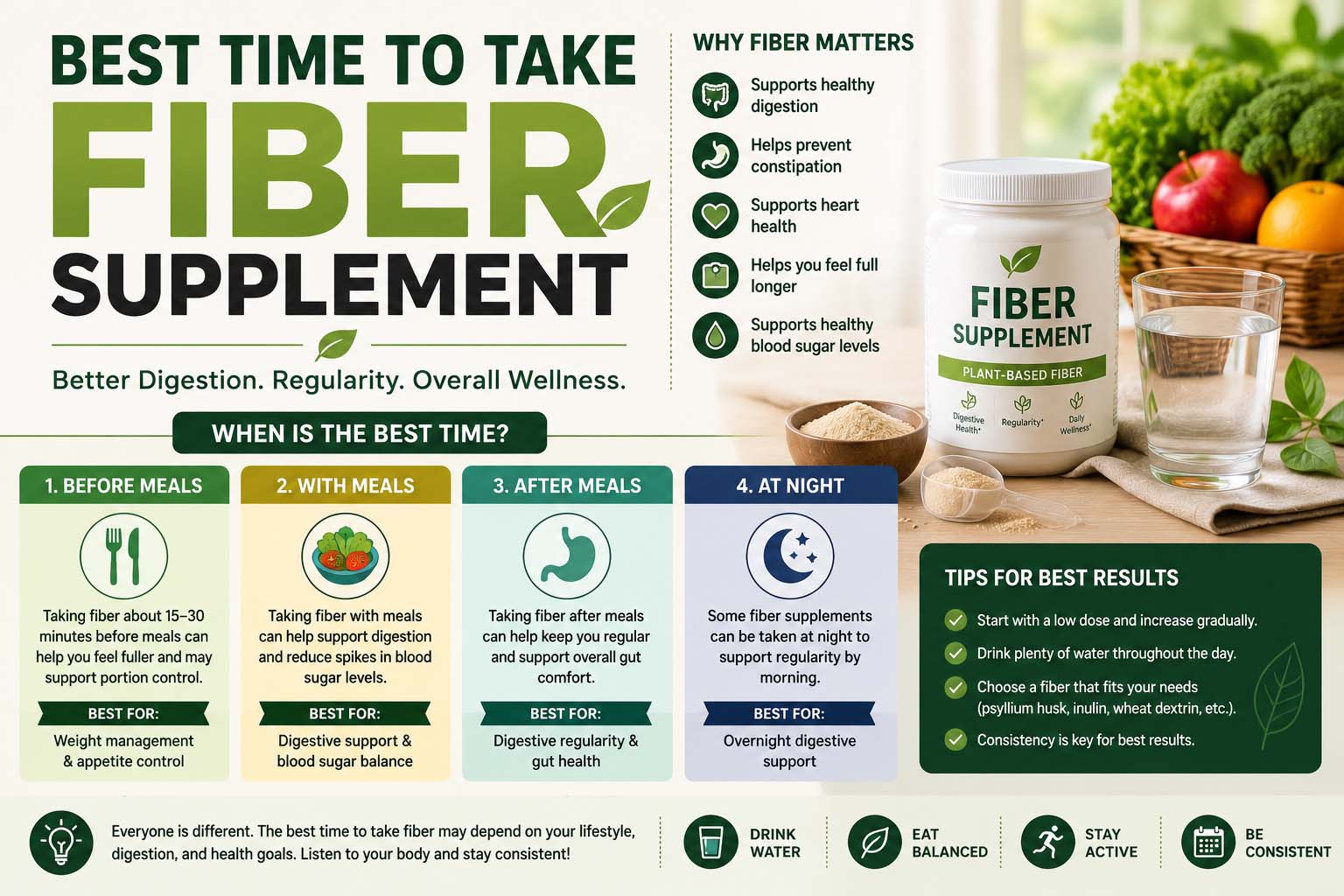
Many people start taking a fiber supplement to improve digestion, ease constipation, or support weight management. One of the first questions they ask is: When should I take it? The good news is that there isn’t one perfect time for everyone. Instead, the best time to take fiber supplement depends on your health goals, daily routine, and the type of fiber you’re using.
Generally, taking your fiber supplement at the same time each day with plenty of water is the best way to see long-term benefits.
This guide explains when to take fiber supplements, how timing affects different health goals, and simple tips to help you get the most from your daily routine.
What Is a Fiber Supplement?
A fiber supplement is a product that adds dietary fiber to your daily intake.
Many people don’t eat enough fiber through food alone, so supplements can help fill the gap.
Common types include:
- Psyllium husk
- Methylcellulose
- Wheat dextrin
- Inulin
- Calcium polycarbophil
These products come in several forms, including:
- Powder
- Capsules
- Gummies
- Tablets
- Drink mixes
However, fiber supplements support healthy digestion best alongside a balanced diet that includes fruits, vegetables, legumes, and whole grains.
Additionally, learning about foods high in fiber may help you add more natural sources to your diet.
Best Time to Take Fiber Supplement
Here is a quick guide.
| Goal | Best Time |
|---|---|
| General digestive health | Morning or any consistent time |
| Constipation relief | Morning with plenty of water |
| Weight management | 20–30 minutes before meals |
| Blood sugar support | Before or with meals (if advised by your healthcare provider) |
| Cholesterol support | Daily at a consistent time |
No matter when you take it, drinking enough water is essential.
Best Time of Day to Take Fiber Supplement
Many people search for the best time of day to take fiber supplement because they want the greatest benefit.
Morning
Morning is one of the most popular choices.
Benefits include:
- Builds a healthy daily routine
- Supports regular bowel movements
- Encourages better hydration early in the day
For example, many people mix fiber powder into water before or after breakfast.
Afternoon
Some people prefer taking fiber before lunch.
This option may help:
- Increase fullness
- Reduce afternoon snacking
- Support healthy digestion throughout the day
Evening
Evening works well for people who forget morning supplements.
However, the key is leaving enough time before bed to drink water and allow comfortable digestion.
When Is the Best Time to Take Fiber Supplement?
If you’re wondering when is the best time to take fiber supplement, the answer is simple:
Choose a time you can stick with every day.
In fact, fiber works gradually rather than immediately.
Missing doses frequently usually has a greater impact than taking it at the “wrong” hour.
Therefore, daily consistency is one of the biggest factors in long-term success.
Similarly, people organizing a digestive-health routine may find information about the best time to take probiotics useful.
Best Time to Take Fiber Supplement for Constipation
People often ask about the best time to take fiber supplement for constipation.
Morning is often recommended because it supports the body’s natural digestive rhythm.
Helpful tips include:
- Drink a full glass of water with the supplement.
- Continue drinking water throughout the day.
- Increase fiber gradually instead of taking large amounts immediately.
- Stay physically active.
Many people notice improvement within several days, although timing varies depending on the individual and the type of fiber used.
However, if constipation lasts longer than a few weeks, becomes severe, or is accompanied by symptoms such as blood in the stool, significant abdominal pain, or unexplained weight loss, seek medical advice.
Best Time to Take Fiber Supplement for Weight Loss
The best time to take fiber supplement for weight loss is often about 20 to 30 minutes before meals.
This may help:
- Increase feelings of fullness
- Reduce overeating
- Support portion control
- Slow digestion
However, fiber supplements are not weight-loss products by themselves.
They work best alongside:
- Healthy eating
- Regular exercise
- Good sleep habits
- Long-term lifestyle changes
Additionally, knowing the best time to workout may help you build a more consistent exercise routine.
How Fiber Helps Your Body
Fiber provides several health benefits beyond digestion.
Supports Digestive Health
Fiber helps move waste through the digestive tract.
As a result, this promotes regular bowel movements.
Helps Maintain Healthy Cholesterol Levels
Some soluble fibers can help lower LDL (“bad”) cholesterol when combined with a heart-healthy diet.
Supports Blood Sugar Management
Certain fibers slow carbohydrate absorption, which may help reduce rapid blood sugar spikes after meals.
However, people with diabetes should follow their healthcare provider’s advice about fiber use.
Feeds Healthy Gut Bacteria
Some fibers act as prebiotics.
In particular, these nourish beneficial bacteria living in the intestines.
A healthy gut microbiome supports normal digestion and overall wellness.
Likewise, understanding the best time to eat sauerkraut for gut health may help you consider how fermented foods fit into a balanced diet.
How to Take a Fiber Supplement Correctly
Using fiber properly makes a big difference.
Step 1
First, read the label carefully.
Different products have different serving sizes.
Step 2
Start with a small amount.
In fact, gradually increasing your intake helps reduce bloating and gas.
Step 3
Drink plenty of water.
Water allows fiber to work effectively and helps prevent digestive discomfort.
Additionally, learning about the benefits of cucumber water may help you consider another way to support daily hydration.
Step 4
Take it consistently.
Overall, daily use often provides better results than occasional use.
Step 5
Eat fiber-rich foods too.
Above all, supplements should support—not replace—a healthy diet.
Foods Naturally High in Fiber
Even if you take supplements, natural food sources remain valuable.
Good choices include:
- Apples
- Pears
- Berries
- Oats
- Brown rice
- Lentils
- Chickpeas
- Beans
- Broccoli
- Carrots
- Chia seeds
- Flaxseeds
- Almonds
Generally, combining whole foods with supplements provides the best overall nutrition.
Common Side Effects
Most side effects are mild.
They may include:
- Gas
- Bloating
- Mild stomach discomfort
- Feeling full sooner
These symptoms often improve as your body adjusts.
Therefore, increasing fiber slowly usually reduces discomfort.
Common Mistakes to Avoid
Many people don’t get the full benefit because of simple mistakes.
Avoid these habits:
Not Drinking Enough Water
Fiber needs water to function properly.
Without enough fluids, constipation may actually become worse.
Increasing Fiber Too Quickly
A sudden increase may lead to gas and bloating.
Instead, build your intake gradually.
Depending Only on Supplements
Fiber supplements work best alongside healthy meals.
Skipping Doses
Regular daily use provides the most consistent results.
Ignoring Medication Timing
Some fiber supplements can reduce the absorption of certain medications.
A common recommendation is to take medications at least two hours before or after a fiber supplement, but follow the instructions provided by your healthcare professional or pharmacist for your specific medicines.
Who May Benefit From Fiber Supplements?
Fiber supplements may be helpful for:
- Adults with low-fiber diets
- People experiencing occasional constipation
- Individuals trying to improve digestive regularity
- People looking for extra support with cholesterol management
- Those who struggle to meet daily fiber recommendations through food alone
However, a healthcare provider can help determine whether a fiber supplement is appropriate for your individual needs.
Who Should Talk to a Healthcare Provider First?
Medical advice is especially helpful if you have:
- Persistent digestive symptoms
- Difficulty swallowing
- Chronic intestinal diseases
- Severe abdominal pain
- Unexplained weight loss
- Rectal bleeding
- Frequent bowel obstruction
- Multiple prescription medications
In particular, these situations may require a different treatment approach.
Frequently Asked Questions
What Is the Best Time to Take Fiber Supplement?
For most people, the best time is whenever they can take it consistently every day. Morning is a popular choice, but other times can work just as well.
What Is the Best Time of Day to Take a Fiber Supplement?
Morning or before meals are common options. Ultimately, the right time depends on your routine and health goals.
When Is the Best Time to Take a Fiber Supplement?
Take your supplement at a regular time each day with plenty of water. Overall, consistency is usually more valuable than choosing a specific hour.
Best Time to Take Fiber Supplement for Constipation?
Morning with a full glass of water is often recommended because it supports the body’s natural digestive pattern.
Best Time to Take Fiber Supplement for Weight Loss?
Many people take fiber about 20–30 minutes before meals to help increase fullness and support portion control as part of a balanced lifestyle.
Can I Take Fiber Before Bed?
Yes. Many people take fiber in the evening without problems, provided they drink enough water and follow the product directions.
Can I Take Fiber With Other Supplements?
Sometimes, but fiber may reduce the absorption of certain vitamins or medications. Therefore, if you’re taking prescription medicines or multiple supplements, ask your healthcare provider or pharmacist about the best timing.
Building a Healthy Fiber Routine
Finding the best time to take fiber supplement doesn’t have to be complicated. The ideal schedule is one you can follow consistently while staying well hydrated and eating a balanced diet. Whether your goal is better digestion, relief from occasional constipation, or support for healthy weight management, regular use combined with healthy lifestyle habits usually delivers the best results.
Start slowly, drink plenty of water, and pay attention to how your body responds. If digestive symptoms continue or you have underlying health conditions, speak with a healthcare professional to make sure you’re using the right type and amount of fiber for your needs.