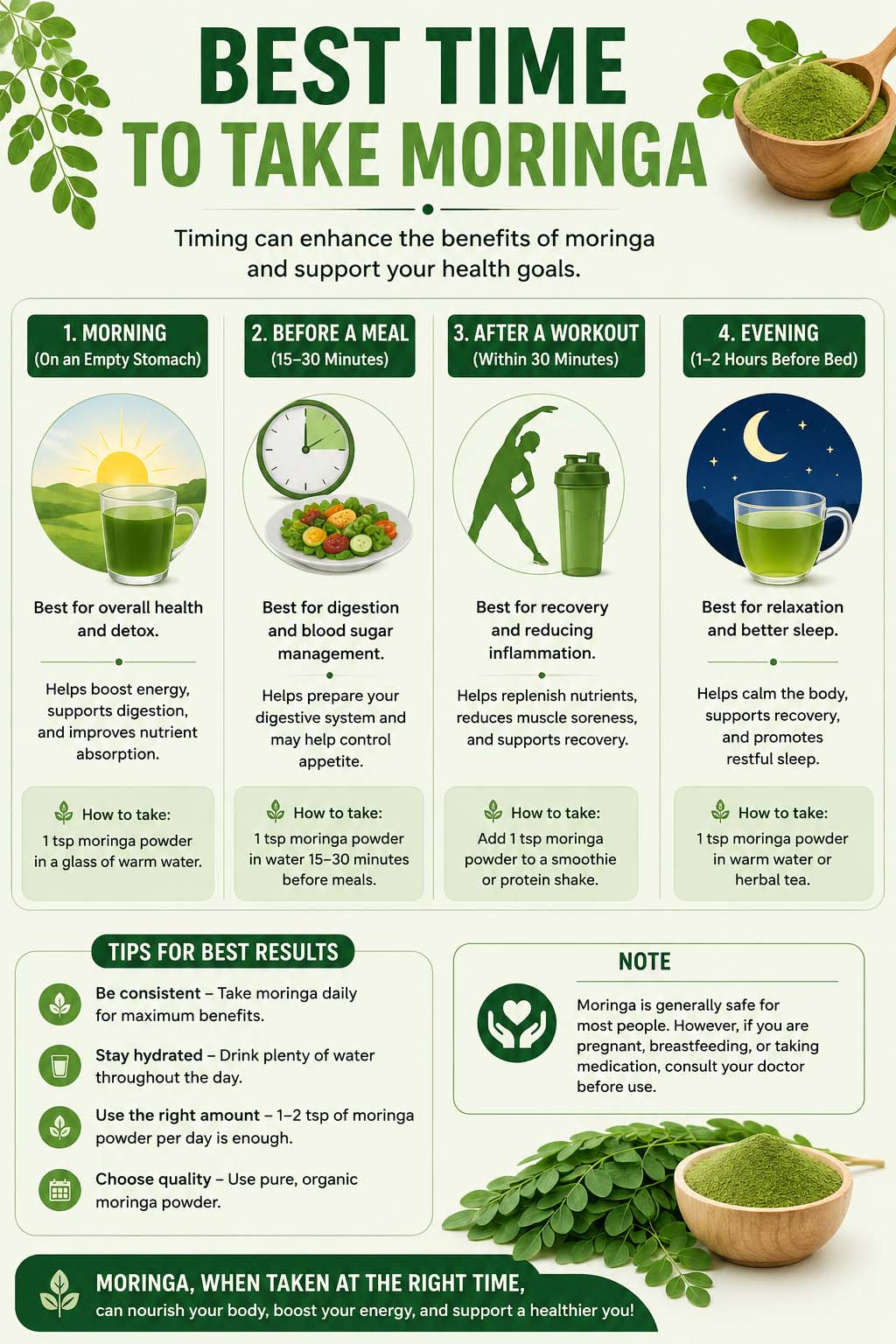
Moringa has earned a reputation as one of the most nutrient-rich plants available, and many people take it as part of their daily wellness routine. If you’ve recently purchased moringa powder or capsules, you may be wondering whether timing makes a difference. The short answer is that the best time to take moringa is usually in the morning or with breakfast. In fact, many people find that taking it earlier in the day fits naturally into their routine and pairs well with a healthy meal.
That said, there isn’t a single “perfect” time that works for everyone. Instead, the ideal schedule depends on your lifestyle, how your body responds, and the form of moringa you’re using.
This guide explains when to take moringa, whether it should be taken with food, potential benefits, and simple tips for getting the most from your supplement.
Quick Reference: Best Time to Take Moringa
| Goal | Recommended Timing |
|---|---|
| Daily wellness | Morning with breakfast |
| Nutritional support | Morning or lunch |
| Sensitive stomach | With food |
| Moringa powder | Mixed into breakfast or smoothies |
| Moringa capsules | Morning with water |
| Consistency | Same time each day |
What Is Moringa?
Moringa oleifera comes from the Moringa oleifera tree, which is commonly known as the “drumstick tree” or “miracle tree.” It is valued for its highly nutritious leaves, pods, and seeds, and is widely used in traditional diets and herbal practices around the world.
Its leaves are naturally rich in nutrients, including:
- Vitamin A
- Vitamin C
- Vitamin E
- Calcium
- Potassium
- Iron
- Magnesium
- Plant antioxidants
Today, moringa is commonly available as:
- Capsules
- Powder
- Tea
- Tablets
- Dried leaves
Overall, people use moringa as a dietary supplement to support wellness rather than as a replacement for a balanced diet.
Best Time to Take Moringa
For most healthy adults, the best time to take moringa is during the morning with breakfast or shortly afterward.
Morning use offers several practical benefits:
- Easy to remember
- Fits naturally into daily routines
- Can be taken with breakfast
- Less likely to disrupt your bedtime routine
Ultimately, consistency matters more than finding the exact hour of the day.
Therefore, taking moringa at roughly the same time each day helps build a simple habit.
Best Time of Day for Moringa
The best time of day to take moringa depends on your schedule and how your body responds.
Morning
Morning is the most common recommendation.
For example, many people mix moringa powder into:
- Smoothies
- Oatmeal
- Yogurt
- Juice
Meanwhile, capsules can simply be taken with water during breakfast.
Afternoon
Lunch is another good option if mornings are busy.
Additionally, taking moringa with a meal may reduce the chance of mild stomach discomfort.
Evening
Some people take moringa later in the day without any problems.
However, because some users report feeling more energized after taking moringa, many prefer avoiding it close to bedtime.
Since everyone responds differently, pay attention to how your body reacts.
When Is the Best Time to Take Moringa?
If you’re asking when is the best time to take moringa, think about these three factors.
Your Daily Routine
Choose a time that’s easy to remember.
In fact, missing doses regularly matters more than taking it at a specific hour.
Your Meals
Many people tolerate moringa best when it’s taken with food.
Your Personal Response
Some people feel comfortable taking it on an empty stomach, while others prefer having it with breakfast or lunch.
Similarly, people organizing several supplements may find information about the best time to take probiotics helpful when planning their routine.
Best Time to Take Moringa Capsules
Many beginners choose capsules because they’re convenient and require no preparation.
The best time to take moringa capsules is generally with breakfast or lunch and a full glass of water.
This routine offers several advantages:
- Easy to build into daily habits
- Gentle on digestion for many people
- Simple to remember
However, always follow the serving size listed on the product label unless your healthcare provider recommends otherwise.
When Is the Best Time to Take Moringa Capsules?
If you’re specifically wondering when is the best time to take moringa capsules, the answer is usually:
- Morning with breakfast
- Early afternoon with lunch
In particular, taking capsules with meals may help reduce mild digestive discomfort that some people experience when starting a new supplement.
Should You Take Moringa With Food?
Many people do well taking moringa alongside meals.
Possible benefits include:
- Easier digestion
- Reduced stomach irritation
- Convenient daily routine
Examples include:
- Breakfast smoothie
- Yogurt
- Oatmeal
- Salad
- Soup
- Rice dishes
If you’re using moringa powder, it blends easily into many everyday foods.
Likewise, people who use other powdered supplements may find information about the best time to take collagen useful when organizing their schedule.
Potential Benefits of Moringa
Research into moringa continues, and many people include it in their wellness routines because of its impressive nutritional profile.
Potential benefits may include supporting:
- Daily nutrition
- Antioxidant intake
- General wellness
- Healthy immune function
- Normal energy metabolism
- Balanced diet
However, keep in mind that Moringa oleifera is a dietary supplement and should not be viewed as a treatment or cure for any medical condition.
Powder vs. Capsules
Both forms provide similar nutritional benefits.
| Form | Advantages | Considerations |
|---|---|---|
| Powder | Easy to mix into foods and drinks | Earthy taste may not appeal to everyone |
| Capsules | Convenient and portable | Requires swallowing capsules |
| Tea | Pleasant option for some users | Nutrient content may vary depending on preparation |
Ultimately, choose the option that best fits your lifestyle.
How Much Moringa Should You Take?
There isn’t one standard serving that fits everyone.
The appropriate amount depends on:
- Product concentration
- Form (powder or capsules)
- Manufacturer recommendations
Therefore, start with the serving size listed on the label unless advised differently by a healthcare professional.
Above all, avoid taking more simply because you think it will provide greater benefits.
Possible Side Effects
Most healthy adults tolerate moringa well when used appropriately.
However, some people may experience:
- Mild stomach upset
- Nausea
- Loose stools
- Digestive discomfort
For this reason, starting with a smaller serving may help your body adjust.
If you experience persistent symptoms, stop using the supplement and speak with your healthcare provider.
Who Should Be Careful With Moringa?
Consult a healthcare professional before taking moringa if you:
- Are pregnant or breastfeeding
- Take medications for blood sugar
- Take blood pressure medication
- Have a chronic medical condition
- Are preparing for surgery
Because moringa may interact with certain medications, personalized medical advice is always the safest approach.
Tips for Building a Daily Routine
Making moringa part of your day doesn’t have to be complicated.
Pair It With Breakfast
In particular, linking supplements to an existing habit makes them easier to remember.
Stay Hydrated
Additionally, drink plenty of water throughout the day.
Eat a Balanced Diet
Supplements work best alongside healthy eating habits.
Store It Correctly
Finally, keep moringa in a cool, dry place away from direct sunlight and moisture.
Similarly, if your routine includes other wellness supplements, learning about the best time to take coq10 may help you organize them consistently.
Common Myths About Moringa
Myth: Moringa only works in the morning.
Not true.
Although morning is convenient, consistency matters more than the clock.
Myth: More moringa always gives better results.
Taking more than recommended doesn’t automatically provide additional benefits and may increase the chance of digestive discomfort.
Myth: Moringa replaces healthy food.
No supplement can replace a balanced diet filled with fruits, vegetables, whole grains, lean protein, and healthy fats.
Lifestyle Habits That Complement Moringa
A healthy routine includes more than supplements.
Support your overall wellness by:
- Eating nutrient-rich meals
- Exercising regularly
- Sleeping 7–9 hours each night
- Managing stress
- Drinking enough water
- Avoiding tobacco
- Limiting highly processed foods
These habits work together to support long-term health by reinforcing one another. When combined consistently, they create a balanced routine that improves physical strength, mental well-being, and overall quality of life over time.
Additionally, knowing the best time to workout may help you create a consistent exercise schedule alongside your wellness routine.
Frequently Asked Questions
What Is the Best Time to Take Moringa?
For many people, morning with breakfast is the most practical and comfortable option.
Can I Take Moringa at Night?
Yes. In fact, some people take moringa in the evening without any issues. However, if you notice that it makes you feel more alert, consider taking it earlier in the day instead.
Should Moringa Be Taken With Food?
Many people find it easier on the stomach when taken with a meal, though some tolerate it well on an empty stomach.
Can I Take Moringa Every Day?
Many adults use moringa daily as part of a balanced diet. However, follow the product’s serving recommendations and consult your healthcare provider if you have medical conditions or take prescription medications.
Are Moringa Capsules as Good as Powder?
Both can be good options. While capsules offer convenience, powder can easily be added to foods and drinks.
How Long Does It Take to Notice Results?
This varies from person to person and depends on factors such as diet, lifestyle, and overall health. Generally, moringa is used as part of a long-term wellness routine rather than for immediate effects.
Final Thoughts
The best time to take moringa is usually with breakfast or another morning meal, making it easy to build a consistent daily habit. Whether you choose powder, tea, or capsules, taking moringa at the same time each day is generally more beneficial than worrying about the exact hour.
If you’re wondering when is the best time to take moringa, best time to take moringa capsules, when is the best time to take moringa capsules, or the best time of day to take moringa, the answer often comes down to choosing a schedule that works for you and following it consistently. Pair your supplement with a healthy lifestyle, a balanced diet, and regular physical activity to support your overall wellness goals.