Whether you’re fasting for health, religious reasons, or intermittent fasting, knowing the foods to avoid when breaking a fast can make a big difference in how you feel afterward. After hours without food, your digestive system becomes more sensitive. Eating the wrong meal too quickly may lead to bloating, stomach pain, nausea, heartburn, or sudden spikes in blood sugar.
Fortunately, avoiding these problems is usually simple. Choosing gentle, easy-to-digest foods and reintroducing larger meals gradually can help your body adjust comfortably. This guide explains which foods are best avoided immediately after fasting, why they may cause problems, and what to eat instead.
Why Breaking a Fast Carefully Matters
During a fast, your digestive system gets a temporary break.
When you begin eating again:
- Stomach acid production changes.
- Digestive enzymes gradually become active.
- Blood sugar starts to rise.
- Your body shifts from using stored energy to processing food.
If you suddenly eat large, heavy meals, your digestive system may struggle to keep up.
This advice applies whether you’re practicing intermittent fasting, preparing for medical procedures, or researching foods to avoid when breaking a fast Ramadan after sunset.
What Happens If You Eat the Wrong Foods?
Most healthy people recover quickly after an uncomfortable meal, but eating unsuitable foods immediately after fasting may cause:
- Bloating
- Stomach cramps
- Acid reflux
- Indigestion
- Diarrhea
- Fatigue
- Blood sugar fluctuations
People with diabetes, digestive disorders, or other medical conditions should follow personalized advice from their healthcare provider before beginning extended fasting routines.
Foods to Avoid When Breaking a Fast
Not every food is harmful, but some are harder for your digestive system to process immediately after fasting.
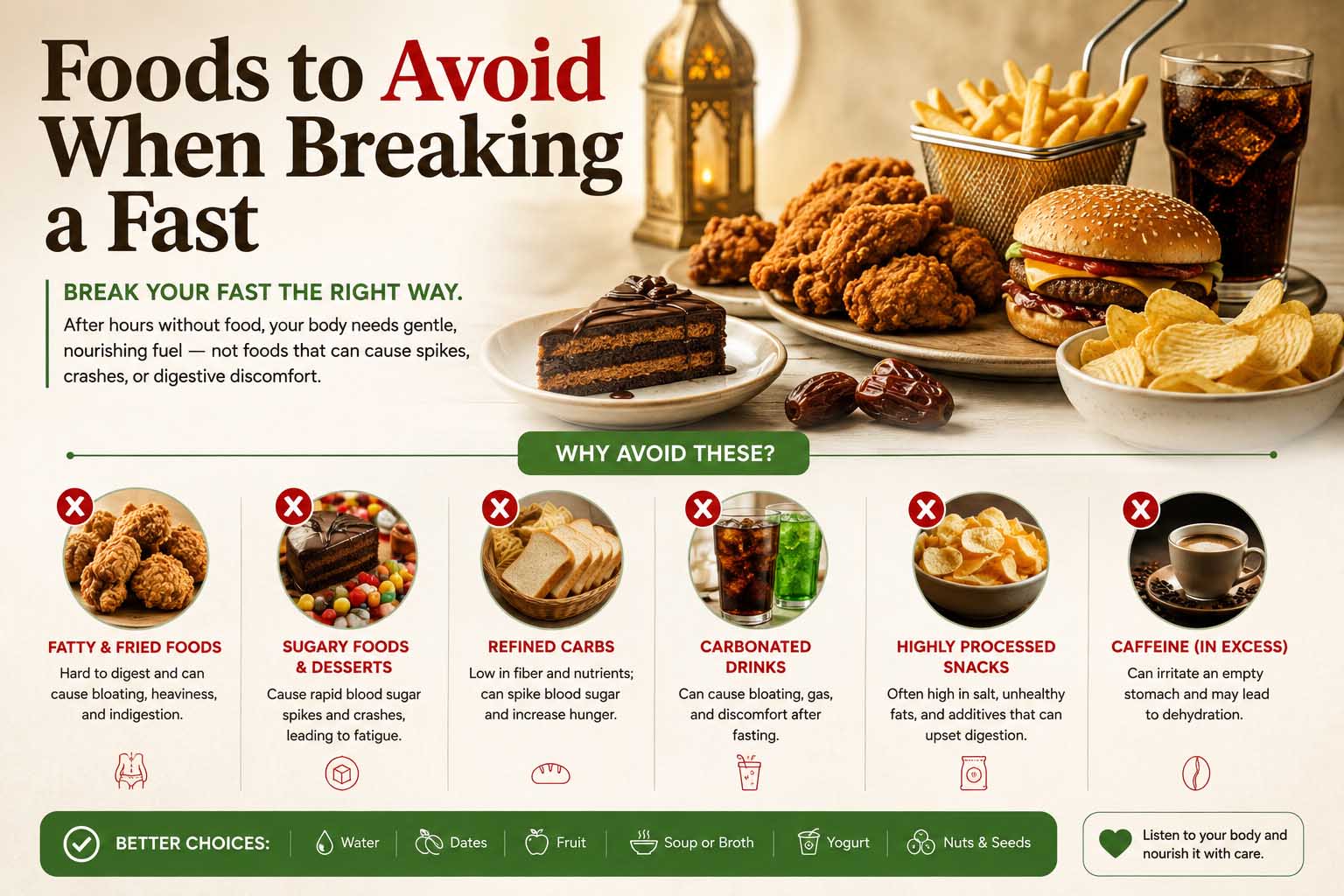
1. Fried Foods
Deep-fried foods are among the worst choices after fasting.
Examples include:
- Fried chicken
- French fries
- Fried pastries
- Onion rings
Instead of feeling energized, you may experience heaviness, bloating, or stomach discomfort.
2. Very Sugary Foods
Sweet desserts may seem tempting after fasting, but large amounts of sugar can cause rapid blood sugar spikes followed by sudden drops.
Examples include:
- Cakes
- Donuts
- Candy
- Sweet pastries
- Sugary breakfast cereals
If you want something sweet, fresh fruit is often a gentler option.
3. Large Portions
One of the biggest mistakes isn’t a specific food—it’s eating too much at once.
After fasting, it’s usually better to:
- Eat slowly.
- Start with a smaller portion.
- Wait 15–20 minutes before deciding if you need more.
This gives your body time to recognize fullness.
4. Highly Processed Fast Food
Fast food often combines:
- High sodium
- Saturated fat
- Refined carbohydrates
- Added sugars
This combination may overwhelm digestion after fasting.
Home-cooked meals prepared with simple ingredients are usually easier on the stomach.
5. Carbonated Drinks
Soft drinks and sparkling beverages may increase:
- Gas
- Bloating
- Burping
- Stomach discomfort
Water remains the best first choice for rehydration.
Some people also enjoy reading about the benefits of drinking warm water, especially since warm fluids may feel gentler on an empty stomach than very cold beverages.
What Should You Eat Instead?
Choosing gentle foods helps your digestive system return to normal gradually.
Good first options include:
- Fresh fruit
- Plain yogurt
- Vegetable soup
- Oatmeal
- Rice
- Eggs
- Steamed vegetables
- Lean protein
These foods provide nutrients while remaining relatively easy to digest.
Foods to Avoid When Breaking a Long Fast
People often ask about foods to avoid when breaking a long fast after fasting for 24 hours or longer.
Longer fasts require even greater care because digestion has been inactive for a longer period.
Rather than eating a very large meal immediately, consider this gradual approach:
Step 1
Begin with:
- Water
- Broth
- Herbal tea
Step 2
After a short period, try:
- Fruit
- Yogurt
- Soup
Step 3
Later, introduce balanced meals containing:
- Protein
- Whole grains
- Healthy fats
- Vegetables
Anyone completing prolonged fasts under medical supervision should follow the specific guidance provided by their healthcare team.
Should You Eat High-Fiber Foods Immediately?
Fiber supports long-term digestive health, but very large amounts immediately after fasting may cause bloating for some people.
If your digestive system feels sensitive, start with moderate portions before introducing meals that contain more foods high in fiber later in the day.
This gradual approach often improves comfort while still supporting healthy digestion.
Quick Comparison Table
| Better First Choices | Foods to Delay |
|---|---|
| Water | Soda |
| Vegetable soup | Fried foods |
| Plain yogurt | Fast food |
| Fresh fruit | Sugary desserts |
| Oatmeal | Very spicy meals |
| Rice | Large portions |
| Lean chicken | Heavy processed meats |
This simple comparison makes meal planning much easier after fasting.
Are There Any Foods to Avoid When Breaking a Fast?
Many readers ask, are there any foods to avoid when breaking a fast if they feel completely healthy.
The answer is yes.
Even healthy individuals often feel better by avoiding:
- Heavy fried meals
- Large servings
- Excess sugar
- Alcohol
- Highly processed foods
Your digestive system generally responds better when food is reintroduced gradually rather than all at once.
Gentle Foods for Sensitive Digestion
If you have a sensitive stomach or have fasted for an extended period, simple meals are usually the safest place to start.
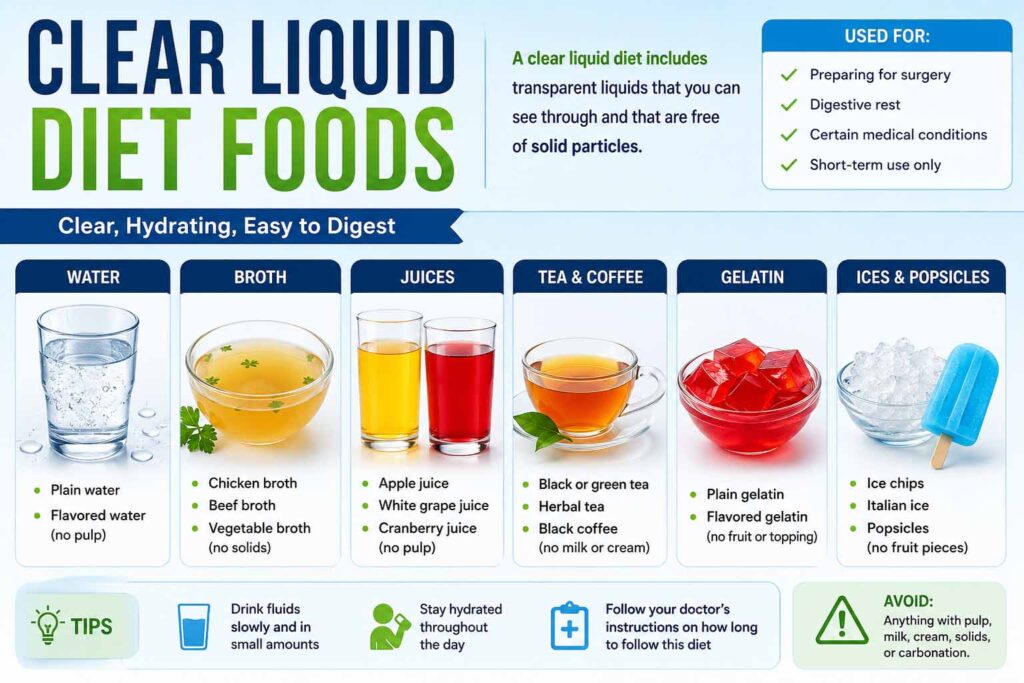
Some healthcare providers recommend beginning with foods similar to full liquid diet foods before progressing to regular meals, especially after certain medical procedures or prolonged periods without eating.
This approach is not necessary for every healthy person, but it illustrates how gradually increasing food texture can support digestion.
More Foods to Avoid When Breaking a Fast
Some foods are not necessarily unhealthy, but they may be difficult to tolerate immediately after fasting.
6. Very Spicy Foods
Spicy meals can irritate an empty stomach.
Foods containing large amounts of chili peppers or hot sauces may trigger:
- Heartburn
- Stomach pain
- Acid reflux
- Indigestion
If you enjoy spicy food, wait until you’ve eaten a small, balanced meal first.
7. Alcohol
Alcohol is never an ideal choice for breaking a fast.
After fasting, your body may absorb alcohol more quickly, increasing its effects.
Alcohol may also:
- Increase dehydration
- Irritate the stomach lining
- Affect blood sugar regulation
Water or other non-alcoholic beverages are much safer first choices.
8. Highly Caffeinated Drinks
Coffee and energy drinks can be harsh on an empty stomach.
- Stomach irritation
- Jitters
- Acid reflux
- Temporary dehydration
If coffee is part of your routine, consider drinking water and eating a light meal before your first cup.
9. Very Fatty Meals
Meals loaded with butter, cream, or fatty meats may slow digestion.
Large amounts of fat require more digestive effort, which can leave you feeling sluggish after fasting.
Healthy fats such as avocado, olive oil, or nuts can still be included later as part of a balanced meal.
10. Highly Salty Foods
Foods high in sodium may increase thirst after fasting.
Examples include:
- Chips
- Processed meats
- Instant noodles
- Salty snacks
After hours without fluids, rehydration should remain the priority.
Foods to Avoid When Breaking a Fast During Ramadan
Many readers specifically search for foods to avoid when breaking a fast Ramadan.
Traditional Ramadan meals often begin with dates and water, followed by soup or a light meal. This gradual approach can be easier on the digestive system than immediately eating a large dinner.
To reduce digestive discomfort, try to avoid:
- Overeating at iftar
- Drinking large amounts of sugary beverages
- Eating several fried foods at once
- Finishing the meal too quickly
Instead, eat slowly and allow your body time to recognize fullness before going back for additional servings.
Common Mistakes When Breaking a Fast
Even nutritious foods can cause discomfort if they’re eaten the wrong way.
Eating Too Quickly
Fast eating makes it easier to overeat before your brain recognizes you’re full.
Take small bites and chew thoroughly.
Drinking Very Little Water
Rehydration is one of the first priorities after fasting.
Drink water gradually rather than consuming large amounts all at once.
Skipping Protein
Protein helps increase fullness and supports muscle maintenance.
Good options include:
- Eggs
- Greek yogurt
- Fish
- Chicken
- Beans
Eating Only Refined Carbohydrates
White bread, pastries, and sweets digest quickly but may leave you hungry again soon afterward.
Including protein and healthy fats creates a more balanced meal.
Should You Eat Fruit First?
Fresh fruit is often well tolerated after fasting because it contains water, natural sugars, vitamins, and minerals.
Bananas are a popular choice because they’re gentle on the stomach and easy to digest. If you’re wondering about timing, our guide on the best time to eat banana explains when this fruit may fit best into different eating patterns.
Not everyone responds the same way, so pay attention to how your own body feels.
What About Fiber?
Fiber supports digestive health, but introducing very large amounts immediately after fasting isn’t always comfortable.
Some people benefit from starting with easier-to-digest foods before gradually increasing fiber intake throughout the day.
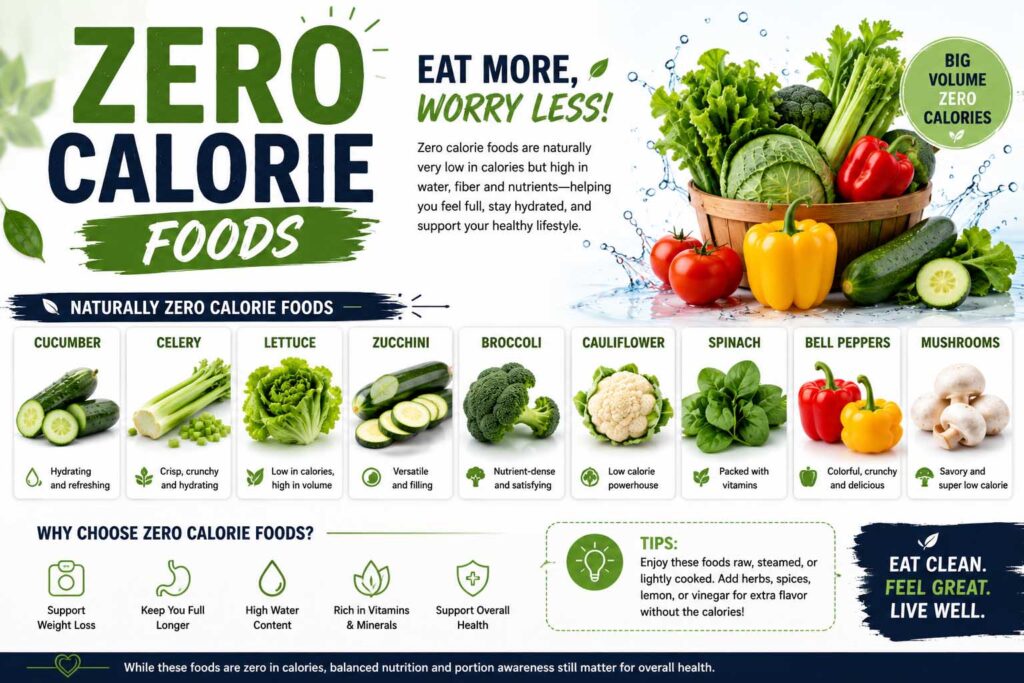
If you’ve recently followed a medically restricted eating plan or have digestive concerns, your healthcare provider may temporarily recommend low fiber foods before returning to your usual diet.
Healthy adults without digestive conditions can generally return to their normal fiber intake gradually.
Medical Guidance
Breaking a fast safely becomes even more important if you have certain medical conditions
- Diabetes
- Kidney disease
- Liver disease
- Pregnancy
- Eating disorders
- Certain gastrointestinal conditions
People taking medications that require food should also follow their healthcare provider’s recommendations.
If you experience severe dizziness, fainting, persistent vomiting, confusion, or signs of dehydration after fasting, seek medical care promptly.
Frequently Asked Questions
What foods should I eat first after fasting?
Water, broth, fruit, yogurt, oatmeal, soup, and other gentle foods are commonly good starting choices for many healthy adults.
Can I eat a large meal immediately?
It’s usually better to begin with a smaller meal and wait several minutes before deciding whether you need more food.
Is coffee okay after fasting?
Many people tolerate coffee better after eating a light meal instead of drinking it on an empty stomach.
Are fried foods always bad?
No. Fried foods can be enjoyed occasionally, but they’re generally not the best first meal immediately after fasting because they’re harder to digest.
How much water should I drink?
There’s no single amount that works for everyone. Drink gradually based on your thirst, activity level, climate, and individual health needs.
Practical Tips for Breaking a Fast Comfortably
A simple routine can help your digestive system adjust smoothly:
- Start with water.
- Eat slowly.
- Choose smaller portions.
- Include protein and complex carbohydrates.
- Wait before eating a second serving.
- Pay attention to hunger and fullness cues.
- Return to your normal eating pattern gradually.
Small habits like these often make a noticeable difference in how you feel after fasting.
Key Takeaways
Knowing the foods to avoid when breaking a fast can help you reduce digestive discomfort and make the transition back to eating much easier. Heavy fried meals, sugary desserts, highly processed foods, alcohol, and oversized portions are common triggers for bloating, indigestion, and rapid blood sugar changes. Instead, begin with water and gentle, nutrient-rich foods, then slowly work your way toward a balanced meal.
Whether you’re fasting for health, intermittent fasting, or religious reasons, listening to your body’s signals is one of the most effective strategies. If you have a medical condition, take prescription medications, or are planning longer fasts, speak with a qualified healthcare professional before making significant changes to your eating routine. A gradual, balanced approach is the safest way to support both digestion and overall well-being.