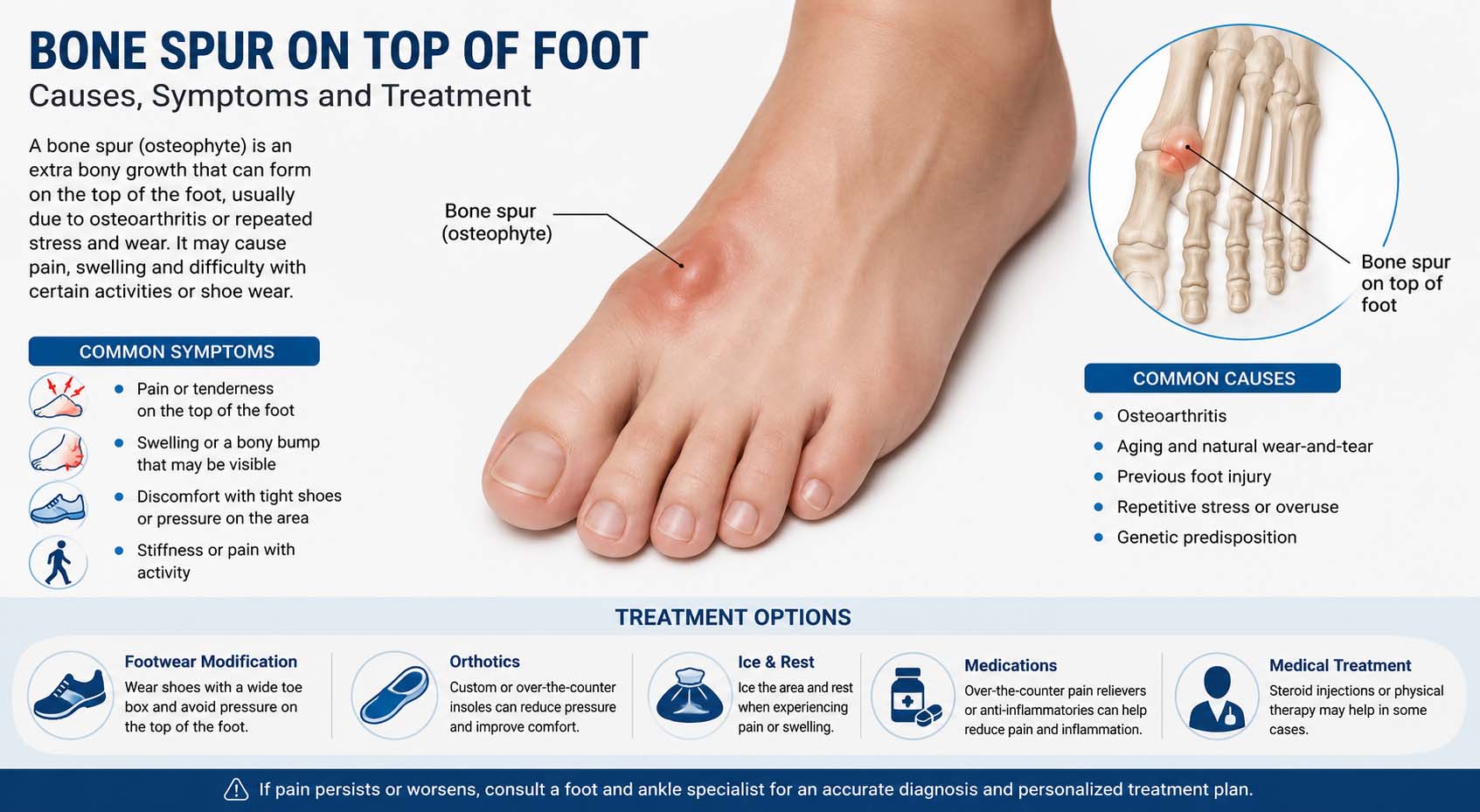
A bone spur on top of foot can cause a noticeable hard bump, pain, swelling, and discomfort when wearing shoes or walking. Bone spurs, also called osteophytes, are bony growths that usually develop around joints affected by long-term stress or degenerative changes.
Although these growths may look concerning, many bone spurs cause no symptoms. However, a spur on the upper part of the foot can become uncomfortable when shoes press against it or when nearby joints and soft tissues become irritated.
Some people first notice a firm bump near the middle of the foot. Others experience stiffness, tenderness, or difficulty wearing certain footwear. In addition, symptoms may become more noticeable after prolonged standing or physical activity.
Understanding the causes, diagnosis, and available treatments can help you make informed decisions about foot health. Fortunately, many people manage their symptoms without surgery.
What Is a Bone Spur on Top of Foot?
A bone spur is an extra bony projection that develops along an existing bone, commonly near a joint. On the upper surface of the foot, these growths often appear around the midfoot joints.
The medical term for a bone spur is osteophyte. These growths frequently develop alongside osteoarthritis, although other conditions can also contribute to bony changes.
A dorsal bone spur, meaning one located on the upper surface of the foot, may create a visible bump. However, not every bump in this area is a bone spur.
For example, a ganglion cyst, localized swelling, or another bone-related condition can produce a similar appearance. Therefore, a healthcare professional may need to examine the foot before confirming the diagnosis.
According to the Cleveland Clinic’s overview of bone spurs, osteophytes do not always cause symptoms, and treatment generally depends on whether they produce pain or interfere with normal activities.
Symptoms of a Bone Spur on the Top of the Foot
Symptoms vary depending on the spur’s location, size, and effect on nearby structures.
Some people have a visible bump without significant discomfort. Meanwhile, others experience pain when walking or wearing shoes.
A Hard Bump on the Upper Foot
One common sign is a firm, raised area on the top of the foot.
Unlike many soft-tissue swellings, a bony prominence usually feels hard and remains relatively fixed in position.
However, appearance alone cannot confirm the cause. A clinician may recommend imaging if the diagnosis remains uncertain.
Pain When Walking or Wearing Shoes
Shoes can press directly against a raised bone spur, especially when the upper material or laces fit tightly.
As a result, walking or standing may become uncomfortable.
In some cases, the discomfort improves when a person removes their shoes or changes to footwear with more room over the affected area.
Swelling and Joint Stiffness
A painful spur may occur alongside joint inflammation or arthritis.
Consequently, the surrounding area may feel tender, swollen, or stiff.
Stiffness can become particularly noticeable after periods of rest or during movements that stress the affected joint.
Tingling or Numbness
Occasionally, a bony prominence or associated swelling may irritate a nearby nerve.
This irritation can contribute to tingling, burning sensations, or numbness.
However, these symptoms can have several causes. Therefore, persistent sensory changes deserve medical evaluation rather than an assumption that a bone spur is responsible.
What Causes a Bone Spur on Top of Foot?
Bone spurs usually develop gradually as joints respond to long-term mechanical stress or degenerative changes.
Several factors may contribute to their formation.
Osteoarthritis and Joint Wear
Osteoarthritis is a common condition associated with osteophytes.
As the cartilage and other structures within a joint change over time, the body may form additional bone around the joint margins.
In the foot, this process can affect the midfoot joints and create a raised area on the upper surface.
However, the size of a spur does not necessarily reflect the amount of pain a person experiences.
Repetitive Foot Stress
Repeated loading can contribute to joint irritation and may aggravate an existing foot problem.
For example, people who spend long periods standing, walking, or participating in demanding physical activities may notice more discomfort.
Nevertheless, repetitive activity does not automatically cause a bone spur. Joint health, biomechanics, previous injuries, and other factors also matter.
People interested in strength training and the benefits of deadlifts should use appropriate technique and avoid exercises that aggravate existing foot pain.
Similarly, understanding the benefits of a weighted vest can help individuals consider how additional loading may affect their feet during exercise.
Previous Foot Injuries
Earlier injuries can sometimes contribute to long-term changes in joint structure.
For instance, a fracture involving a joint may increase the risk of post-traumatic arthritis.
Over time, arthritic changes may lead to osteophyte formation.
However, not every previous sprain or fracture results in a bone spur.
Foot Structure and Biomechanics
Foot shape and movement patterns influence how forces pass through the joints.
Certain structural differences may increase pressure on particular areas of the foot.
As a result, some people experience recurring joint irritation or discomfort.
A podiatrist can assess foot mechanics and determine whether footwear changes or orthotic support may help.
How Doctors Diagnose a Bone Spur on Top of Foot
A medical evaluation helps distinguish a bone spur from other conditions that cause pain or swelling on the upper foot.
Diagnosis generally begins with a discussion of symptoms and a physical examination.
Physical Examination
A clinician may inspect the bump, check for tenderness, and assess foot movement.
The examination may also include checking swelling, skin changes, sensation, and the effects of walking.
Depending on the symptoms, the clinician may perform a broader head to toe assessment to identify other relevant health concerns.
Bone Spur on Top of Foot X-Ray
An X-ray is a common imaging test for identifying bony growths.
It allows healthcare professionals to examine the bones and joints and determine whether a visible prominence represents an osteophyte.
Additionally, X-rays may reveal joint-space narrowing or other changes associated with osteoarthritis.
The procedure is generally quick and painless. A radiographer positions the foot and takes images from the necessary angles.
However, an X-ray finding does not automatically prove that the spur is causing the pain. Doctors must compare the images with symptoms and examination findings.
Other Imaging Tests
Sometimes, an X-ray does not fully explain the symptoms.
For example, a clinician may suspect a ganglion cyst, tendon disorder, stress injury, or another soft-tissue problem.
In these situations, ultrasound, MRI, or another imaging test may help clarify the diagnosis.
Nevertheless, additional imaging is not necessary for every patient.
Treatment for Bone Spur on Top of Foot
Treatment usually focuses on relieving discomfort, reducing pressure, and improving daily function.
Importantly, nonsurgical treatments generally do not remove the bony growth itself. Instead, they help manage the symptoms associated with it.
Choose Comfortable Footwear
Shoes with adequate space over the upper foot can reduce pressure on a painful prominence.
Look for footwear with a comfortable fit, supportive soles, and uppers that do not press firmly against the bump.
Additionally, adjusting the lacing pattern may reduce irritation in some cases.
Avoid shoes that repeatedly rub against the painful area.
Use Ice for Temporary Pain Relief
Cold therapy may help relieve soreness after activity.
For example, you can apply a cold pack wrapped in a towel for approximately 10–15 minutes.
However, avoid placing ice directly against the skin.
People with reduced sensation or circulation problems should seek medical guidance before using cold therapy.
Consider Pain-Relief Medication
Over-the-counter pain relievers may provide temporary symptom relief.
Some people benefit from nonsteroidal anti-inflammatory drugs, such as ibuprofen, when these medicines are appropriate for them.
However, these medications are not suitable for everyone, particularly people with certain kidney, stomach, cardiovascular, or medication-related risks.
Therefore, ask a pharmacist or healthcare professional before using them if you have other medical conditions or take regular medication.
Orthotic Inserts and Foot Support
Orthotic inserts may help some patients by modifying how forces pass through the foot.
For example, a supportive insert may reduce painful movement in an arthritic midfoot joint.
However, orthotics do not remove a bone spur or guarantee that it will stop growing.
A podiatrist can recommend suitable support based on your foot structure and symptoms.
Physical Therapy and Gentle Exercises
Physical therapy may help improve strength, movement, and functional comfort.
A therapist can recommend exercises suited to the underlying condition.
For instance, gentle ankle mobility work and appropriate strengthening exercises may support normal walking mechanics.
However, avoid stretching or exercising through sharp pain.
The most useful program depends on whether symptoms arise from arthritis, tendon irritation, or another condition.
Bone Spur on Top of Foot Surgery
Doctors generally consider surgery when symptoms remain troublesome despite appropriate nonsurgical treatment.
However, the presence of a bone spur alone does not mean an operation is necessary.
When Is Surgery Recommended?
A foot and ankle specialist may discuss surgery if a painful prominence repeatedly interferes with footwear, walking, or everyday activities.
Before recommending an operation, the surgeon will consider the underlying joint condition and whether removing the spur is likely to address the symptoms.
For example, removing a prominent osteophyte may help when direct shoe pressure causes most of the discomfort.
However, if significant arthritis causes pain within the joint, spur removal alone may not provide lasting relief.
How Does the Procedure Work?
In selected cases, a surgeon may remove the prominent bony growth through a procedure known as an exostectomy or cheilectomy, depending on the location and condition.
The surgeon carefully accesses the affected area and removes the problematic bone prominence.
However, some patients with advanced joint arthritis may require a different procedure, such as joint fusion.
Therefore, the surgical approach depends on the diagnosis rather than the presence of a bump alone.
Recovery After Foot Surgery
Recovery varies considerably according to the procedure.
After a relatively limited bone-spur removal, some patients may return to certain activities within weeks.
However, swelling and discomfort can persist longer, and more extensive operations may require several months of recovery.
Patients should follow their surgeon’s instructions regarding wound care, weight-bearing, footwear, and rehabilitation.
Possible Surgical Risks
Like other operations, foot surgery carries potential risks.
These include infection, nerve irritation, wound-healing problems, persistent pain, and recurrence of a bony prominence.
In addition, surgery may not resolve symptoms if another condition contributes to the discomfort.
Therefore, discussing realistic benefits and risks with a specialist is essential.
How to Relieve Foot Pain at Home
Simple adjustments may improve comfort when symptoms are mild.
However, home care should not replace medical evaluation when pain is persistent, severe, or unexplained.
Reduce Pressure on the Painful Area
First, identify whether a particular pair of shoes or lacing pattern increases discomfort.
Then, try footwear that leaves more room over the top of the foot.
In addition, consider temporarily reducing activities that repeatedly aggravate the area.
Adjust Physical Activity
You may be able to remain active while avoiding movements that worsen symptoms.
For example, some people find lower-impact activities more comfortable than running or prolonged walking.
However, the right choice depends on the underlying condition.
If an activity causes increasing pain or swelling, stop and seek professional advice.
Monitor Changes in Symptoms
Pay attention to whether the bump changes size or whether pain becomes more frequent.
Also, watch for new numbness, skin irritation, or difficulty walking.
These changes may indicate that the condition needs reassessment.
Can You Prevent Bone Spurs on the Foot?
Not every bone spur is preventable, especially when osteoarthritis or previous joint damage contributes to its development.
However, several habits may help reduce unnecessary foot irritation.
Wear Properly Fitted Shoes
Choose shoes that accommodate your foot shape and do not create painful pressure points.
Supportive footwear may improve comfort during daily activities.
In contrast, tight or poorly fitting shoes can aggravate an existing bony prominence.
Manage Repetitive Stress
Gradually increase exercise intensity rather than making sudden changes.
Also, allow adequate recovery between demanding activities.
Although these habits cannot guarantee prevention, they may help limit avoidable discomfort.
Address Persistent Foot Problems
Seek professional advice if you experience recurring pain, stiffness, or changes in foot movement.
Early assessment may identify arthritis, structural problems, or other conditions that benefit from targeted care.
When Should You See a Doctor?
A healthcare professional should assess persistent pain, a growing or unexplained bump, or symptoms that interfere with walking.
Additionally, arrange an evaluation if you develop recurring swelling, tingling, or numbness.
Seek urgent medical care if you experience severe pain after an injury, cannot bear weight, or develop a hot, red, swollen foot with fever.
People with diabetes, reduced circulation, or loss of foot sensation should seek prompt advice about new foot problems.
These symptoms do not necessarily indicate a bone spur and may require different treatment.
Frequently Asked Questions About Foot Bone Spurs
Can a Bone Spur on the Foot Go Away Naturally?
A true bony osteophyte generally does not disappear through exercises, massage, or home remedies.
However, pain and irritation may improve with suitable footwear and other conservative treatments.
Therefore, symptom relief does not always require removing the spur.
Is a Hard Bump on Top of the Foot Always a Bone Spur?
No. A hard or raised area may have several causes, including a ganglion cyst or another structural change.
Consequently, a medical examination is important when the cause is unclear.
Can You Walk With a Bone Spur?
Many people can walk normally despite having a bone spur.
However, symptoms may worsen when shoes press against the affected area or when an underlying joint condition causes pain.
If walking becomes difficult, a healthcare professional can assess the cause.
Does a Bone Spur Always Require Surgery?
No. Many bone spurs cause few symptoms or respond to nonsurgical care.
Surgery is generally reserved for selected patients whose symptoms remain significant despite appropriate treatment.
How Long Does Recovery Take After Surgery?
Recovery depends on the surgical technique, joint condition, and individual healing process.
A limited procedure may involve a shorter recovery than an operation requiring joint fusion.
Therefore, your surgeon should provide a recovery plan based on the exact procedure.
Conclusion
A bone spur on top of foot may cause a hard bump, pain, swelling, or difficulty wearing certain shoes. However, not every bony growth produces symptoms, and other foot conditions can cause similar problems.
Osteoarthritis and long-term joint changes commonly contribute to osteophyte formation. Therefore, a physical examination and, when appropriate, an X-ray can help identify the cause of discomfort.
Fortunately, many people find relief through footwear adjustments, activity modification, pain management, and appropriate foot support. Surgery remains an option for selected cases when conservative treatment does not provide adequate relief.
If symptoms persist or interfere with everyday activities, consult a qualified healthcare professional for an accurate diagnosis and an individualized treatment plan.