
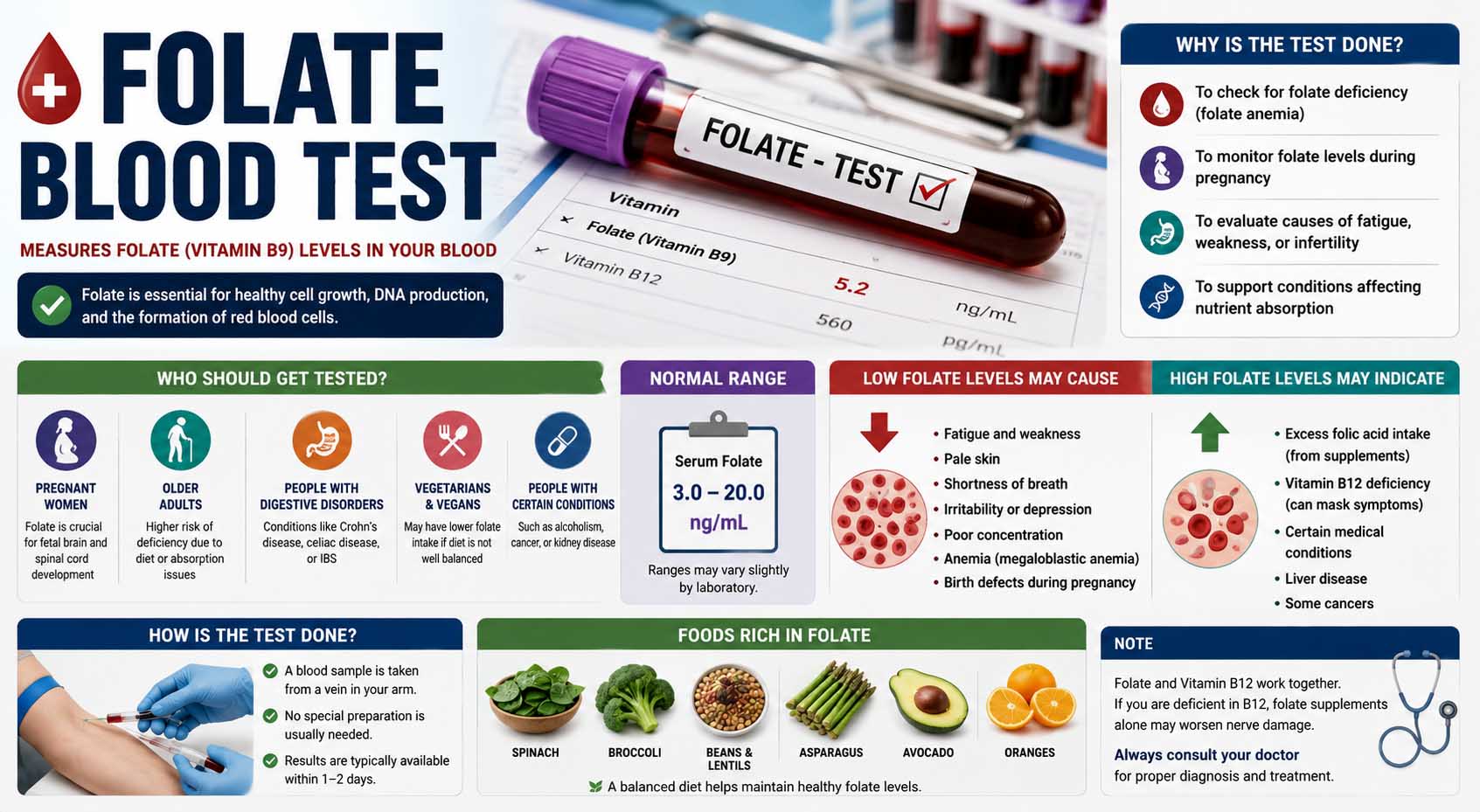
A folate blood test measures the amount of folate, also called vitamin B9, in your blood. Because folate helps your body make healthy red blood cells and DNA, doctors may check your level when investigating anemia, fatigue, weakness, nutritional problems, or certain digestive conditions. The test is simple, but understanding the result requires more than looking at whether a number appears high or low.
Folate occurs naturally in foods such as leafy green vegetables, beans, citrus fruits, and fortified grains. Folic acid, meanwhile, is a form commonly found in supplements and fortified foods.
A low result can point toward inadequate intake, poor absorption, increased nutritional needs, or certain medications. However, doctors often interpret folate alongside vitamin B12 and other blood tests because several nutritional problems can cause similar symptoms.
What Is a Folate Blood Test?
If you are wondering what is a folate blood test, it is a laboratory test that checks the concentration of vitamin B9 in a blood sample. Most commonly, the laboratory measures serum or plasma folate.
A folate serum blood test mainly reflects relatively recent folate intake. Therefore, what you ate or which supplements you recently took may influence the result.
Doctors sometimes evaluate folate when a complete blood count shows unusually large red blood cells. For example, folate deficiency can contribute to megaloblastic anemia, which involves abnormally large and poorly developed red blood cells.
Because several blood abnormalities can overlap, your clinician may review other results as well. An MPV blood test high result, for example, relates to platelet size rather than folate status, so it answers a different clinical question even when both values appear on a broader blood workup.
Why Doctors Order a Folate Blood Test
A healthcare professional may order folate testing when symptoms, medical history, or other laboratory findings suggest a possible deficiency.
Possible reasons include:
- Unexplained fatigue or weakness
- Signs of anemia
- Poor or restrictive dietary intake
- Long-term heavy alcohol use
- Conditions that interfere with nutrient absorption
- Unexplained changes in red blood cell size
- Monitoring nutritional status in selected patients
- Suspected vitamin B12 or folate deficiency
Pregnancy also increases folate requirements because folate supports normal fetal development. However, routine prenatal care generally emphasizes adequate folic acid intake rather than relying only on serum folate testing.
Folate results may also be considered alongside iron studies when doctors investigate anemia. For instance, TIBC blood test high can occur with iron deficiency, while folate deficiency causes anemia through a different mechanism.
Folate Blood Test Normal Range and Results
There is no single universal normal folate range because laboratories can use different methods, units, and reference intervals. Therefore, always compare your number with the reference range printed on your own laboratory report.
Serum folate is commonly reported in nanograms per milliliter (ng/mL) or nanomoles per liter (nmol/L). Rather than diagnosing deficiency from an internet cutoff, your healthcare professional will consider the laboratory’s range together with your symptoms, diet, medications, and other test results.
The NIH Office of Dietary Supplements folate fact sheet explains that serum folate concentrations can help assess folate status but are sensitive to recent dietary intake. Therefore, clinicians interpret the measurement within a broader health and nutritional assessment.
A simplified interpretation looks like this:
| Result | What It May Suggest | What Usually Happens Next |
|---|---|---|
| Below laboratory range | Possible folate deficiency | Diet, medications, B12 and underlying causes may be reviewed |
| Within laboratory range | Folate deficiency less likely | Other causes may be investigated if symptoms continue |
| Above laboratory range | Often supplements or high intake | Supplement use and B12 status may be reviewed |
One isolated result rarely provides the entire answer. Therefore, avoid starting high-dose supplements solely because you believe your result looks borderline.
What Low Folate Blood Test Results May Mean
A low folate blood test result may mean your body is not receiving or absorbing enough vitamin B9. However, serum levels can respond relatively quickly to recent dietary intake, so clinicians interpret them within the broader clinical picture.
Common Causes of Folate Deficiency
Diet can play a major role. People who eat few vegetables, legumes, fruits, and fortified grains may consume inadequate folate.
Alcohol can also interfere with folate intake and metabolism. Meanwhile, digestive disorders that impair nutrient absorption may increase the risk of deficiency.
Other possible contributors include increased nutritional requirements and certain medications. For example, some medicines interfere with folate metabolism or absorption. Because stopping prescription medication without guidance can be risky, discuss this possibility with your prescriber instead of making changes yourself.
Symptoms of Low Folate
Low folate may cause no obvious symptoms initially. As deficiency progresses, however, anemia may develop.
Possible symptoms include:
- Tiredness
- Weakness
- Pale skin
- Shortness of breath
- Reduced exercise tolerance
- Headaches
- Sore or smooth tongue
- Difficulty concentrating in some cases
Therefore, proper testing matters because iron deficiency, vitamin B12 deficiency, blood loss, chronic disease, and other conditions can produce similar complaints.
When a complete blood count is unusual, a clinician may also review an NRBC blood test or other red-cell measurements to understand how the body is producing blood cells.
Folate vs. Vitamin B12 Deficiency
Folate and vitamin B12 deficiencies deserve careful distinction because both can cause megaloblastic anemia and unusually large red blood cells.
Vitamin B12 deficiency, however, can also affect the nervous system. Symptoms may include numbness, tingling, balance problems, or cognitive changes.
This difference is one reason healthcare professionals consider vitamin B12 status when evaluating or treating suspected folate deficiency. High folic acid intake can improve the anemia associated with vitamin B12 deficiency without correcting the underlying neurological problem.
For people who have confirmed B12 deficiency, treatment depends on the cause and severity. A discussion of the benefits of B12 shots can help explain why injections are used in certain cases, especially when absorption from the digestive system is inadequate.
What High Folate Blood Test Results May Mean
A high folate blood test result is often associated with consuming folic acid supplements or fortified foods. Unlike a low level, a high serum folate value does not automatically mean that a disease is present.
For example, someone taking a multivitamin, prenatal vitamin, or dedicated folic acid supplement may have a result above the laboratory’s reference range.
Recent food intake may also influence serum folate. Consequently, doctors usually review supplements, diet, medications, and vitamin B12 status before deciding whether an elevated value needs further investigation.
High folic acid intake deserves particular attention when vitamin B12 deficiency is possible. Large amounts can correct some blood abnormalities associated with B12 deficiency without correcting its neurological effects.
Therefore, do not assume that taking more folic acid is beneficial simply because folate is an essential vitamin. Supplement doses should match your actual needs and medical guidance.
Preparing for a Folate Serum Blood Test
Preparation requirements vary between laboratories. Some clinicians or labs may request fasting, while others may not.
Therefore, follow the instructions provided with your test rather than using a universal fasting rule. Also, tell your healthcare professional about vitamins, supplements, and medications you use because some can influence interpretation.
Do not stop prescription medicines or medically recommended prenatal supplements just to prepare for the test unless your healthcare professional specifically tells you to do so.
During the test, a healthcare worker usually draws blood from a vein in your arm. The process generally takes only a few minutes.
You may feel a brief sting when the needle enters. Afterward, mild soreness or bruising can occur, although serious complications from routine blood collection are uncommon.
What Happens After Folate Testing?
Your next step depends on the result and why your healthcare professional ordered the test.
If folate is low, your healthcare professional may review your diet, alcohol intake, medications, digestive health, and other laboratory results. Vitamin B12 testing is particularly relevant before or during treatment.
A complete blood count may help determine whether anemia is present. Meanwhile, your clinician may order other tests when another nutritional or medical problem is suspected.
Electrolytes are separate from vitamin measurements, although they may appear on the same laboratory report. For example, a sodium blood test evaluates fluid and electrolyte balance and should not be interpreted as a marker of folate status.
If folate is high, your clinician may first ask how much folic acid you receive from supplements and fortified products. In many cases, that information helps explain the result.
Treating and Preventing Folate Deficiency
Treatment depends on why folate is low. Therefore, simply taking a supplement without identifying the cause may not be the best approach.
When diet contributes to the problem, increasing folate-rich foods can help. Good sources include:
- Spinach and other leafy greens
- Lentils
- Beans and peas
- Asparagus
- Broccoli
- Avocado
- Oranges and other citrus fruits
- Fortified breads, cereals, and grain products
Healthcare professionals may also recommend folic acid supplements when dietary changes alone are insufficient or when nutritional requirements increase.
Pregnancy is a particularly relevant example. Adequate folic acid before conception and during early pregnancy helps reduce the risk of neural tube defects. People who are pregnant, planning pregnancy, or could become pregnant should follow current medical guidance on folic acid intake because individual recommendations can vary.
If an intestinal condition causes poor absorption, however, improving diet alone may not completely correct the deficiency. In that situation, treating the underlying condition becomes part of the plan.
Common Myths About Folate Testing
A Normal Result Rules Out Every Vitamin Problem
Not necessarily. A serum folate result mainly provides information about folate status and can be influenced by recent intake. Other deficiencies, including vitamin B12 or iron deficiency, require their own evaluation.
High Folate Always Means Better Health
Higher is not automatically better. Your body needs adequate folate, but very high results may simply reflect supplementation. Therefore, use supplements appropriately rather than taking them with the goal of maximizing a laboratory number.
Folate and Vitamin B12 Are the Same
They are different vitamins. Folate is vitamin B9, while cobalamin is vitamin B12. Still, both participate in healthy blood cell production and can cause similar types of anemia when deficient.
Symptoms Alone Can Diagnose Folate Deficiency
Symptoms such as tiredness and weakness have many possible causes. Therefore, blood testing and medical assessment provide much more useful information than symptoms alone.
When to Speak With a Healthcare Professional
Contact a healthcare professional if you have persistent fatigue, unexplained weakness, shortness of breath, significant dietary restriction, or other symptoms that could indicate anemia or nutritional deficiency.
You should also discuss an abnormal folate result rather than treating the number yourself. Your clinician can determine whether the result fits your symptoms and whether vitamin B12, iron studies, a complete blood count, or other tests are appropriate.
Seek prompt medical care for severe shortness of breath, chest pain, fainting, new neurological symptoms, or rapidly worsening weakness because these symptoms should not simply be attributed to a vitamin deficiency.
Folate Blood Test FAQs
What Is Folate in Blood Test Results?
If you are asking what is folate in blood test reports, the value represents the measured concentration of vitamin B9 in the tested blood sample. Folate supports DNA synthesis and normal red blood cell production.
Is Folate the Same as Folic Acid?
Not exactly. Folate is the general term for vitamin B9. People often use “folate” when referring to naturally occurring forms in foods, while folic acid is a form commonly used in fortified foods and supplements.
Can I Have Low Folate Without Anemia?
Yes. Folate levels can become inadequate before obvious anemia develops. Therefore, clinicians consider symptoms, medical history, diet, and laboratory findings together.
How Quickly Can Folate Levels Change?
Serum folate can respond relatively quickly to recent food and supplement intake. Consequently, one measurement does not always reflect long-term nutritional status perfectly.
Should I Take Folic Acid if My Folate Is Low?
A healthcare professional may recommend folic acid after confirming deficiency and considering its cause. However, vitamin B12 status should also be considered, particularly before prolonged high-dose folic acid treatment.
Can Supplements Cause High Folate Levels?
Yes. Folic acid-containing multivitamins, prenatal vitamins, and individual supplements can raise serum folate. Therefore, tell your healthcare professional exactly which products and doses you take.
Practical Next Steps After Your Folate Result
A folate blood test can provide useful information about vitamin B9 status, especially when doctors investigate anemia or possible nutritional deficiency. Still, the number makes the most sense when your healthcare professional interprets it alongside your symptoms, diet, supplements, vitamin B12 status, complete blood count, and medical history.
If your result falls outside your laboratory’s reference range, avoid trying to correct it with large supplement doses on your own. Instead, review the result with a qualified healthcare professional, identify why the level is abnormal, and then choose the dietary changes, supplementation, or medical treatment that fits the underlying cause.