
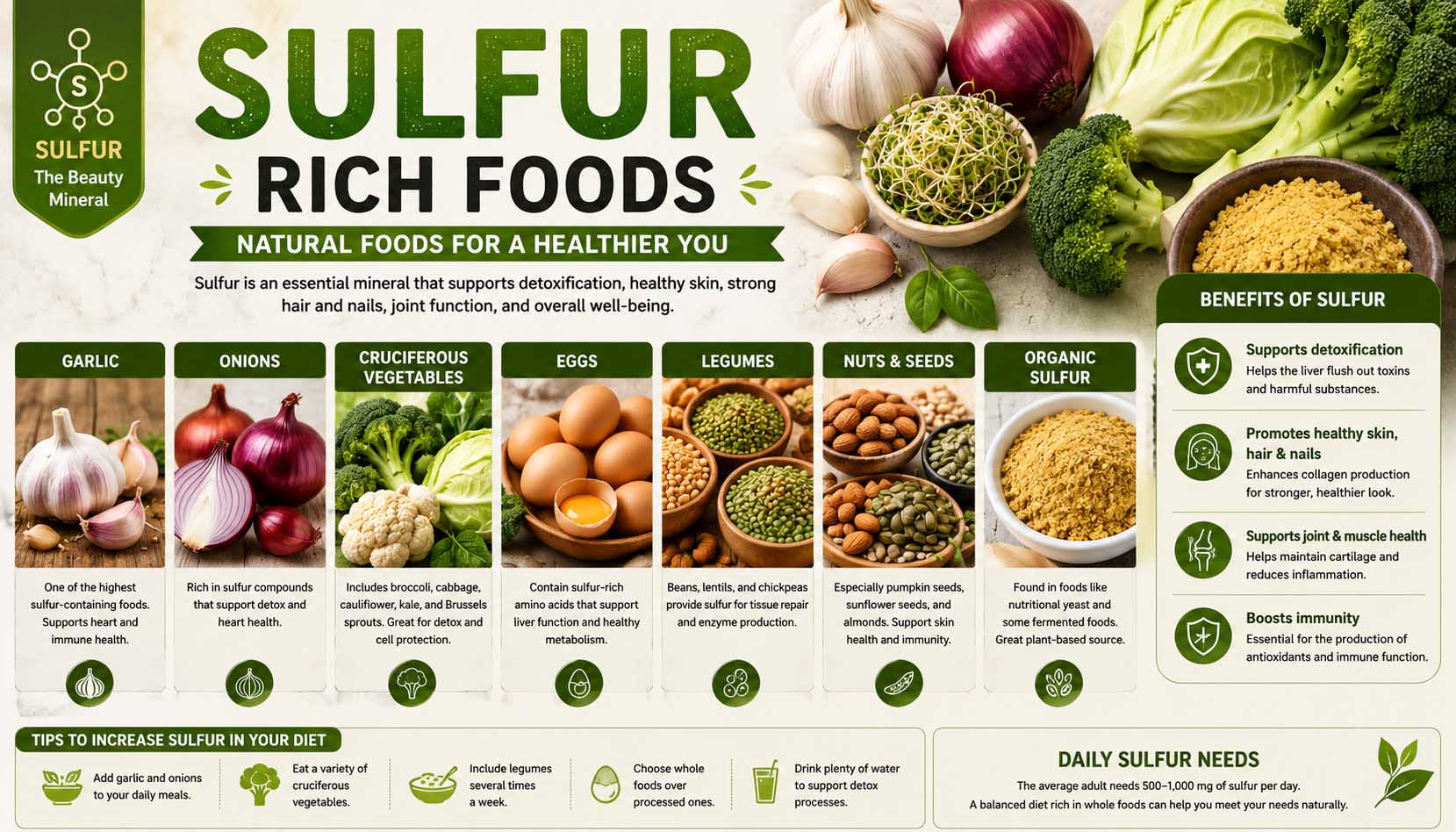
Many people search for sulfur rich foods after hearing that sulfur supports healthy skin, joints, hair, or detoxification. While sulfur doesn’t receive as much attention as vitamins and minerals, it’s an essential element that plays an important role in many body functions.
The good news is that most people get enough sulfur through a balanced diet. It’s naturally found in protein-rich foods and many vegetables, especially those in the cruciferous family. This guide explains what sulfur does, the best food sources, and how to include them in your meals without falling for common nutrition myths.
What Is Sulfur and Why Does Your Body Need It?
Sulfur is a naturally occurring mineral element found throughout the human body. It is a key component of the amino acids methionine and cysteine, both of which play an essential role in building and maintaining proteins throughout the body.
Sulfur helps support:
- Protein production
- Healthy skin
- Hair and nails
- Connective tissues
- Enzyme activity
- Antioxidant production
Your body also relies on sulfur to produce glutathione, one of its most important antioxidants, which helps protect cells from oxidative stress and supports overall cellular health.
Sulfur Rich Foods List
If you’re looking for a practical sulfur rich foods list, these are among the best dietary sources.
| Food | Sulfur Content Source |
|---|---|
| Eggs | Sulfur-containing amino acids |
| Garlic | Organosulfur compounds |
| Onions | Organosulfur compounds |
| Broccoli | Sulfur compounds and glucosinolates |
| Brussels sprouts | Sulfur-containing plant compounds |
| Cabbage | Glucosinolates |
| Cauliflower | Sulfur-rich vegetables |
| Kale | Sulfur-containing compounds |
| Asparagus | Natural sulfur compounds |
| Chicken | Protein amino acids |
| Beef | Protein amino acids |
| Fish | Sulfur-containing proteins |
| Turkey | High-quality protein |
| Lentils | Plant protein |
| Beans | Plant protein |
Eating a variety of these foods helps provide sulfur alongside many other valuable nutrients.
What Are Sulfur Rich Foods?
People often ask, what are sulfur rich foods because sulfur isn’t listed on nutrition labels the way calcium or iron is.
Generally, sulfur comes from two main groups:
- Protein-rich animal and plant foods
- Cruciferous vegetables
These foods naturally contain sulfur in the form of amino acids and beneficial plant compounds, contributing to a nutritious diet that supports overall health.
Foods Rich in Sulfur From Animal Sources
Examples include:
- Eggs
- Chicken
- Turkey
- Lean beef
- Fish
- Seafood
- Dairy products
Eggs are especially well known because sulfur contributes to both their nutritional value and their distinctive smell when cooked.
Sulfur-Rich Foods From Plants
Many vegetables also supply sulfur compounds.
Top choices include:
- Broccoli
- Cabbage
- Cauliflower
- Brussels sprouts
- Kale
- Bok choy
- Garlic
- Onions
- Leeks
These vegetables also provide vitamins, minerals, fiber, and antioxidants.
For example, if you enjoy asparagus, learning more about the health benefits of asparagus can help you appreciate how this vegetable contributes far more than sulfur alone.
Health Benefits of Sulfur Rich Foods
Including sulfur-containing foods as part of a balanced diet offers several nutritional benefits.
Potential advantages include:
- Supporting normal protein synthesis
- Helping maintain healthy connective tissue
- Contributing to healthy hair and nails
- Supporting antioxidant production
- Providing essential amino acids
Many of these health benefits are attributed to the overall nutritional value of sulfur-containing foods, not to sulfur alone, as they also provide vitamins, minerals, antioxidants, and other beneficial compounds.
Sulfur and Glutathione
One reason sulfur attracts attention is its connection to glutathione.
Glutathione is a powerful antioxidant that your body produces naturally to help protect cells from oxidative stress and support overall health.
Sulfur-containing amino acids help your body produce glutathione, which supports normal cellular function and protects against oxidative stress.
Eating enough protein from varied sources helps maintain this natural process.
Sulfur Rich Foods and Gut Health
Many sulfur-rich vegetables also contain dietary fiber.
Fiber supports:
- Healthy digestion
- Beneficial gut bacteria
- Regular bowel movements
If you’re trying to improve digestive health, combining sulfur-rich vegetables with other foods high in fiber is an excellent long-term strategy.
Easy Ways to Add Sulfur-Rich Foods to Meals
You don’t need a complicated meal plan.
Simple ideas include:
Breakfast:
- Eggs with spinach and onions
Lunch:
- Grilled chicken salad with broccoli
Snack:
- Roasted chickpeas
Dinner:
- Baked salmon with Brussels sprouts
Side dish:
- Garlic-roasted cauliflower
These meals provide sulfur naturally while supporting an overall balanced diet.
Who May Benefit From Sulfur-Rich Foods?
Most healthy adults can benefit from including sulfur-containing foods in their regular diet.
These foods are especially valuable because they often provide:
- High-quality protein
- Vitamins
- Minerals
- Fiber
- Antioxidants
Rather than focusing on sulfur alone, aim for a varied diet built around whole foods.
Can You Eat Too Many Sulfur Foods?
For most people, sulfur from food isn’t harmful.
However, eating large amounts of certain sulfur-rich vegetables may cause temporary digestive symptoms such as:
- Gas
- Bloating
- Mild stomach discomfort
These effects are usually related to fiber and natural plant compounds rather than sulfur itself.
Gradually increasing vegetable intake often helps reduce digestive discomfort.
Common Myths About Sulfur
Nutrition myths spread quickly online.
Here are a few facts.
Myth: Sulfur Foods Detox the Body
Your liver and kidneys naturally carry out the body’s detoxification processes by filtering waste products, breaking down harmful substances, and eliminating them from the body.
While nutritious foods support overall health, no single food “detoxes” the body.
Myth: Sulfur Is Dangerous
Sulfur is an essential element found naturally in many healthy foods.
Most people consume it safely every day.
Myth: Only Meat Contains Sulfur
Many vegetables provide substantial sulfur-containing compounds.
Garlic, onions, broccoli, and cabbage are excellent examples.
Should Some People Limit Sulfur Intake?
Most people don’t need to avoid sulfur-rich foods.
However, dietary recommendations may differ for individuals with certain rare medical conditions or digestive disorders.
If you’ve been advised to follow a specialized eating plan, consult your healthcare provider or registered dietitian before making significant dietary changes.
Building a Balanced Diet
Sulfur is only one part of good nutrition.
A healthy eating pattern should also include:
- Fruits
- Vegetables
- Whole grains
- Lean proteins
- Healthy fats
- Dairy or fortified alternatives
Choosing a wide variety of foods ensures you obtain many nutrients together instead of relying on supplements or individual ingredients.
Pair Sulfur Foods With Other Nutrient-Rich Choices
Many sulfur-rich vegetables work well alongside other nutritious foods.
For example:
- Broccoli pairs well with lean chicken.
- Garlic enhances bean dishes.
- Kale complements whole grains.
- Onions add flavor without excess sodium.
Some people also follow eating plans that require monitoring specific nutrients. If you have kidney disease, for example, your healthcare team may recommend reviewing resources on low phosphorus foods or high potassium foods to avoid as part of your individualized nutrition plan.
Choosing Fresh Produce
Fresh vegetables often provide the best flavor and texture, although frozen options are also nutritious.
When buying produce, washing fruits and vegetables thoroughly is a good habit. You may also find it helpful to learn about the dirty dozen foods, which highlights produce that may carry higher pesticide residues and can benefit from extra care before eating.
Frequently Asked Questions
What foods contain the most sulfur?
Eggs, garlic, onions, broccoli, Brussels sprouts, cabbage, cauliflower, fish, poultry, and lean meats are among the richest dietary sources.
Are sulfur-rich vegetables healthy?
Yes. They provide fiber, vitamins, minerals, and beneficial plant compounds in addition to sulfur.
Do I need sulfur supplements?
Most healthy people obtain enough sulfur through a balanced diet, especially if they eat adequate protein and vegetables.
Can sulfur-rich foods improve hair and nails?
Sulfur-containing amino acids contribute to the structure of proteins found in hair and nails. Eating enough protein supports normal growth and maintenance, although no single food guarantees specific cosmetic results.
Are sulfur-rich foods safe every day?
Yes. For most people, including a variety of sulfur-containing foods in everyday meals is a healthy approach.
Make Sulfur Part of an Overall Healthy Diet
Sulfur may not receive the same attention as vitamins or minerals, yet it’s an essential part of normal body function. Fortunately, it’s naturally present in many nutritious foods that also provide protein, fiber, antioxidants, and other key nutrients.
Instead of searching for one “superfood,” build meals around eggs, lean proteins, garlic, onions, legumes, and plenty of cruciferous vegetables. Combined with a balanced eating pattern, these sulfur rich foods can help support overall health while adding flavor, texture, and variety to your diet. If you have a medical condition that affects your dietary needs, speak with your healthcare provider or a registered dietitian before making significant changes.