If a doctor tells you to follow a clear liquid diet, figuring out what you can actually consume may be the first challenge. Clear liquid diet foods generally include liquids and certain foods that are transparent or become liquid at room temperature, such as water, clear broth, plain gelatin, and some pulp-free juices. However, the exact instructions can change depending on why the diet was prescribed.
A clear liquid diet is usually temporary. For example, healthcare professionals may recommend it before certain surgeries or medical tests, especially procedures involving the digestive tract. It may also be used for a short period when someone cannot tolerate regular food.
Although the diet sounds straightforward, “clear” does not simply mean colorless. Apple juice may qualify even though it has color, while milk does not qualify despite looking like a liquid. Therefore, understanding the basic rules can make preparation much easier.
What Is a Clear Liquid Diet?
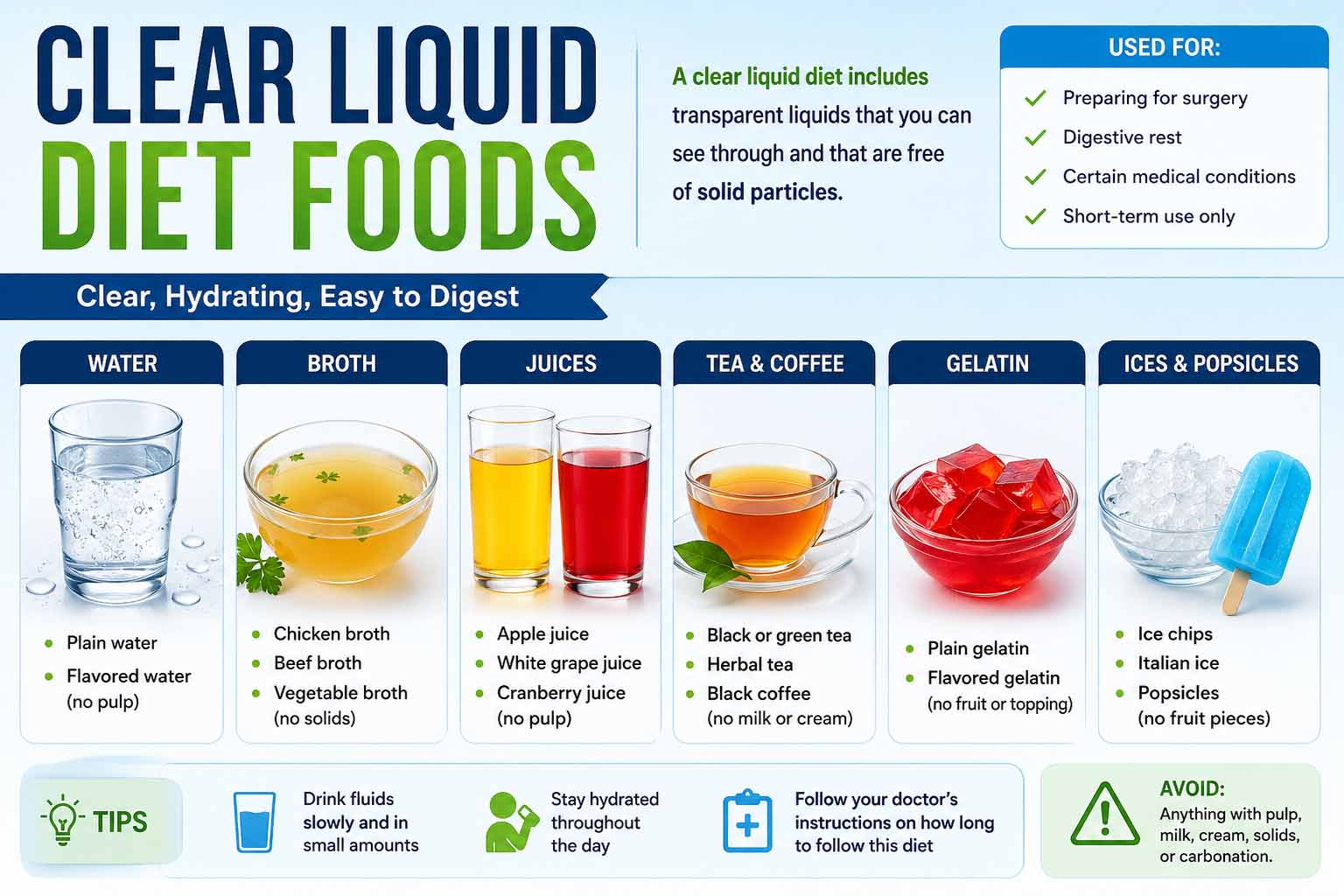
A clear liquid diet consists mainly of fluids that leave little residue in the digestive tract. Generally, you should be able to see through an allowed liquid when it is held up to light, although certain approved gelatin products and frozen treats may also be included.
The diet can provide fluids and small amounts of carbohydrates or electrolytes. However, it does not normally supply enough protein, fiber, fat, vitamins, minerals, or calories for long-term nutrition.
For that reason, healthcare professionals usually recommend it only for a limited time.
A clear liquid diet is also more restrictive than a full liquid diet. If you are transitioning to a less restrictive eating plan, learning about full liquid diet foods can help clarify the difference because full-liquid plans may include items such as milk, yogurt without solids, and creamy strained soups when medically appropriate.
Clear Liquid Diet Foods: Quick Reference List
Your healthcare provider’s instructions should always take priority, particularly before surgery or a colonoscopy. Still, commonly permitted choices may include:
| Food or Drink | Usually Clear-Liquid Friendly? | Notes |
|---|---|---|
| Water | Yes | Plain or approved flavored varieties |
| Clear broth or bouillon | Yes | Avoid solids and creamy soups |
| Apple juice without pulp | Often | Follow procedure-specific instructions |
| White grape juice | Often | Choose pulp-free varieties |
| Clear sports drinks | Often | Some colors may be restricted |
| Plain gelatin | Often | Color restrictions may apply |
| Tea without milk | Often | Avoid cream or milk |
| Black coffee | Often | No milk or creamer |
| Clear ice pops | Sometimes | Must not contain fruit pieces or dairy |
| Milk | No | Not considered a clear liquid |
| Orange juice | Usually no | Typically contains pulp |
| Smoothies | No | Contain solids, fiber, or dairy ingredients |
| Cream soup | No | Not transparent |
Because medical protocols differ, never assume that every item labeled “clear” is permitted for your specific procedure.
Best Clear Liquid Diet Foods for Variety
Following a restricted diet can become repetitive quickly. Therefore, using several permitted options may make the short period easier while also helping you maintain fluid intake.
Water and Approved Clear Beverages
Water is the simplest choice and provides hydration without residue. Still, relying only on plain water may become monotonous.
Depending on your medical instructions, you may also be able to drink pulp-free fruit juice, certain sports drinks, clear soft drinks, or flavored water.
However, avoid beverages containing pulp, seeds, dairy ingredients, or other visible solids.
Clear Broth and Bouillon
Clear chicken, beef, or vegetable broth can add a savory option when most other choices taste sweet.
Before consuming it, check that the broth has been thoroughly strained and does not contain noodles, vegetables, meat, rice, or other solids.
Broth may also contain substantial sodium. Therefore, people who have been instructed to limit sodium should ask their healthcare professional which options are appropriate.
Tea and Coffee
Plain tea and black coffee are commonly permitted on many clear-liquid plans. However, milk, cream, and nondairy creamers generally make them unsuitable.
Sweeteners may sometimes be allowed, although your procedure instructions should guide you.
Herbal teas can vary because some blends contain fruit pieces, seeds, or other ingredients. Therefore, a plain, well-strained tea may be easier to assess.
Gelatin and Frozen Options
Plain gelatin can provide a different texture without adding solid food. Likewise, certain clear ice pops may be permitted.
However, products containing fruit pieces, dairy, or other opaque ingredients generally do not meet the criteria because these components can affect the product’s clarity or classification.
Color can matter as well. For instance, some colonoscopy preparation instructions restrict red, purple, or blue products because certain dyes can interfere with examination of the colon.
Clear Liquid Diet Foods Before Surgery
Doctors may prescribe clear liquid diet foods before surgery because eating and drinking around anesthesia requires specific precautions. However, fasting rules depend on the procedure, type of anesthesia, medical history, and healthcare facility.
Therefore, do not create your own fasting schedule based on general internet advice.
Your surgical team should tell you exactly when to stop solid foods and which, if any, clear liquids you can consume before the procedure. Follow those instructions even if they differ from a general clear-liquid food list.
In some situations, patients may move through several stages of eating around a procedure. For example, a doctor might recommend liquids first and gradually reintroduce easier-to-digest foods later. During such transitions, low fiber foods may sometimes become relevant, but only when they fit the recovery plan provided by your healthcare team.
If you accidentally consume something outside your preoperative instructions, contact the surgical team rather than hiding the mistake. They can decide whether it affects the timing or safety of the planned procedure.
Clear Liquid Diet Foods for Colonoscopy Preparation
A clear liquid diet is commonly used during colonoscopy preparation because the healthcare team needs a clear view of the colon.
However, the diet is only one part of the preparation. You will usually receive specific instructions about bowel-preparation medication, permitted drinks, restricted colors, timing, and when you must stop drinking.
Common clear liquid diet foods for colonoscopy may include water, strained broth, pulp-free apple or white grape juice, approved gelatin, and certain clear beverages.
Still, instructions vary among healthcare providers. Therefore, always follow the specific food list and instructions provided by your clinic, as they should take priority over any general dietary guide.
Why Color Restrictions Matter
Some clinics instruct patients to avoid red, purple, or blue liquids and gelatin. These colors can sometimes make it more difficult to interpret what is seen during the examination.
As a result, choosing lighter-colored or specifically approved options is usually the simpler approach.
However, do not rely solely on color. An opaque white drink, for example, is not automatically permitted simply because it lacks a dark dye.
Foods to Avoid on a Clear Liquid Diet
The easiest mistake is assuming that any food you can drink counts as a clear liquid.
Milk and dairy-based beverages are generally excluded. Likewise, smoothies, protein shakes, creamy soups, and meal-replacement drinks do not normally qualify.
You should also typically avoid juices containing pulp, such as standard orange juice. Similarly, soups containing vegetables, meat, pasta, grains, or other solids do not meet the usual definition.
Alcohol should not be treated as an acceptable clear-liquid option, particularly around medical procedures or when taking medication.
Solid foods are also excluded, even if they are soft. This distinction matters because foods to eat after tooth extraction, for example, may include soft foods that can be suitable during dental recovery but would not meet the requirements of a clear liquid diet.
Clear Liquid Diet vs. Full Liquid Diet
These two diets sound similar, yet they serve different purposes.
A clear liquid diet is the more restrictive option. It focuses on transparent liquids and foods that leave very little digestive residue.
A full liquid diet may include both clear liquids and other foods that are liquid or become liquid at room temperature. Depending on medical guidance, that could include milk, pudding, strained creamy soups, or certain smooth dairy products.
Because a full liquid diet provides more variety, people sometimes assume they can substitute full-liquid items during a clear-liquid phase. However, doing so could interfere with a procedure or preparation.
Therefore, always confirm which diet your healthcare professional actually prescribed.
Can Juice Be Part of a Clear Liquid Diet?
Certain juices may qualify, but they usually need to be transparent and free of pulp.
Apple juice and white grape juice are common examples. Meanwhile, orange juice, thick nectars, smoothies, and juices containing pulp generally do not qualify because they contain particles or are too cloudy for a clear-liquid diet.
This distinction is different from the broader benefits of juicing, where juices may intentionally contain a wider range of fruits or vegetables. During a medically prescribed clear liquid diet, the goal is not to maximize the variety of produce you consume. Instead, the priority is following the preparation or recovery instructions correctly.
Check labels carefully because products that look similar can contain very different ingredients.
Staying Comfortable During a Short Clear Liquid Diet
Because choices are limited, a little planning can make the experience more manageable.
First, keep several approved beverages available instead of depending entirely on one drink. Switching between water, clear broth, approved juice, and other permitted choices can provide some variety.
Next, mix savory and sweet options when your instructions allow them. Clear broth can be particularly welcome after several sweet beverages or gelatin servings.
Temperature can also help. Some people prefer warm broth or tea, while others find chilled water or approved frozen treats more appealing.
Most of all, remember that a clear liquid diet is not designed as a weight-loss plan or everyday wellness diet. Because it lacks adequate amounts of several essential nutrients, extending it without medical supervision can lead to nutritional problems.
When to Contact a Healthcare Professional
Contact your healthcare team if you are uncertain about a particular food or beverage before a scheduled procedure. A quick clarification is safer than guessing.
You should also seek medical guidance if you have trouble keeping liquids down, experience persistent vomiting, become unusually weak or dizzy, or develop other concerning symptoms while following a medically prescribed diet.
People with diabetes, kidney disease, heart conditions, or other health issues may need individualized guidance because fluid, carbohydrate, sodium, or electrolyte needs can differ.
Likewise, children, pregnant people, older adults, and anyone with complex medical needs should follow professional guidance rather than using a generic clear-liquid plan independently.
Frequently Asked Questions About Clear Liquid Diet Foods
Can I Have Jell-O on a Clear Liquid Diet?
Plain gelatin is commonly included in clear liquid diets. However, certain colors may be restricted before procedures such as colonoscopy. Therefore, check the instructions provided by your healthcare team.
Are Eggs Allowed?
No. Eggs are solid food and are not part of a standard clear liquid diet.
Can I Drink Coffee?
Black coffee is often permitted, provided it does not contain milk, cream, or creamer. Still, procedure-specific instructions can differ, so confirm your permitted beverages.
Is Lemonade a Clear Liquid?
Some pulp-free lemonade may qualify, depending on its ingredients and the reason for the diet. However, lemonade containing pulp or restricted coloring may not be permitted.
Can I Eat Soft Foods Instead?
Not while you have specifically been instructed to remain on clear liquids. Even very soft foods contain solids. For example, lists of 50 soft foods to eat after tooth extraction serve a different dietary purpose and should not be treated as substitutes for a medically prescribed clear-liquid plan.
Making the Diet Easier to Follow Safely
The safest approach is to treat a clear liquid diet as a specific medical instruction rather than a general list of foods you can freely modify. Water, strained clear broth, certain pulp-free juices, plain gelatin, and approved clear beverages are common choices, yet the exact rules depend on why you are following the diet.
Before a colonoscopy, surgery, or another medical procedure, use the instructions from your healthcare team as your primary guide. Meanwhile, read labels carefully, avoid unapproved solids and opaque drinks, and ask questions when an item is unclear.
Most clear liquid diet foods are intended to help you through a brief preparation or recovery period rather than provide complete nutrition. Therefore, once your healthcare professional says it is appropriate, you can transition back toward a broader diet that better meets your nutritional needs.