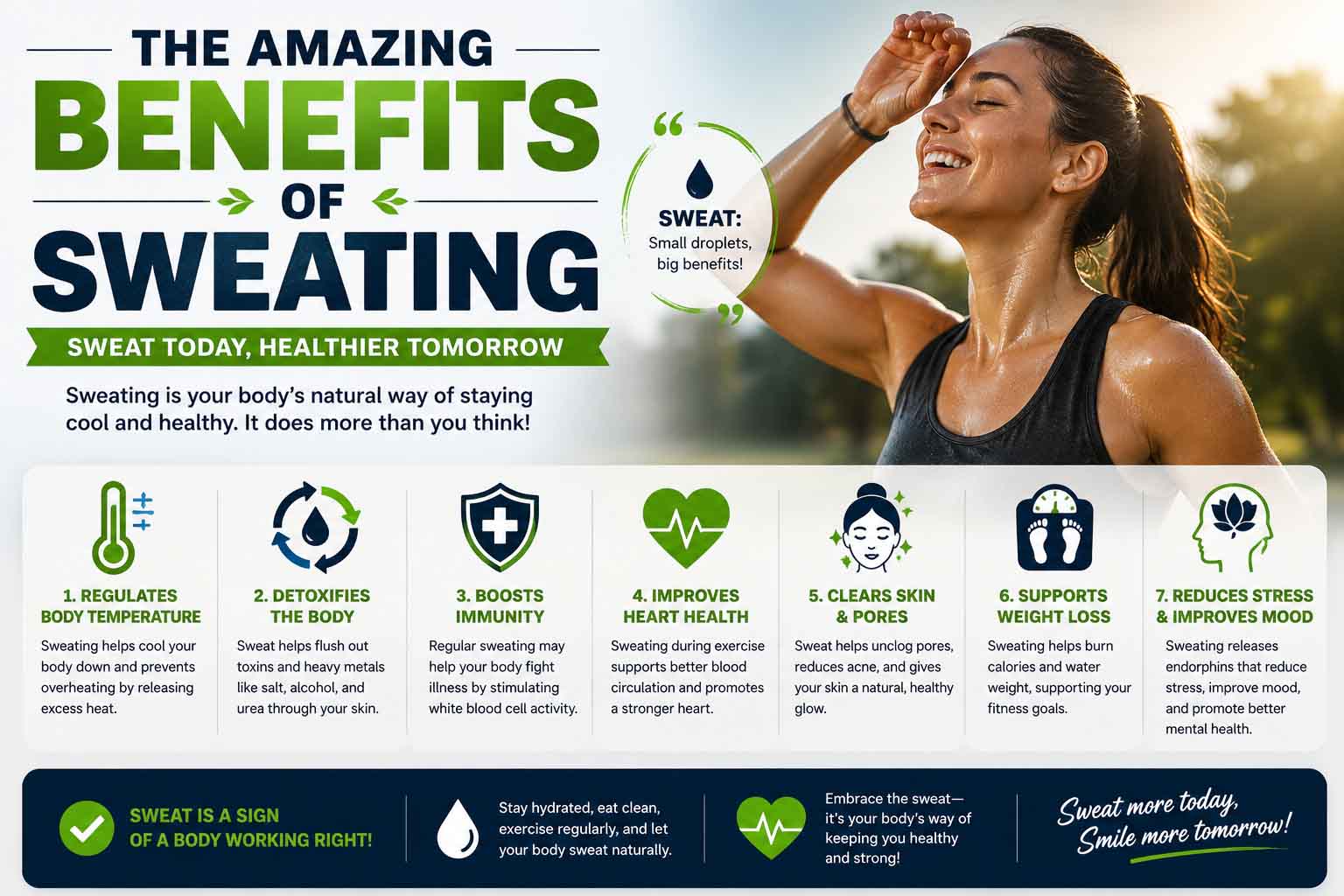
Sweating after a workout can feel like proof that you worked hard, but the real benefits of sweating are more practical than many wellness claims suggest. Your body produces sweat mainly to control temperature. As sweat reaches your skin and evaporates, it releases heat and helps protect you from overheating. Sweating can accompany exercise and other healthy activities, but producing more sweat does not automatically mean you are healthier, burning more fat, or removing large amounts of toxins.
People sweat at very different rates. Temperature, humidity, exercise intensity, genetics, body size, fitness, clothing, medications, hormones, and health conditions can all influence how much perspiration you produce.
So, rather than treating sweat as a measure of workout success, it makes more sense to understand why it happens and what it can—and cannot—do.
Why Does the Body Sweat?
Sweating is part of your body’s temperature-control system.
When your internal temperature starts rising, your nervous system signals sweat glands in your skin. These glands release fluid containing mostly water along with electrolytes such as sodium and chloride.
Once that moisture reaches the skin, evaporation removes heat. As a result, your body has a way to cool itself during exercise, hot weather, fever, or other situations that increase body temperature.
However, evaporation is key.
On a humid day, sweat may remain on your skin because the surrounding air already contains a lot of moisture. Consequently, you can feel much sweatier even though your body may be cooling less efficiently.
Your body can also sweat because of stress, nervousness, spicy foods, hormonal changes, medications, and certain medical conditions.
What Are the Benefits of Sweating?
When people ask what are the benefits of sweating, temperature regulation should be at the top of the list.
Sweating itself is not a cure or wellness treatment. Instead, it is an essential physiological response that helps your body cope with heat.
Sweating Helps Cool the Body
Evaporative cooling is the clearest health function of sweat.
During physical activity, working muscles generate heat. Therefore, your body needs ways to prevent its core temperature from climbing too high.
Sweating moves water onto the skin, where evaporation carries heat away.
This mechanism allows people to remain physically active across a range of temperatures. However, it also means you lose fluid and electrolytes, which is why hydration becomes more important during prolonged or intense exercise.
It Helps You Adapt to Exercising in Heat
People who gradually become accustomed to exercising in hot conditions can develop physiological adaptations.
For example, the body may begin sweating earlier and distribute sweat more effectively across the skin. Meanwhile, other cardiovascular and temperature-regulation adaptations can make exercise in the heat more manageable.
Still, heat acclimatization should happen gradually.
Trying to force adaptation by exercising intensely in extreme heat can increase the risk of heat exhaustion or heat stroke rather than provide extra benefits.
If you are building a regular exercise routine, deciding on the best time to workout may depend partly on temperature. During hot weather, cooler morning or evening periods can make outdoor activity more comfortable and reduce heat stress.
Health Benefits of Sweating During Exercise
Many supposed health benefits of sweating are actually benefits of the activity causing you to sweat.
This distinction matters.
Exercise can support cardiovascular fitness, muscle strength, metabolic health, mobility, mood, and sleep. However, sweating is mainly the cooling response that allows your body to manage the heat generated during that activity.
For example, two people can complete similar workouts while producing very different amounts of sweat.
One may finish with soaked clothing, while the other appears only slightly damp. That difference does not necessarily tell you who burned more calories or completed the better workout.
Benefits of Sweating a Lot During Workout: Is More Better?
The phrase benefits of sweating a lot during workout can be misleading because heavy sweating is not automatically beneficial.
Some people naturally sweat heavily. Meanwhile, hot temperatures, humid conditions, intense exercise, and non-breathable clothing can dramatically increase perspiration.
Heavy sweating means your cooling system is active, but it also means you are losing more fluid.
Therefore, excessive sweating during long workouts can raise the risk of dehydration if those losses are not replaced.
Instead of trying to make yourself sweat more, focus on the quality of the workout.
For instance, the benefits of jumping rope come from the physical activity itself, which can challenge cardiovascular fitness, coordination, and muscular endurance. The sweat that appears during the session mainly helps manage the heat your body produces.
Does Sweating Burn Fat?
Sweating does not directly burn body fat.
After a very sweaty workout or sauna session, your scale weight may temporarily decrease. However, most of that short-term change comes from water loss.
Once you drink and restore the lost fluid, much of the weight returns.
Fat loss occurs when energy expenditure exceeds energy intake over time. Exercise can contribute to that process, but the amount of sweat on your shirt is not a reliable indicator of calories burned.
This is also why the best time to weigh yourself is usually under consistent conditions rather than immediately after a sweaty workout, when temporary fluid losses can distort the number.
Does Sweating Detox Your Body?
One of the most persistent myths is that sweating “flushes toxins” from the body.
Sweat can contain tiny amounts of various substances, but detoxification is not its primary purpose.
Your liver and kidneys play central roles in processing and eliminating many waste products and unwanted substances. Your lungs and digestive system also participate in normal elimination processes.
Therefore, deliberately trying to sweat excessively through hot workouts, heavy clothing, or long sauna sessions should not be viewed as a substitute for those natural organ functions.
Benefits of Sweating on Face and Skin
People also search for the benefits of sweating on face, often because sweating is said to “clean the pores.”
The reality is more nuanced.
Sweat helps cool facial skin just as it cools the rest of the body. However, pores do not open and close like doors, and sweating should not be considered a deep-cleansing treatment.
Sweat left sitting on the skin can mix with oil, cosmetics, sunscreen, dirt, and bacteria. Consequently, some people experience irritation or breakouts after sweaty workouts.
A simple post-workout routine usually works well.
Gently cleanse or rinse your face after heavy sweating, change out of damp clothing, and avoid aggressive scrubbing. If you have acne, eczema, or another skin condition that worsens with sweat, a dermatologist can recommend products suited to your skin.
Sweating and Strength Training
Strength training can make you sweat, especially when workouts involve large muscle groups, short rest periods, warm environments, or higher training intensity.
However, the effectiveness of strength training does not depend on producing large amounts of perspiration.
For example, the benefits of deadlifts relate to resistance training and the involvement of several major muscle groups rather than the amount of sweat generated while lifting.
A cool gym may allow you to complete a challenging strength session with relatively little visible sweat. Conversely, sitting outside on a hot day can make you sweat heavily without providing a training effect.
That contrast makes the difference clear: sweat reflects thermoregulation, not exercise quality.
Sweat, Hydration, and Electrolytes
Because sweat contains water and electrolytes, prolonged sweating increases your need for fluid replacement.
For many everyday workouts, drinking according to thirst and consuming normal meals is enough for healthy adults. However, long-duration exercise, intense heat, or unusually heavy sweating may require more careful fluid and electrolyte replacement.
Water needs vary considerably between people.
Body size, temperature, humidity, workout duration, sweat rate, pregnancy, health conditions, and medications can all affect hydration needs.
A useful sign is urine color. Pale yellow urine generally suggests adequate hydration, although medications, supplements, foods, and some medical conditions can change its appearance.
People sometimes associate the benefits of drinking warm water with hydration or digestion. However, when replacing sweat losses, water temperature is mainly a matter of preference. Cool, room-temperature, or warm water can all contribute to hydration.
Can You Sweat Too Much?
Yes.
Excessive sweating is sometimes called hyperhidrosis. A person with hyperhidrosis may sweat far more than needed for temperature regulation, sometimes even while resting in a cool environment.
It can affect the palms, feet, underarms, face, or larger areas of the body.
Excessive sweating does not always indicate a serious illness. Still, unexplained changes in sweating deserve attention, especially when they appear suddenly.
Certain medications, hormonal changes, infections, metabolic disorders, neurological conditions, and other medical issues can alter sweating.
A healthcare professional can help determine whether treatment or further evaluation is appropriate.
When Sweating Becomes Dangerous
Sweating normally protects you from heat, yet the system has limits.
If you lose fluid faster than you replace it, dehydration can develop.
Possible signs include:
- Strong thirst
- Dry mouth
- Headache
- Dizziness
- Unusual fatigue
- Reduced urination
- Darker urine
- Muscle cramps
Heat exhaustion can cause heavy sweating, weakness, nausea, headache, dizziness, and other symptoms.
Heat stroke is much more serious. It involves dangerously high body temperature and can cause confusion, altered behavior, loss of consciousness, seizures, or other severe symptoms.
Heat stroke is a medical emergency.
If someone develops severe neurological symptoms or appears seriously ill after heat exposure, seek emergency medical care.
Sweat Losses: A Quick Guide
| Situation | What Sweating Is Doing | What to Consider |
|---|---|---|
| Moderate exercise | Removing excess body heat | Drink fluids as needed |
| Hot outdoor activity | Increasing evaporative cooling | Watch for heat illness |
| Humid exercise | Producing sweat that evaporates less efficiently | Reduce intensity if necessary |
| Long endurance exercise | Cooling while losing water and electrolytes | Plan hydration appropriately |
| Sauna use | Responding to external heat | Avoid excessive exposure and dehydration |
| Stress or anxiety | Responding to nervous-system signals | Cooling may not be the main trigger |
The amount you sweat can vary widely in every situation. Therefore, comparisons with other people are rarely useful.
Should You Try to Sweat More?
Usually, no.
You do not need sweat suits, excessive layers of clothing, extremely hot rooms, or dehydrating workouts to make exercise healthier.
In fact, intentionally trapping heat can make physical activity harder and increase the risk of overheating.
Instead, wear clothing suitable for the weather and activity. During hot conditions, choose lightweight, breathable materials and take breaks when needed.
Likewise, adjust workout intensity when temperatures rise.
If your goal is fitness, focus on a sustainable exercise routine rather than chasing perspiration.
Common Myths About Sweating
Fit People Always Sweat More
Not necessarily.
Training can influence how efficiently the body responds to heat, yet genetics, climate, body size, medications, hormones, and individual sweat-gland activity also matter.
Therefore, sweat volume alone cannot tell you how fit someone is.
Sweating Means You Had a Good Workout
No.
You can have an effective workout in a cool environment without becoming drenched in sweat.
Likewise, you can sweat heavily while sitting outdoors without exercising at all.
Sweat Removes Body Fat
No.
Sweating removes water, not meaningful amounts of body fat. Any rapid weight change after heavy sweating is largely temporary fluid loss.
Sweat Is Bad for Your Skin
Not automatically.
Sweat is a normal body fluid. However, leaving sweat mixed with oil, dirt, and tight clothing against the skin for long periods may irritate some people.
Changing clothes and gently washing after a workout can help.
FAQs About the Benefits of Sweating
Is sweating every day healthy?
Sweating every day can be completely normal if it occurs because of exercise, weather, or normal individual variation. However, you do not need to intentionally make yourself sweat every day to stay healthy.
Does sweating improve circulation?
Exercise can increase blood flow and provide cardiovascular benefits, but those effects should not be credited to sweat itself. Sweating mainly helps regulate temperature.
Does sweating help your immune system?
There is not strong evidence that producing more sweat directly strengthens immunity. Regular physical activity, adequate sleep, balanced nutrition, vaccinations, and other established health habits play more meaningful roles.
Why do some people sweat more than others?
Genetics, body size, fitness, environment, hormones, medications, anxiety, health conditions, and individual differences in sweat glands can all influence perspiration.
Should I replace electrolytes every time I sweat?
Not necessarily. For many shorter everyday activities, normal meals and water are sufficient.
Why do I suddenly sweat more than usual?
A sudden unexplained change can have many causes, including environmental changes, medications, hormonal factors, illness, or other medical conditions. If the change persists or comes with concerning symptoms, talk with a healthcare professional.
A Healthier Way to Think About Sweat
The most meaningful benefits of sweating come from its basic job: helping your body control temperature when heat builds up.
Sweat can accompany many healthy activities, especially exercise, yet it should not become the goal itself. You do not need to finish every workout soaked, and you do not need to deliberately overheat yourself to make exercise effective.
Instead, exercise consistently, dress appropriately for the conditions, replace fluids after significant losses, and pay attention to signs of overheating.
Most of all, treat sweating as feedback from your body’s cooling system rather than a scorecard for fitness. When sweat suddenly becomes excessive, disappears despite intense heat, or occurs alongside concerning symptoms, seek medical advice rather than trying to manage the change through workout adjustments alone.