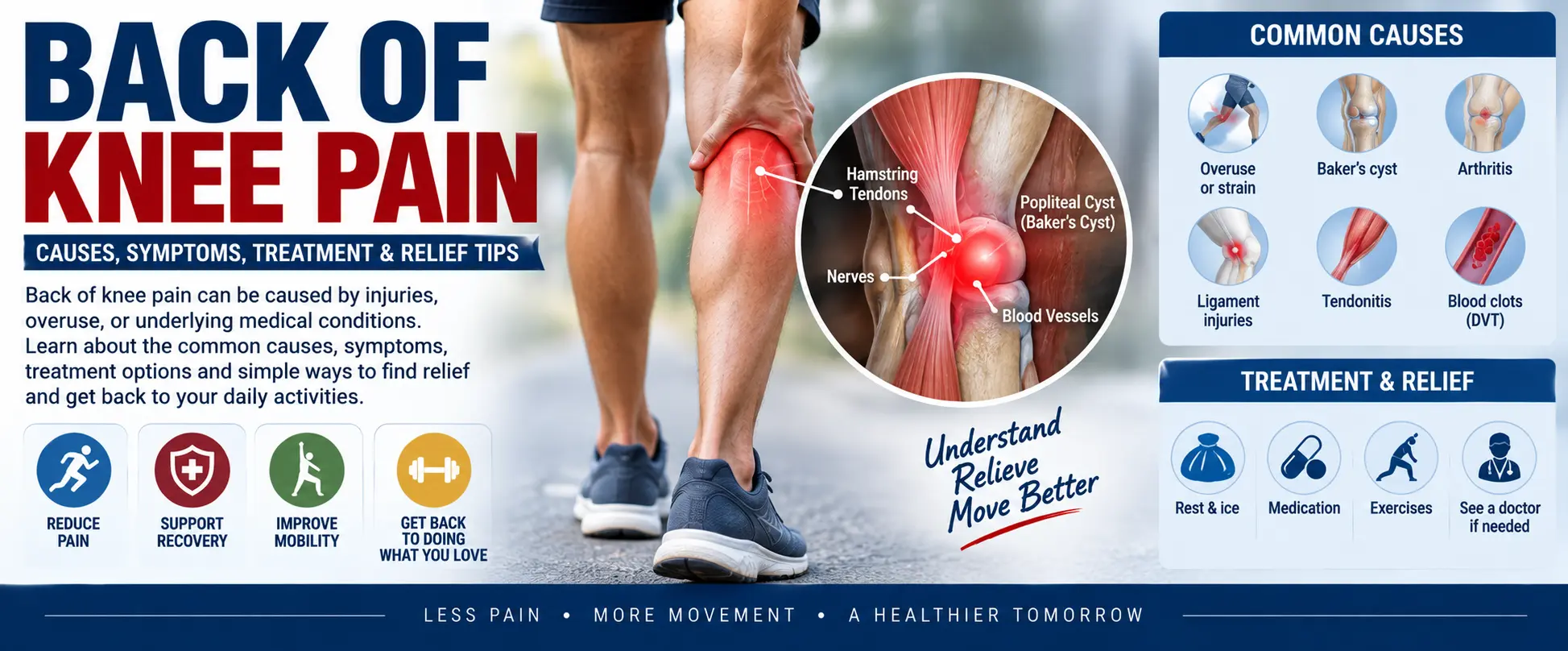
Feeling discomfort behind your knee can make simple movements such as walking, bending, climbing stairs, or getting up from a chair surprisingly difficult. Back of knee pain can develop after exercise, an injury, or repetitive activity, but sometimes there is no obvious trigger. Possible causes range from muscle or tendon strain to a Baker’s cyst, arthritis, meniscus injury, or, less commonly, a blood clot. Because treatment depends on the cause, persistent or severe symptoms deserve proper medical evaluation.
The location and pattern of discomfort can provide useful clues. For example, pain that appears mainly when straightening the leg may have different causes from swelling and tightness that remain present at rest. However, symptoms alone cannot reliably identify every condition.
What Can Back of Knee Pain Feel Like?
The discomfort can vary from a mild ache to sharp pain. Some people notice stiffness after sitting, while others experience pulling or tightness during movement.
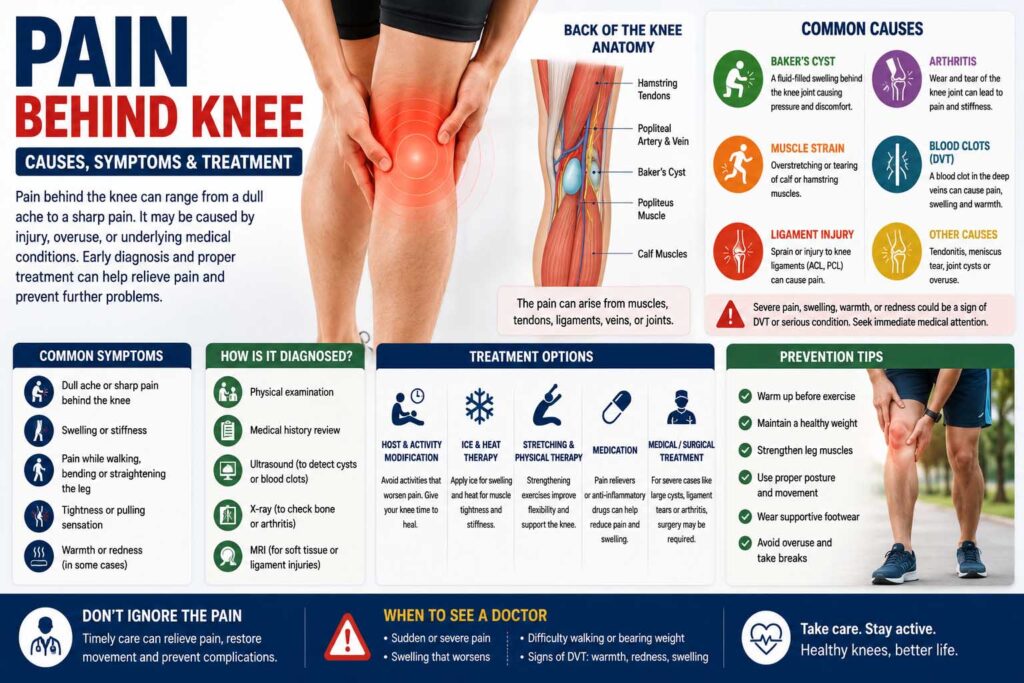
Depending on the underlying problem, symptoms may include:
- Aching or tenderness behind the knee
- Swelling or a feeling of fullness
- Stiffness when bending or straightening the leg
- Pain while walking, running, or climbing stairs
- Reduced range of motion
- Clicking, catching, or locking
- Bruising after an injury
- Weakness or instability
A person experiencing pain behind knee may also notice symptoms extending into the calf or thigh. Since several structures occupy this small area, the exact location does not always reveal the cause.
Sudden severe pain, major swelling, inability to bear weight, or symptoms following a significant injury should be medically assessed.
Common Causes of Back of Knee Pain
Several muscles, tendons, ligaments, nerves, blood vessels, and joint structures meet around the knee. Therefore, discomfort can originate from several different tissues.
Hamstring or Calf Muscle Strain
Muscle strains can occur after sudden acceleration, jumping, running, or overstretching. A strain involving the hamstrings or upper calf may cause discomfort near the back of the knee.
Symptoms commonly start during or after physical activity. Depending on severity, you might also notice tenderness, weakness, swelling, or bruising.
Mild strains often improve with temporary activity modification. However, significant weakness, extensive bruising, or difficulty walking warrants medical assessment.
Baker’s Cyst
A Baker’s cyst, also called a popliteal cyst, is a fluid-filled swelling behind the knee. It can develop when excess joint fluid collects in this area, often in association with another knee problem such as arthritis or a cartilage injury.
A cyst may cause fullness, stiffness, swelling, or pain in the back of the knee, particularly when bending or fully straightening it.
Some Baker’s cysts cause few symptoms. Meanwhile, others become uncomfortable enough to interfere with movement. Because a ruptured cyst can produce calf swelling and symptoms that may resemble a blood clot, sudden calf swelling should not simply be assumed to be a cyst.
Meniscus Injury
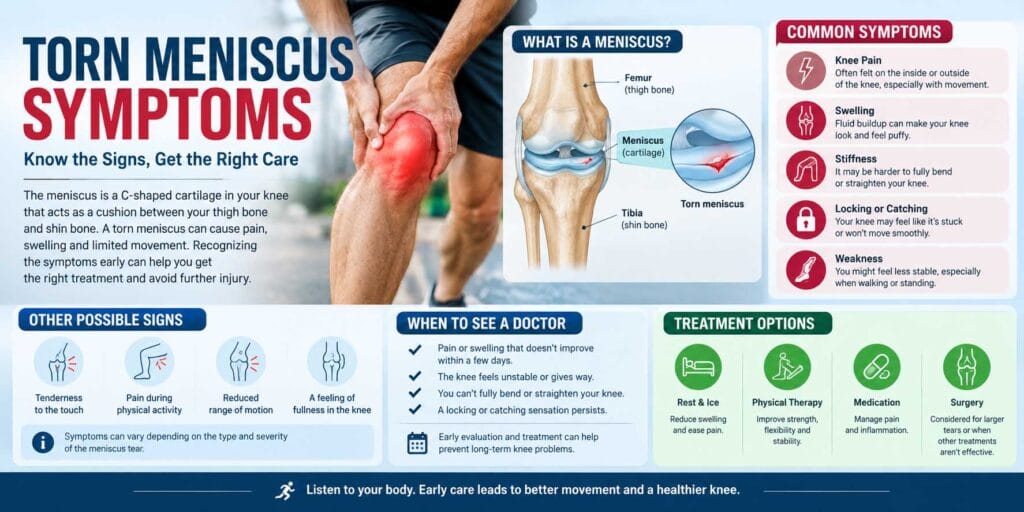
The menisci are pieces of cartilage that help distribute forces within the knee joint. Twisting the knee, particularly while the foot remains planted, can injure a meniscus. Degenerative changes can also make tears more likely over time.
Pain may occur along the joint line or toward the back of the knee. In some cases, people also experience swelling, clicking, catching, or difficulty fully extending the leg.
If these symptoms sound familiar, understanding torn meniscus symptoms can help explain why mechanical symptoms such as locking and catching deserve attention. Still, a healthcare professional may need a physical examination and, in selected cases, imaging to determine the actual cause.
Arthritis
Osteoarthritis can affect the knee as cartilage and other joint structures change over time. Symptoms often include pain, stiffness, swelling, and reduced movement.
Although discomfort may involve the entire joint, some people notice symptoms toward the back. Meanwhile, inflammatory forms of arthritis can also produce knee pain and swelling.
A clinician can help distinguish arthritis from injuries and other causes, particularly when symptoms persist or affect daily activities.
Pain in Back of Knee When Straightening Leg
Experiencing pain in back of knee when straightening leg can happen for several reasons. For instance, tight or injured muscles and tendons may become uncomfortable as they lengthen. Likewise, swelling within the joint or a Baker’s cyst can create pressure during full extension.
A meniscus problem may also interfere with normal knee movement. In that situation, the knee might feel as though it catches, locks, or cannot completely straighten.
Rather than repeatedly forcing the knee into a painful position, reduce movements that clearly aggravate the symptoms. If the inability to straighten the knee develops suddenly, follows an injury, or persists, seek medical advice.
Exercise-Related Pain Back of Knee
Exercise can temporarily irritate tissues around the knee, especially after a sudden increase in training volume or intensity.
Running, jumping, squatting, and strength training all place different demands on the knee and surrounding muscles. Therefore, technique, recovery time, footwear, previous injuries, and training progression can affect how your body responds.
For example, the benefits of deadlifts are generally discussed in the context of strengthening several major muscle groups. However, people with active knee pain should not assume that any particular exercise is appropriate during recovery. Exercise selection should match the injury and individual abilities.
Likewise, high-impact exercise may aggravate certain knee problems. Although the benefits of jumping rope can make it an appealing fitness activity, repeated jumping may not be suitable while unexplained knee pain is present.
Could Pain Behind the Knee Be a Blood Clot?
Although it is not the most common explanation for knee pain, it requires prompt medical attention because a clot can travel to the lungs.
Possible DVT symptoms can include swelling in one leg, pain or tenderness, warmth, and skin discoloration. However, DVT does not always produce the same symptoms, and other conditions can look similar.
Seek urgent medical evaluation if you develop unexplained one-sided leg swelling or concerning leg pain, especially if you have risk factors such as recent surgery, prolonged immobility, or a previous blood clot.
Call emergency services for chest pain, sudden shortness of breath, coughing up blood, fainting, or other symptoms that could indicate a pulmonary embolism.
How Doctors Evaluate Pain in the Back of the Knee
Diagnosis usually starts with a discussion about when the pain began and what makes it better or worse.
A healthcare professional may ask about recent injuries, exercise, swelling, locking, previous knee problems, medications, and other health conditions. Next, they may examine knee movement, stability, tenderness, swelling, and surrounding structures.
Imaging is not necessary for every case. However, depending on the suspected cause, a clinician may use an X-ray, ultrasound, or MRI.
For example, ultrasound can help evaluate certain soft-tissue problems and may be used when a blood clot is suspected. Meanwhile, MRI can provide detailed images of structures such as menisci and ligaments when clinically appropriate.
The right test depends on the symptoms and examination rather than pain location alone.
Home Care for Mild Back of Knee Pain
If discomfort is mild, began after activity, and there are no warning signs, temporarily reducing the activity that triggered it may help.
You can avoid movements that clearly worsen the pain while maintaining comfortable daily movement as tolerated. Applying a cold pack wrapped in cloth for short periods may also help with pain or swelling after an acute injury.
Some people use over-the-counter pain medicines. However, these medicines are not appropriate for everyone because medical conditions, pregnancy, allergies, and other medications can affect their safety. A pharmacist or healthcare professional can advise you if you are unsure.
Most of all, avoid trying to “push through” significant unexplained pain simply to maintain a workout schedule.
Returning to Exercise Safely
Recovery depends heavily on the cause and severity of the problem. Therefore, there is no single timeline that works for every case of posterior knee pain.
As symptoms settle, a healthcare professional or physical therapist may recommend exercises to restore strength, mobility, and control. Progress should generally be gradual rather than jumping immediately back to previous training levels.
Resistance training can be useful in many fitness programs. For example, learning about the benefits of a weighted vest may be helpful when planning future workouts, yet adding external load while a knee remains painful can increase demands on the joint and surrounding tissues.
Therefore, resolve or appropriately manage active symptoms before substantially increasing exercise difficulty.
When Should You See a Healthcare Professional?
Mild discomfort after unusual activity may improve with reduced aggravating activity. However, arrange a medical evaluation if symptoms persist, repeatedly return, or interfere with walking and normal daily tasks.
You should also seek medical care for:
- Significant or increasing swelling
- Severe pain
- Inability to bear weight
- A knee that repeatedly locks or gives way
- Obvious deformity after an injury
- Redness, warmth, or fever
- Persistent symptoms despite basic self-care
Meanwhile, unexplained swelling of one leg, particularly when accompanied by pain, warmth, or discoloration, requires prompt assessment for conditions such as DVT.
Chest pain or sudden breathing difficulty alongside leg symptoms requires emergency medical care.
Can Back of Knee Pain Be Prevented?
Not every knee problem is preventable. Still, sensible training habits can reduce avoidable stress and help your body adapt to exercise.
Increase exercise intensity and volume gradually rather than making abrupt changes. Likewise, use footwear appropriate for your activity and replace worn-out equipment when needed.
Strength and mobility work may also support general physical function when performed appropriately. However, exercises should match your abilities, training goals, and any existing injuries.
Recovery matters as well. If discomfort consistently appears after a particular movement, do not repeatedly ignore it. Instead, adjust the activity and investigate persistent symptoms before increasing the workload.
Frequently Asked Questions
What causes back of knee pain without an injury?
Possible causes include a Baker’s cyst, arthritis, overuse, tendon problems, or other joint and soft-tissue conditions. Less commonly, vascular problems can cause discomfort in the area. A medical assessment is appropriate when pain is persistent, worsening, or accompanied by swelling.
Why do I have pain in back of knee when straightening my leg?
Pain during extension may relate to irritated muscles or tendons, joint swelling, a Baker’s cyst, or a meniscus problem. Because symptoms overlap, persistent difficulty straightening the knee should be professionally evaluated.
Can a Baker’s cyst cause pain back of knee?
Yes. A Baker’s cyst can produce swelling, tightness, stiffness, or discomfort behind the knee.
Is walking good for pain in the back of the knee?
It depends on the cause and severity. Gentle walking may be tolerable for some minor problems, while other injuries become worse with weight-bearing. Stop or reduce an activity if it noticeably increases pain, and seek medical advice when symptoms are significant or persistent.
How long does back of knee pain take to improve?
Recovery time varies widely because a mild muscle strain, arthritis flare, meniscus injury, and Baker’s cyst have different courses. Instead of relying on a fixed timeline, monitor pain, swelling, movement, and function, and seek care when improvement does not occur as expected.
Give Persistent Knee Pain the Attention It Needs
Many cases of back of knee pain are related to muscles, tendons, joint irritation, or other manageable conditions. However, the same general area can also hurt because of meniscus injuries, cysts, arthritis, and less common but serious vascular problems.
For mild symptoms after activity, reducing aggravating movements and gradually returning to exercise may be reasonable. However, persistent pain, major swelling, locking, difficulty bearing weight, or unexplained one-sided leg swelling deserves professional assessment.
Rather than guessing from pain location alone, pay attention to how the symptoms started, what movements trigger them, and whether swelling or mechanical symptoms are present. Those details can help a qualified healthcare professional determine the next appropriate step.