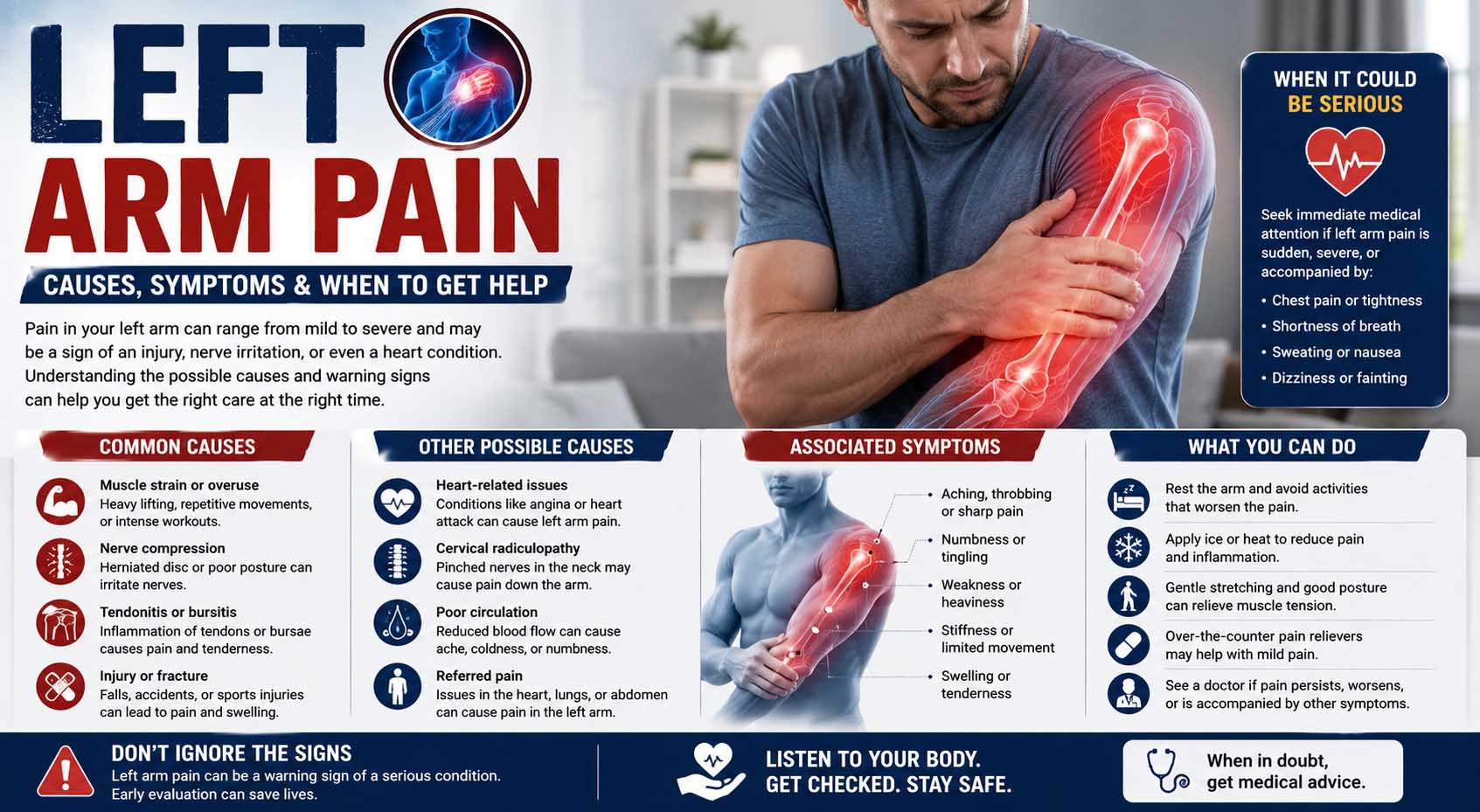
Left arm pain can come from something as simple as an overworked muscle, but it can also occur with nerve problems, joint conditions, injuries, or heart-related emergencies. The location and type of discomfort often provide useful clues, yet you should consider arm pain alongside other symptoms. In particular, sudden unexplained pain with chest pressure, shortness of breath, sweating, nausea, faintness, or other concerning symptoms requires urgent medical attention.
Some people feel a dull ache, while others describe burning, tingling, heaviness, weakness, or sharp pain. Meanwhile, discomfort may stay in one small area or travel from the neck or shoulder toward the hand.
Because there are many possible causes, understanding the pattern can help you decide what to do next.
When Left Arm Pain May Be an Emergency
Many cases relate to muscles or joints. However, pain involving an arm can sometimes occur during a heart attack, so certain symptoms should never be ignored.
Call your local emergency service if new or unexplained arm discomfort occurs with chest pressure, squeezing, fullness, or pain. Likewise, seek emergency care for shortness of breath, cold sweating, nausea, fainting, sudden severe weakness, or discomfort spreading into the jaw, neck, back, shoulder, or one or both arms.
Heart attack symptoms are not identical for everyone. For example, some people have relatively subtle chest symptoms, while others experience discomfort elsewhere in the upper body. The American Heart Association’s heart attack warning signs include chest discomfort as well as possible discomfort in one or both arms, the back, neck, jaw, or stomach.
Therefore, do not wait for severe chest pain before seeking help when several concerning symptoms occur together.
Sudden arm weakness or numbness can also be a warning sign of stroke, especially when it occurs with facial drooping, speech difficulty, confusion, vision changes, severe dizziness, or trouble walking. In that situation, seek emergency assessment right away.
What Can Cause Left Arm Pain?
Most causes are not heart-related. In fact, muscles, tendons, joints, bones, and nerves can all produce pain in the arm.
Muscle Strain and Overuse
Muscle strain is common after lifting, exercising, repetitive work, or an unfamiliar physical activity. Usually, movement or pressure on a specific muscle makes the discomfort more noticeable.
For example, lifting weights after a long break may cause soreness in the biceps or triceps. Similarly, carrying heavy bags or repeatedly reaching overhead can irritate muscles around the shoulder.
Pain that starts after a clear activity and gradually improves with rest suggests a musculoskeletal problem more strongly. Still, you should not self-diagnose unexplained or severe symptoms based on location alone.
When discomfort extends beyond the arm, looking at the whole symptom pattern matters. For instance, pain around ribs and back symptoms can have causes ranging from muscle strain to conditions involving structures inside the chest or abdomen.
Shoulder Problems
Several structures in the shoulder can become irritated or injured, including muscles, tendons, bursae, and joints. As a result, shoulder problems often cause discomfort that extends into the upper arm.
Rotator cuff irritation, bursitis, arthritis, and frozen shoulder are possible examples. Typically, certain movements make the symptoms worse.
You may also notice reduced range of motion, weakness, stiffness, or pain when sleeping on the affected side.
Tendon Problems
Tendons connect muscles to bones. Therefore, repetitive movement or sudden overload can irritate them.
Biceps tendon problems, for example, may cause pain toward the front of the shoulder and upper arm. Meanwhile, tendon injuries around the elbow can produce discomfort that becomes noticeable when gripping, lifting, or moving the wrist.
Pain in Upper Left Arm Between Elbow and Shoulder
Pain in upper left arm between elbow and shoulder often involves muscles, tendons, the shoulder, or referred pain from the neck. The biceps and triceps occupy much of this region, so exercise, lifting, repetitive movements, or direct injury can produce soreness there.
However, location by itself cannot confirm the cause. For example, nerve irritation in the neck may produce pain farther down the arm even when no injury has occurred in the arm itself.
Pay attention to what changes the discomfort. Pain that becomes worse when raising or rotating the arm may point toward a shoulder or muscle problem. Conversely, tingling or numbness extending toward the fingers may suggest nerve involvement.
Seek prompt medical evaluation if an injury causes visible swelling, significant bruising, deformity, sudden weakness, or an inability to use the arm.
Nerve-Related Pain in the Left Arm
Nerves leaving the neck travel through the shoulder and down the arm. Consequently, compression or irritation along this pathway can cause pain far from the original problem.
A pinched or irritated nerve in the cervical spine may cause burning, shooting, or electric-like discomfort.
Meanwhile, certain peripheral nerve conditions can affect the hands and arms. When nerve symptoms appear in several limbs or gradually progress, a clinician may consider broader neurological causes. For example, understanding charcot–marie–tooth disease symptoms can be useful when discussing inherited peripheral nerve disorders, although this condition is not a common explanation for sudden isolated arm pain.
A healthcare professional may examine sensation, reflexes, strength, neck movement, and hand function to narrow down the source.
Left Arm Pain With No Chest Pain: Should You Worry?
Having left arm pain no chest pain does not automatically mean a heart problem. Muscle strain, shoulder injuries, arthritis, tendon irritation, and nerve compression provide more direct explanations in many situations.
Still, the absence of chest pain cannot completely rule out a cardiovascular emergency.
Pay attention to how the pain started and whether other symptoms occur. Take sudden unexplained discomfort more seriously if you also experience breathlessness, nausea, sweating, faintness, unusual weakness, or pain in the jaw or back.
Your personal medical history and cardiovascular risk factors also matter. Therefore, when symptoms are new, unexplained, or concerning, getting professional medical advice is safer than trying to determine the cause from one symptom.
Throbbing Pain in the Left Arm in Women
A search for throbbing pain in left arm woman often reflects concern about heart disease. However, throbbing arm discomfort in women can still have many musculoskeletal, neurological, and other causes.
Heart attack symptoms can vary among individuals. Women may experience classic chest discomfort, but they can also have shortness of breath, nausea, unusual fatigue, back or jaw discomfort, or arm pain.
Because symptoms can overlap with less serious conditions, consider a new unexplained pain pattern together with associated symptoms and personal risk factors.
Meanwhile, localized throbbing after exercise or an injury may relate to irritated tissue. A healthcare professional should also assess persistent swelling, redness, warmth, or a major change in the appearance of the arm.
How Doctors Evaluate Pain in the Left Arm
A clinician usually starts by asking when the pain began, where it is located, what it feels like, and what makes it better or worse. They may also ask about exercise, recent injuries, work activities, neck symptoms, medications, and existing medical conditions.
Next, the physical examination may assess the shoulder, elbow, wrist, neck, muscles, circulation, sensation, reflexes, and strength. A broader head to toe assessment may be useful when symptoms involve more than the arm or when the cause is unclear.
Testing depends on what the clinician suspects.
For instance, clinicians may use an electrocardiogram and blood tests when they suspect a heart problem. Meanwhile, X-rays can help assess certain bone or joint problems. A clinician may consider ultrasound, MRI, or nerve tests for selected injuries or neurological symptoms.
Not every case requires imaging. In many straightforward muscle strains, the history and physical examination provide enough information to guide initial care.
Treating Left Arm Pain Safely
Treatment depends on the cause. Therefore, a method that helps an overworked muscle may be inappropriate for nerve pain or a cardiovascular problem.
Rest From Aggravating Activities
For a mild strain after exercise or repetitive activity, temporarily reducing movements that worsen the pain may help. However, complete inactivity for long periods is rarely necessary for a simple strain unless a healthcare professional recommends it.
As symptoms settle, gradually returning to comfortable movement can help prevent unnecessary stiffness.
Cold or Heat
A wrapped cold pack may help with pain and swelling after some recent minor injuries. Use it for short periods and keep a cloth between the cold source and your skin.
Heat may feel better for muscle tightness or stiffness in some situations. However, avoid applying intense heat to a newly swollen injury, and never use extreme temperatures directly against the skin.
Over-the-Counter Pain Relief
Some people can use nonprescription medicines such as acetaminophen or nonsteroidal anti-inflammatory drugs for short-term musculoskeletal pain.
However, these medicines are not suitable for everyone. Kidney disease, liver disease, stomach ulcers, pregnancy, cardiovascular conditions, allergies, blood-thinning medicines, and other factors can affect which products are safe.
Therefore, follow label directions and ask a pharmacist or healthcare professional if you are unsure.
Physical Therapy and Targeted Treatment
Persistent shoulder, muscle, joint, or nerve-related problems may benefit from physical therapy. A therapist can identify movement limitations and develop exercises based on the specific diagnosis.
Depending on the cause, other treatments may include medication, activity modification, injections, or, less commonly, surgery.
Other Symptoms Can Provide Useful Clues
Arm discomfort sometimes occurs alongside symptoms in nearby parts of the body. Therefore, noting these details can help a healthcare professional identify the source.
For example, neck pain with tingling down the arm may point toward nerve irritation. Shoulder stiffness combined with pain during overhead movement may suggest a shoulder problem.
Likewise, people can sometimes confuse chest-wall or breast-area discomfort with nearby musculoskeletal pain. Understanding possible causes of pain under right breast can help illustrate why location alone rarely provides a diagnosis, even though symptoms on the opposite side may have different causes.
Keep track of whether movement, breathing, meals, exercise, posture, or rest affects the pain. That information can make a medical evaluation more useful.
Can Left Arm Pain Be Prevented?
Not every cause is preventable. Still, healthy movement habits may reduce the risk of common overuse injuries.
Warm up before demanding exercise, then increase training loads gradually rather than making sudden jumps. Likewise, use appropriate lifting technique and take breaks from repetitive tasks.
If desk work contributes to shoulder or neck tension, adjust your workspace so you can sit comfortably without constantly reaching or hunching forward. Regular movement breaks can also reduce prolonged muscle tension.
Meanwhile, managing cardiovascular risk supports overall health rather than preventing arm pain alone. Avoiding tobacco, staying physically active, eating a balanced diet, and working with a healthcare professional to manage blood pressure, cholesterol, or diabetes can support heart health.
Frequently Asked Questions About Arm Pain
Why Does My Left Arm Hurt for No Obvious Reason?
A cause is not always immediately apparent. Muscle tension, repetitive activity, shoulder conditions, neck-related nerve irritation, and joint problems can develop without a memorable injury.
However, seek medical assessment for new unexplained pain that is severe, persistent, or accompanied by concerning symptoms.
Can Sleeping Incorrectly Cause Pain in the Left Arm?
Yes. Sleeping with prolonged pressure on an arm or holding the neck and shoulder in an awkward position can sometimes cause temporary soreness, tingling, or numbness.
Symptoms should generally improve after changing position and moving around. Persistent weakness or numbness needs medical attention.
Can Anxiety Cause Pain in the Left Arm?
Anxiety can cause muscle tension and physical sensations that may include discomfort or tingling. However, you should not assume new unexplained arm pain comes from anxiety, especially if symptoms could indicate a heart, neurological, or other medical problem.
Why Does My Arm Hurt When I Lift It?
Pain triggered by lifting the arm can occur with shoulder or tendon problems, muscle strain, or injury. If movement remains restricted, weakness develops, or symptoms persist, a healthcare professional can assess the shoulder and surrounding structures.
How Long Should Muscle-Related Arm Pain Last?
Minor muscle soreness often improves over several days, although strains can take longer depending on severity. If pain fails to improve, keeps returning, or becomes progressively worse, seek an evaluation rather than repeatedly treating it at home.
Know When Left Arm Pain Needs Medical Attention
Most pain in left arm cases have a musculoskeletal or nerve-related explanation, especially when discomfort clearly follows exercise, repetitive movement, an awkward position, or a minor injury. Still, location alone cannot determine the cause.
For mild pain with an obvious musculoskeletal cause, temporary activity modification and simple home care may be reasonable. However, persistent pain, unexplained weakness, significant swelling, numbness, or reduced arm function deserves professional assessment.
Above all, sudden left arm pain accompanied by chest discomfort, shortness of breath, sweating, nausea, faintness, or other concerning symptoms needs emergency evaluation. Likewise, sudden arm weakness with facial or speech changes can signal a stroke. Recognizing those warning signs and acting quickly is far safer than waiting to see whether severe symptoms disappear on their own.