
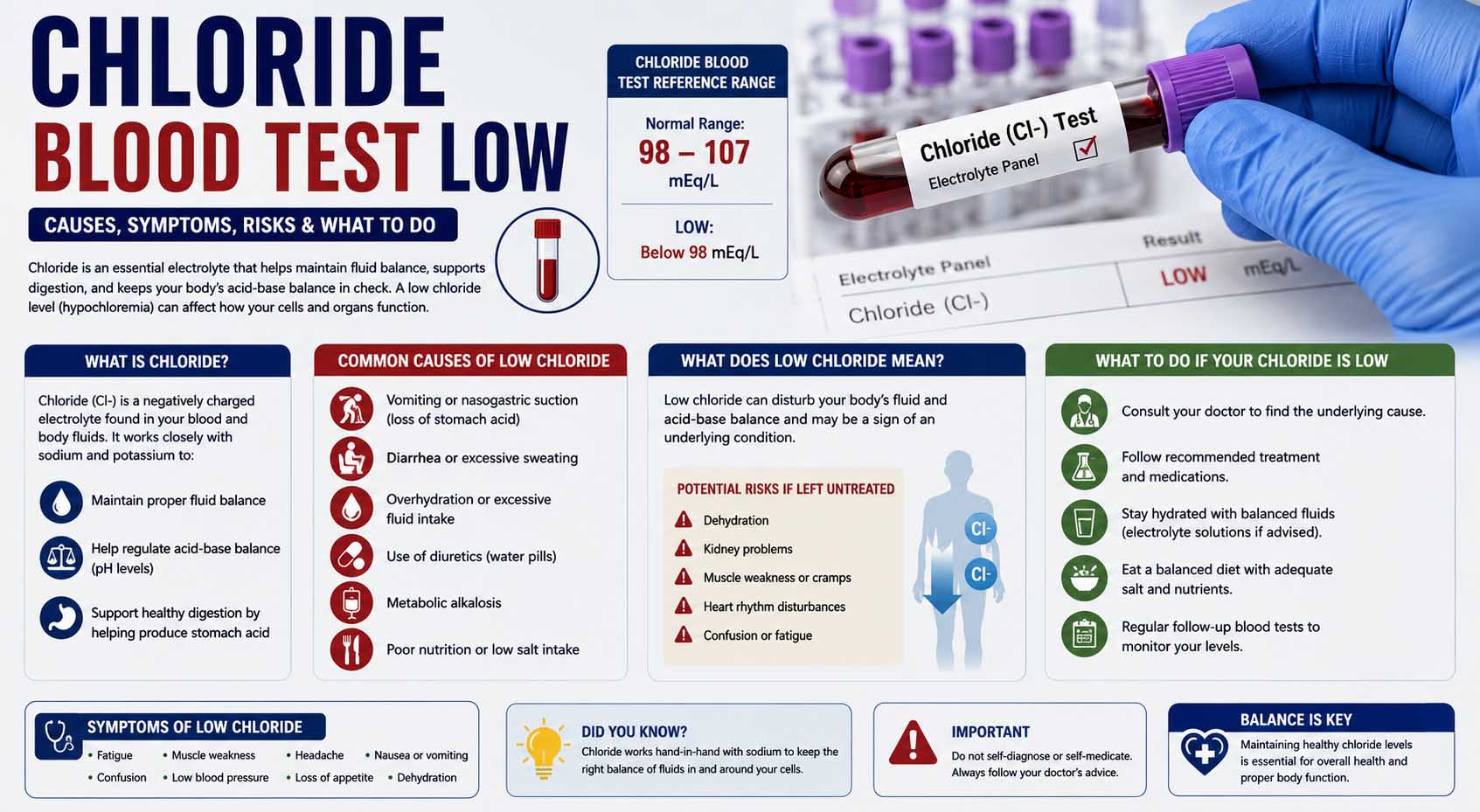
Seeing chloride blood test low on a laboratory report can be confusing, especially if you feel perfectly well. Chloride is an electrolyte that helps your body maintain fluid balance, acid-base balance, and normal cell function. A low blood chloride level is called hypochloremia. Although a mildly low result may occur for several reasons and does not automatically indicate a serious illness, doctors interpret it alongside other electrolytes, symptoms, medications, and your overall health.
Chloride levels often change together with sodium, bicarbonate, and other substances in the blood. Therefore, one abnormal number rarely tells the whole story. Your healthcare professional may simply repeat the test or may investigate further, depending on how low the result is and whether other values are abnormal.
What Does Low Chloride Mean in a Blood Test?
If you’re wondering what does low chloride mean in a blood test, it means the concentration of chloride in your blood is below the laboratory’s reference range.
You get it mainly through dietary salt, which contains sodium chloride. Your kidneys then help regulate how much chloride remains in the bloodstream and how much leaves the body through urine.
Chloride also works closely with sodium to regulate fluid distribution. Meanwhile, its relationship with bicarbonate helps maintain the body’s acid-base balance.
Reference ranges vary somewhat among laboratories. Therefore, always use the range printed on your own test report rather than comparing your result with a single number found online.
A low result is not a diagnosis by itself. Instead, your doctor considers how far the level falls outside the reference range and what is happening with your other laboratory values.
Why Chloride Is Usually Tested With Other Electrolytes
Doctors rarely evaluate chloride completely on its own. Instead, it commonly appears on an electrolyte panel, basic metabolic panel, or comprehensive metabolic panel.
These panels may measure sodium, potassium, chloride, bicarbonate or total carbon dioxide, glucose, calcium, and markers of kidney function.
Because chloride and sodium often change together, understanding a sodium blood test can be helpful when reviewing an electrolyte panel. For example, conditions involving fluid loss or excess body water can affect several electrolyte values rather than chloride alone.
Your clinician may also calculate an anion gap using electrolyte results. This calculation can provide more information about acid-base disorders, although it does not identify every possible cause by itself.
Common Causes of Chloride Blood Test Low Results
A chloride blood test low result can have several explanations. Some are temporary, while others relate to medications or underlying medical conditions.
Prolonged Vomiting
Repeated vomiting is a classic cause of low chloride because the stomach contains hydrochloric acid. Consequently, losing substantial amounts of stomach fluid can reduce chloride levels and contribute to metabolic alkalosis.
This problem becomes more concerning when vomiting continues because dehydration and other electrolyte abnormalities may develop as well.
Diuretic Medicines
Some diuretics increase the amount of sodium and water that the kidneys remove. However, they can also increase chloride loss.
People taking loop or thiazide diuretics may therefore develop changes in chloride, sodium, potassium, or acid-base balance. Never stop a prescribed diuretic based solely on a laboratory result. Instead, ask the prescribing clinician whether the medication could be contributing.
Excess Body Water
In some situations, excess water relative to electrolytes can dilute substances in the blood. As a result, both sodium and chloride concentrations may fall.
Several medical conditions can contribute to abnormal fluid balance, so treatment depends on the underlying cause rather than simply consuming more salt.
Metabolic Alkalosis
Low chloride can accompany this acid-base disturbance, particularly after prolonged vomiting or certain types of diuretic use.
Because laboratories often report total carbon dioxide as an estimate largely reflecting bicarbonate, a carbon dioxide blood test can provide useful context when doctors are assessing electrolyte and acid-base patterns.
Other Medical Conditions
Kidney disorders, hormonal conditions, heart failure, and other illnesses can sometimes contribute to abnormal electrolyte or fluid balance.
However, a low chloride result does not mean you have one of these conditions. Doctors look at symptoms, medical history, physical findings, medications, and other laboratory values before identifying a likely cause.
What Is Low Chloride in Blood Test Results Likely to Feel Like?
Mild hypochloremia may cause no noticeable symptoms. In fact, many people first discover it during routine blood testing.
When symptoms do occur, they may reflect the underlying fluid, electrolyte, or acid-base disturbance rather than chloride deficiency alone.
Possible symptoms can include:
- Weakness or unusual fatigue
- Nausea or vomiting
- Muscle cramps or twitching
- Increased thirst
- Dizziness
- Confusion
- Signs of dehydration
- Abnormal breathing in some acid-base disorders
Symptoms vary considerably depending on the cause and severity.
Severe electrolyte disturbances can affect multiple body systems. Therefore, significant confusion, fainting, seizures, severe weakness, breathing difficulty, or persistent vomiting requires prompt medical assessment.
How Doctors Evaluate a Chloride Low Blood Test
When a chloride low blood test appears on your results, the first step is usually to examine the rest of the laboratory panel.
Your clinician may ask whether you have recently experienced vomiting, diarrhea, major changes in fluid intake, or other illnesses. Likewise, they may review prescription drugs, supplements, and over-the-counter products.
Looking at the Electrolyte Pattern
Chloride becomes much more informative when compared with sodium, potassium, and bicarbonate.
For instance, low chloride combined with elevated bicarbonate may fit certain forms of metabolic alkalosis. Meanwhile, low sodium alongside low chloride can point toward a broader fluid or electrolyte problem.
Kidney function tests can provide another piece of the picture because the kidneys play a major role in electrolyte regulation.
Repeating the Blood Test
If the abnormality is mild and unexpected, a healthcare professional may repeat the test.
Temporary changes, hydration status, laboratory variation, or short-term illness can sometimes influence results. Therefore, confirmation can be useful before further testing or treatment.
Urine Testing
In certain cases, a clinician may measure chloride in urine. Urine chloride can help doctors investigate the cause of metabolic alkalosis and distinguish between different patterns of chloride loss.
However, this is not necessary for every mildly abnormal blood chloride result.
Low Chloride and Acid-Base Balance
Chloride plays a close role in maintaining electrical neutrality and acid-base balance in the body.
When chloride is lost through prolonged vomiting, bicarbonate can become relatively elevated. As a result, metabolic alkalosis may develop or persist, particularly when volume depletion and kidney responses are involved.
Doctors may look at bicarbonate, blood gases, and other laboratory values if a meaningful acid-base disturbance is suspected.
In different clinical circumstances, a lactic acid blood test may be ordered to evaluate elevated lactate, such as when clinicians are assessing certain serious illnesses or problems with tissue oxygen delivery. However, lactate testing is not a routine test for isolated low chloride.
This distinction matters because different laboratory tests answer different clinical questions, even when they all relate broadly to metabolism or blood chemistry.
Is Low Chloride Dangerous?
A slightly low chloride level is not necessarily dangerous.
Risk depends on the severity of the abnormality, how quickly it developed, the underlying cause, other electrolyte values, and the person’s overall medical condition.
For example, a small change after a brief illness may resolve once normal fluid and electrolyte balance returns. On the other hand, substantial losses from prolonged vomiting or a serious underlying condition may require medical treatment.
Rather than focusing only on whether chloride is marked “low,” consider the full laboratory picture with your healthcare professional.
A sudden or substantial abnormality deserves more attention than a minor isolated result, particularly when symptoms are present.
How Is Low Chloride Treated?
Treatment for hypochloremia depends on why chloride is low.
There is no universal treatment that is appropriate for every patient.
Treating Fluid and Electrolyte Loss
If vomiting or another source of fluid loss is responsible, treatment may involve replacing fluids and electrolytes while addressing the cause of the losses.
Depending on severity, this might involve oral fluids or intravenous fluids under medical supervision.
Reviewing Medications
When a medication contributes to electrolyte loss, a clinician may review the dose or treatment plan.
However, patients should not change prescribed medications without medical advice. Diuretics, for instance, may be necessary for treating conditions such as high blood pressure, heart failure, or fluid retention.
Correcting the Underlying Condition
If low chloride results from a kidney, hormonal, heart, or acid-base problem, treatment focuses on that condition.
Simply consuming extra table salt is not an appropriate solution for everyone. In fact, increasing sodium intake without medical advice may be unsuitable for people with high blood pressure, heart disease, kidney disease, or certain fluid-balance problems.
Can Diet Raise Chloride Levels?
Most people get plenty of chloride from their normal diet because chloride is present in table salt and many foods.
Foods that contain sodium chloride naturally provide chloride. However, dietary changes are not necessarily the answer to an abnormal blood result.
If a person has lost fluids and electrolytes during a short gastrointestinal illness, an appropriate oral rehydration solution may sometimes be recommended. These products contain carefully balanced amounts of water, electrolytes, and glucose rather than simply providing salt.
Still, persistent vomiting, severe diarrhea, or signs of significant dehydration should be medically assessed.
Do not use excessive salt intake or homemade electrolyte remedies to treat an unexplained low laboratory value without professional guidance.
What Other Blood Tests May Be Checked?
The tests ordered alongside chloride depend on the clinical situation.
A metabolic panel commonly provides information about other electrolytes and kidney function. Meanwhile, a CBC may be ordered if the doctor is investigating infection, anemia, or another medical concern.
An nrbc blood test refers to nucleated red blood cells reported as part of certain blood count evaluations. It assesses a very different aspect of the blood than chloride and is not used to diagnose hypochloremia.
This is why reviewing a laboratory report by grouping related tests is often more useful than treating every abnormal value as part of the same problem.
Common Misunderstandings About Low Chloride
“Low Chloride Means I Don’t Eat Enough Salt”
Not necessarily. Although chloride comes from food, low blood levels can result from vomiting, medications, abnormal fluid balance, or medical conditions.
“I Can Fix It by Eating Salty Foods”
Not always. Treatment depends on the cause, and increasing salt may be inappropriate for some people.
“One Low Result Means Something Is Seriously Wrong”
A single mildly abnormal result does not establish a serious diagnosis. Your doctor may simply review the rest of the panel and repeat the test if needed.
“Normal Sodium Means Low Chloride Doesn’t Matter”
Not necessarily. Electrolytes interact, but each measurement provides different information. Doctors interpret the overall pattern rather than relying on one value.
Frequently Asked Questions About Low Chloride
What level of chloride is considered low?
A chloride value is considered low when it falls below the reference range used by the laboratory that performed your test. Since ranges can differ slightly, check the range printed beside your result.
Can dehydration cause low chloride?
Fluid loss associated with prolonged vomiting can lead to chloride depletion. However, different types of dehydration and fluid imbalance can produce different electrolyte patterns, so testing is needed to understand the cause.
Can vomiting lower chloride?
Yes. Stomach fluid contains hydrochloric acid, so repeated or prolonged vomiting can cause significant chloride loss and may contribute to metabolic alkalosis.
Can medications cause low chloride?
Yes. Certain diuretics can contribute to chloride loss, while other medications may affect fluid or electrolyte balance indirectly.
Can low chloride cause fatigue?
Electrolyte and acid-base disturbances can be associated with weakness or fatigue. However, fatigue has many possible causes, so low chloride should not automatically be assumed to be responsible.
Should I drink electrolyte drinks if my chloride is low?
Not automatically. An electrolyte drink may be useful in certain situations involving fluid loss, but an unexplained abnormal blood result needs to be interpreted in context. Ask a healthcare professional what type and amount of fluid replacement is appropriate for you.
Practical Next Steps After a Low Chloride Result
If your chloride blood test low result is only slightly outside the reference range and you feel well, there may be no reason to panic. Still, review the result with your healthcare professional, particularly if other electrolytes are abnormal or the finding persists.
Bring a current list of medications and supplements to the discussion. Also, mention recent vomiting, diarrhea, major changes in fluid intake, or any new symptoms because these details can help explain the laboratory pattern.
Meanwhile, seek prompt medical care for severe weakness, significant confusion, fainting, seizures, breathing difficulty, or persistent vomiting and dehydration.
Most of all, avoid treating a laboratory number on your own. Chloride makes the most sense when viewed alongside sodium, potassium, bicarbonate, kidney function, symptoms, and medical history. Once the cause is clear, your healthcare professional can decide whether you need treatment, repeat testing, or simply routine follow-up.